Launching private label running socks is not only about adding a logo to an existing sock.
For running brands, clubs, marathon organizers and retailers, the product needs to perform during movement while also remaining consistent across repeat production.
A good private label running sock program therefore involves several stages:
Product Positioning → Construction → Materials → Branding → Sampling → Bulk Production → Packaging → Quality Control → Repeat Orders
Skipping any of these stages can create problems later, especially when the product starts selling and you need to reorder the same specification quickly.
This guide explains how to develop private label running socks from the first product brief through repeat production.
What Are Private Label Running Socks?
Private label running socks are socks produced by a manufacturer and sold under your own brand.
Depending on the project, customization may include:
- Brand logo
- Sock colors
- Yarn selection
- Cushioning
- Compression
- Mesh zones
- Sock height
- Heel and toe reinforcement
- Packaging
- Size labels
- Barcode labels
The level of customization can range from an existing running sock construction with your branding to fully customized running sock development.
The right route depends on your brand stage, order quantity, budget and product requirements.
Who Buys Private Label Running Socks?
- Running brands
- Sportswear brands
- Running clubs
- Marathon organizers
- Race events
- Retailers
- Distributors
- Outdoor brands
- Corporate wellness programs
Each buyer may need a slightly different product.
A marathon organizer may prioritize event branding, fast production and large quantities.
A premium running brand may prioritize fit, technical yarns, cushioning, compression, packaging and repeat production consistency.
The first step is therefore to define the customer and use case.
Step 1: Define the Product Before Asking for a Quote
One of the most common sourcing mistakes is sending only a logo and asking: “How much are custom running socks?”
A manufacturer needs more information before giving a meaningful quotation.
Your product brief should include:
- Sock height
- Target runner
- Target retail price
- Material preference
- Cushioning level
- Compression requirement
- Size range
- Colorways
- Logo placement
- Packaging
- Expected quantity
A clearer brief leads to more accurate pricing, faster sampling, fewer revisions and better bulk consistency.
For the wider branding and OEM route, see our private label sports socks.
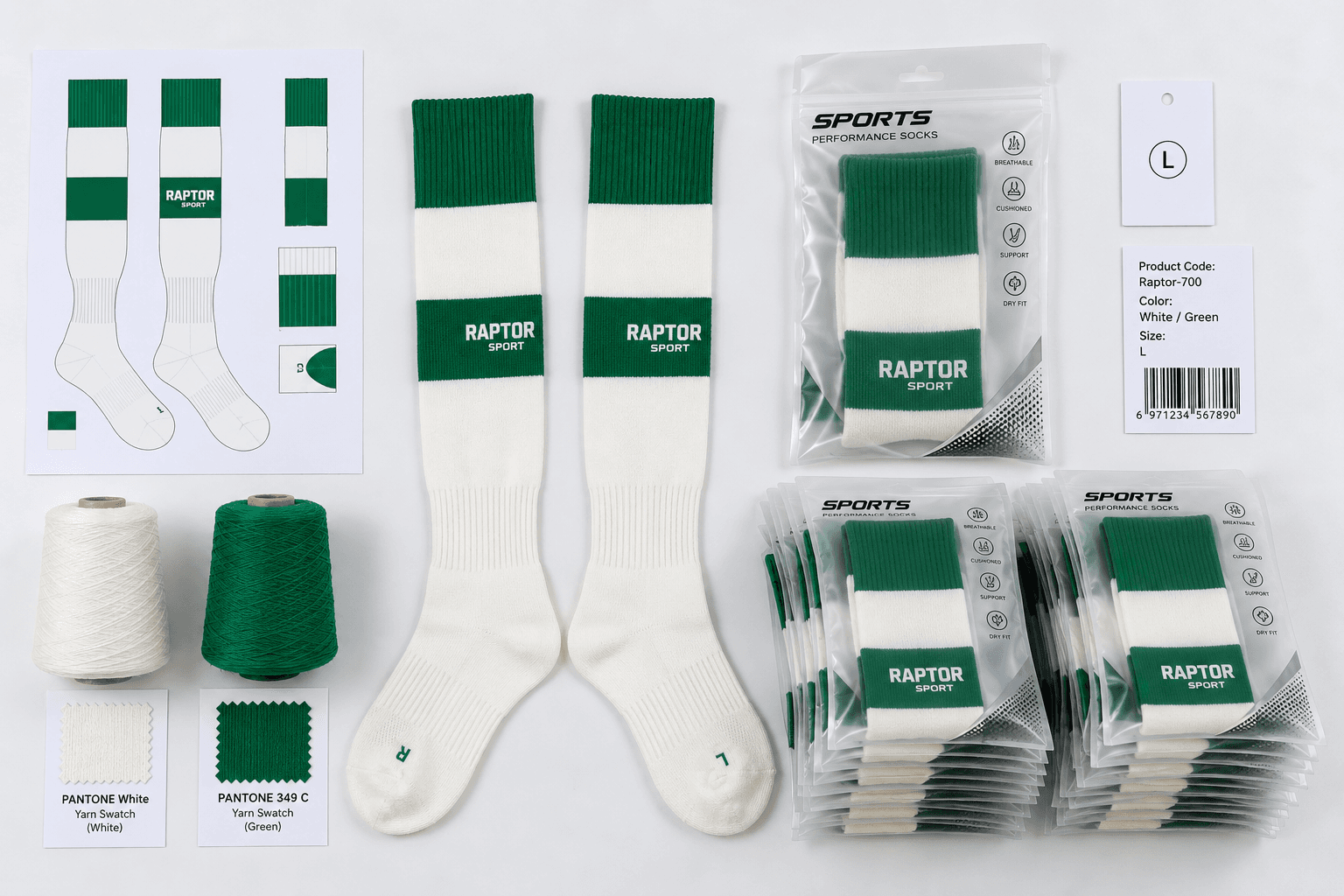
Step 2: Choose the Right Running Sock Height
No-Show
Suitable for minimal appearance, warm-weather running and lifestyle-running crossover.
- Heel tab
- Anti-slip heel construction
- Shoe collar protection
Ankle
A versatile choice for running brands, gyms and general sports use. It gives more branding space than a no-show sock.
Quarter
Popular for performance running, trail running and club programs. Quarter-length socks provide more ankle coverage while remaining lightweight.
Crew
Suitable for running clubs, lifestyle-performance brands, trail running and race merchandise.
Crew socks also provide more space for logos, stripes, color blocks and club identity.
Your preferred height should be confirmed before sample development because it affects both fit and branding placement.
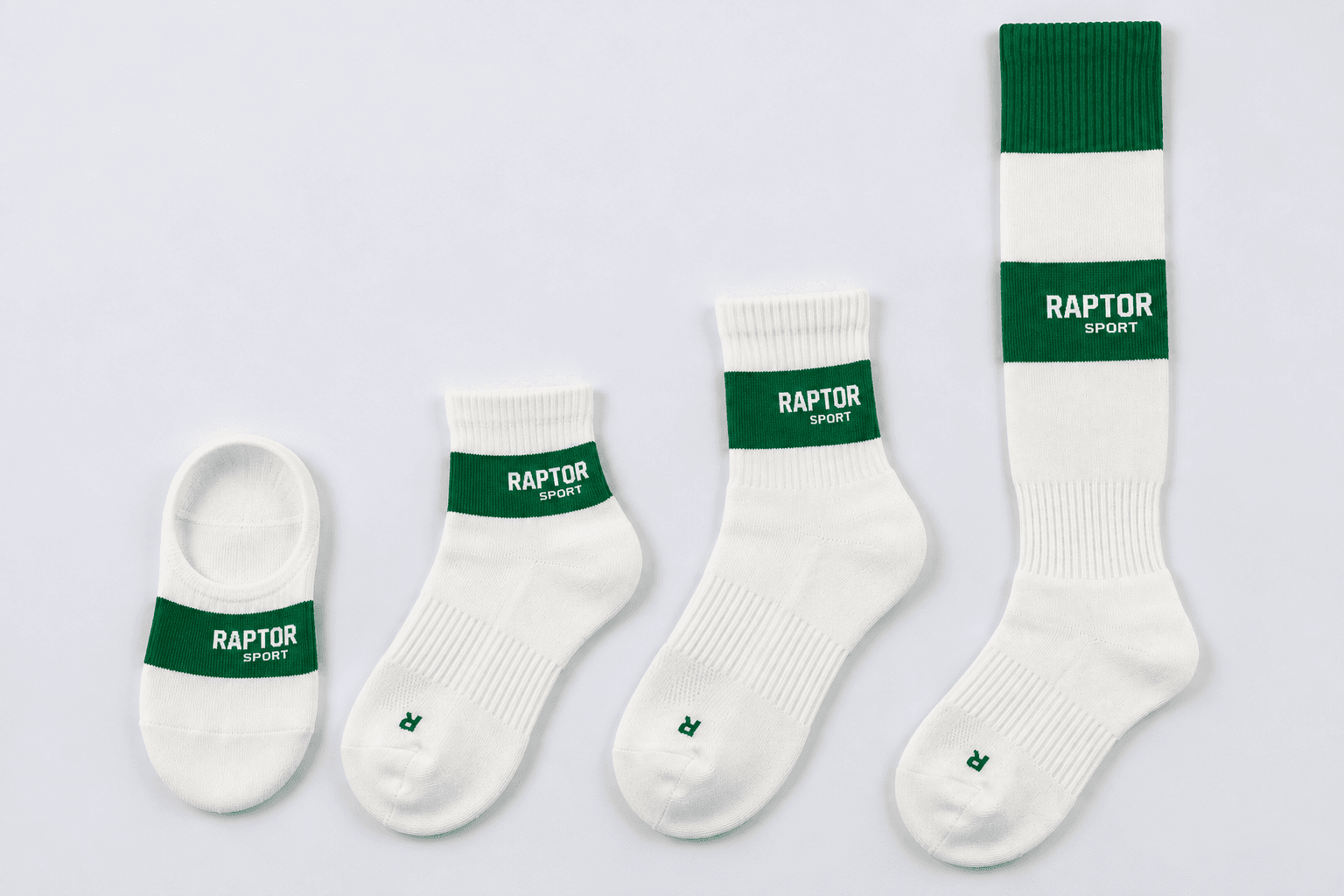
Step 3: Select the Material Based on Performance
Material selection is one of the most important parts of private label running socks.
The goal is not simply to choose the most expensive yarn. The yarn should match the intended product.
- Nylon
- Polyester
- Cotton blends
- Spandex
- Performance yarns
- Recycled yarn options
- Merino wool blends
Nylon
Often used for durability, elasticity and close-fitting performance socks.
Polyester
Common for moisture management, lightweight construction and sports socks.
Cotton Blends
Can provide softness and everyday comfort, but high-cotton constructions may not always be ideal for intensive running because moisture management is different from synthetic performance yarns.
Merino Wool Blends
Useful for trail running, outdoor running and cooler conditions, but may increase product cost.
The final material should support your target positioning.
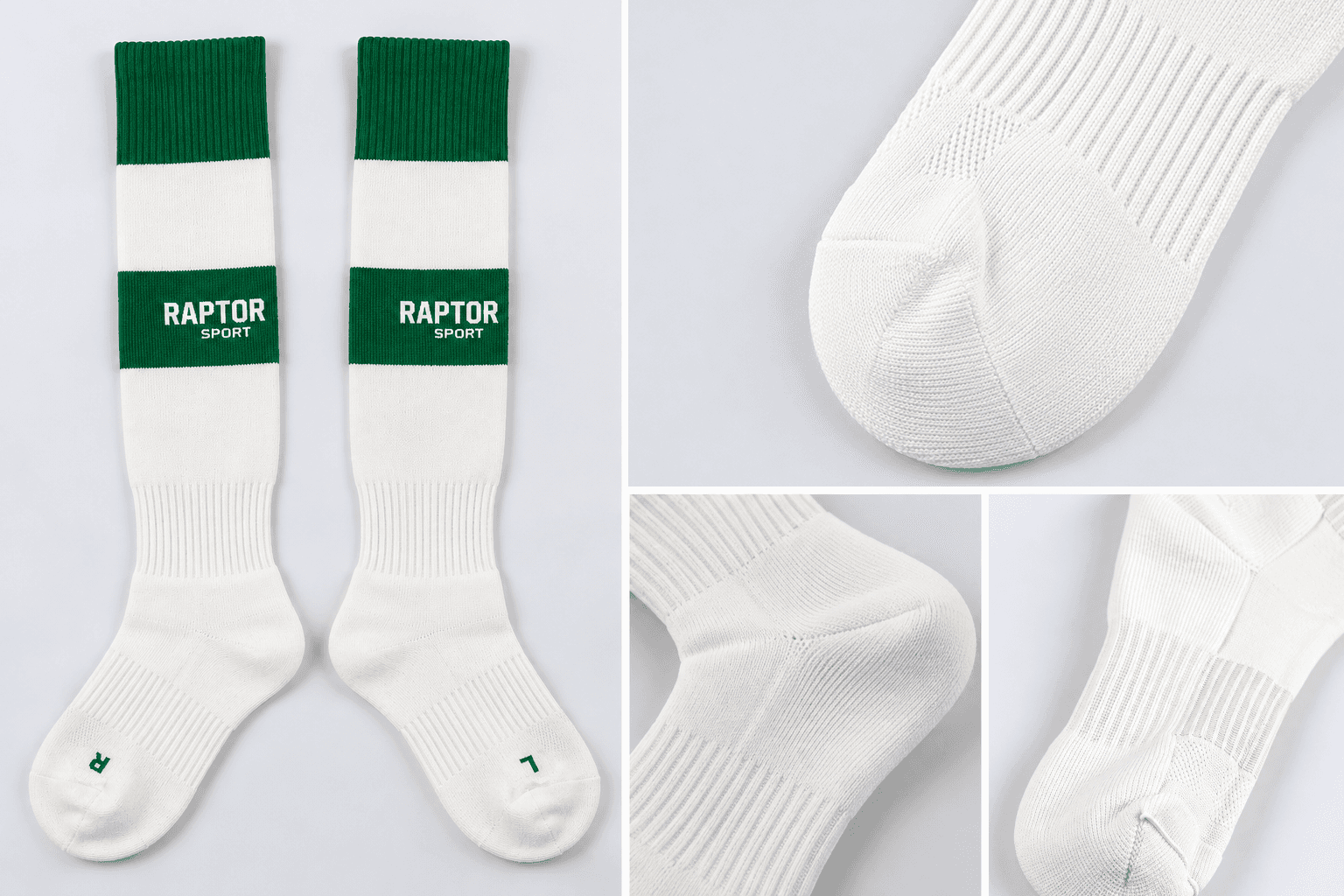
Step 4: Decide the Cushioning Level
Running socks are commonly developed with light cushioning, medium cushioning or targeted cushioning.
Cushioning may be concentrated in the heel, toe and forefoot.
Light Cushioning
Suitable for runners who prefer lower bulk, close shoe fit and a lightweight feel.
Medium Cushioning
Can provide more comfort for longer runs, training and everyday running.
Targeted Cushioning
Provides padding only where needed. This can help keep the sock lightweight while protecting high-pressure areas.
For private label programs, targeted cushioning is often a good balance between performance and manufacturing efficiency.
.png&w=3840&q=75)
Step 5: Add Compression Only Where It Helps
Running socks may include compression or support zones around the arch, midfoot and ankle.
The purpose is generally to improve fit and reduce sock movement.
However, more compression is not automatically better.
If the structure is too tight, the sock can become uncomfortable.
A better product brief might request “Moderate arch support with a secure but comfortable fit” rather than simply “Maximum compression.”
Physical sample testing is the best way to evaluate the result.
.png&w=3840&q=75)
Step 6: Use Mesh Zones for Breathability
Running socks often use mesh structures around areas such as the instep, upper foot and ankle.
These zones can help reduce unnecessary material and improve airflow.
The balance is important. Too much mesh may reduce durability. Too little may make the sock feel warm or heavy.
The correct construction depends on climate, running distance, shoe type and product positioning.
.png&w=3840&q=75)
Step 7: Reinforce Heel and Toe Areas
Heel and toe areas experience repeated friction.
For performance running socks, reinforcement can improve durability.
- Denser knitting
- Stronger yarn
- Reinforced heel
- Reinforced toe
This is particularly important for training socks, marathon socks, trail socks and high-frequency use.
If durability is a selling point, include reinforcement in the original specification rather than adding it after sampling.
.png&w=3840&q=75)
Step 8: Choose the Right Toe Construction
Toe comfort matters in running socks. A bulky seam can cause irritation during longer runs.
For this reason, buyers often ask for a flat toe seam or smooth toe construction.
During sample review, check the toe area inside the sock. Do not evaluate only the exterior appearance.
Step 9: Plan the Logo Carefully
Running socks can support branding in several areas:
- Cuff
- Side
- Front
- Back
- Foot
- Toe
Logo methods may include jacquard knitting, embroidery and printing.
For most performance running socks, a knitted logo is often the most integrated option.
But the logo must work with the knitting structure.
Very fine artwork may need simplification. A logo that looks perfect in a vector file may lose detail when knitted.
Your manufacturer should help adapt the artwork for production.
Step 10: Use Color Strategically
Private label running socks can be developed in brand colors, neutral colors, seasonal colors, race-event colors and reflective-style visual themes.
However, every additional colorway creates another SKU.
For a new running brand, launching 2 strong colors may be more practical than launching 8 colors immediately.
Fewer SKUs can simplify MOQ, inventory, reordering and cash flow.
You can add seasonal colors after the product proves itself.
Step 11: Create a Practical Size Range
Running socks are typically sized by shoe size.
A brand may use groups such as S, M, L and XL, or ranges such as EU 35–38, EU 39–42 and EU 43–46.
The exact ranges depend on the product construction.
Before production, confirm shoe-size conversion, sock dimensions, stretch, heel position and customer market.
If you sell internationally, consider whether you need EU, UK and US sizing on the packaging.
Step 12: Understand MOQ Before Building Too Many SKUs
MOQ is especially important for private label running socks.
If MOQ applies per style + color + size, then adding too many variations can increase the total order significantly.
For example:
2 designs × 3 colors × 3 sizes = 18 SKUs
Even if each SKU has a relatively small MOQ, the full production order can become much larger than expected.
For new brands, a focused first launch is usually easier to manage.
A practical starting structure might be:
- 1–2 styles
- 1–2 colors
- 2–3 sizes
Then expand after sales data becomes available.
Compare launch quantities and SKU tradeoffs in our guide to custom socks MOQ.
Step 13: Develop a Physical Sample
The sample stage allows you to evaluate the real product before bulk manufacturing.
A running sock sample should be checked for:
- Fit
- Length
- Heel position
- Toe fit
- Compression
- Cushioning
- Mesh placement
- Yarn feel
- Logo
- Color
- Stretch
A digital mock-up cannot replace physical wear testing.
For a performance product, test the sample during actual running.
When your product brief is ready, you can request a sample.
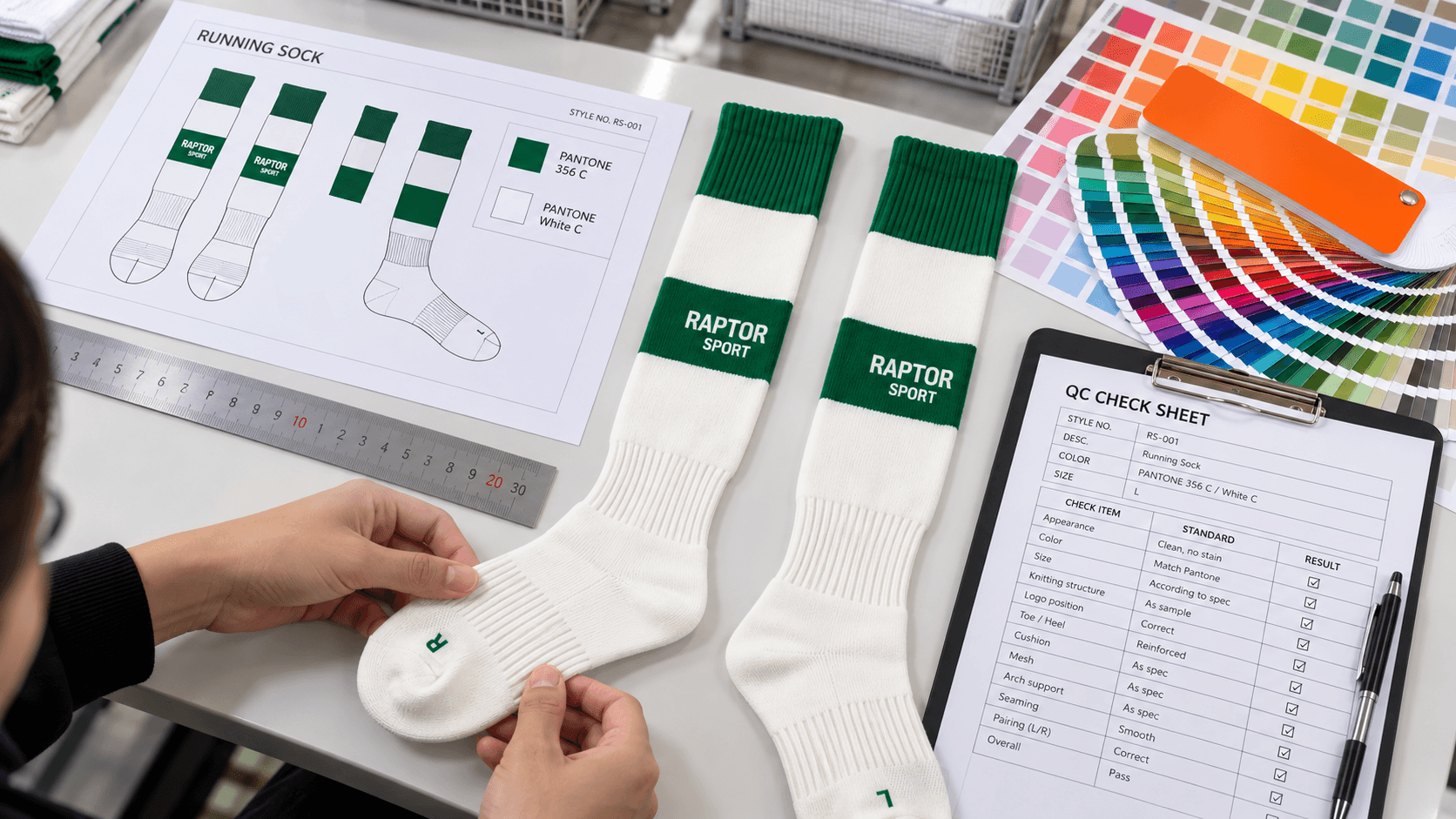
Step 14: Wear-Test the Running Sock
Do not approve the sample after only checking it on a table.
Ask testers to wear the sock during short runs, longer runs and inside different running shoes.
Check for:
- Slipping
- Bunching
- Pressure points
- Heel movement
- Toe irritation
- Excessive warmth
- Compression comfort
Different runners may provide different feedback, so ideally use more than one tester.
.jpeg&w=3840&q=75)
.png&w=3840&q=75)
.jpeg&w=3840&q=75)
.png&w=3840&q=75)
Step 15: Wash-Test the Sample
Running socks are repeatedly washed.
Before bulk production, review how the sample performs after washing.
- Shrinkage
- Color
- Shape recovery
- Logo appearance
- Elasticity
- Cushioning
Follow the intended care instructions.
A product that looks good before washing but loses shape quickly is not ready for repeat retail sales.
Step 16: Approve a Final Production Sample
Once the design is correct, keep a final approved reference sample.
This becomes the physical benchmark for bulk production.
The approved specification should include:
- Sock style
- Size range
- Yarn
- Colors
- Logo
- Cushioning
- Compression
- Mesh
- Reinforcement
- Packaging
This is especially important for future reorders.
Step 17: Plan Private Label Packaging
Packaging should match your sales channel.
Common options include:
- Paper band
- Header card
- Hang tag
- Polybag
- Retail box
- Barcode label
- Size sticker
For e-commerce, simple packaging may be enough.
For retail stores, hanging packaging may be more practical.
For premium brands, a custom box may support stronger presentation.
Do not wait until production is finished to start packaging development.
Product and packaging should ideally be developed in parallel.
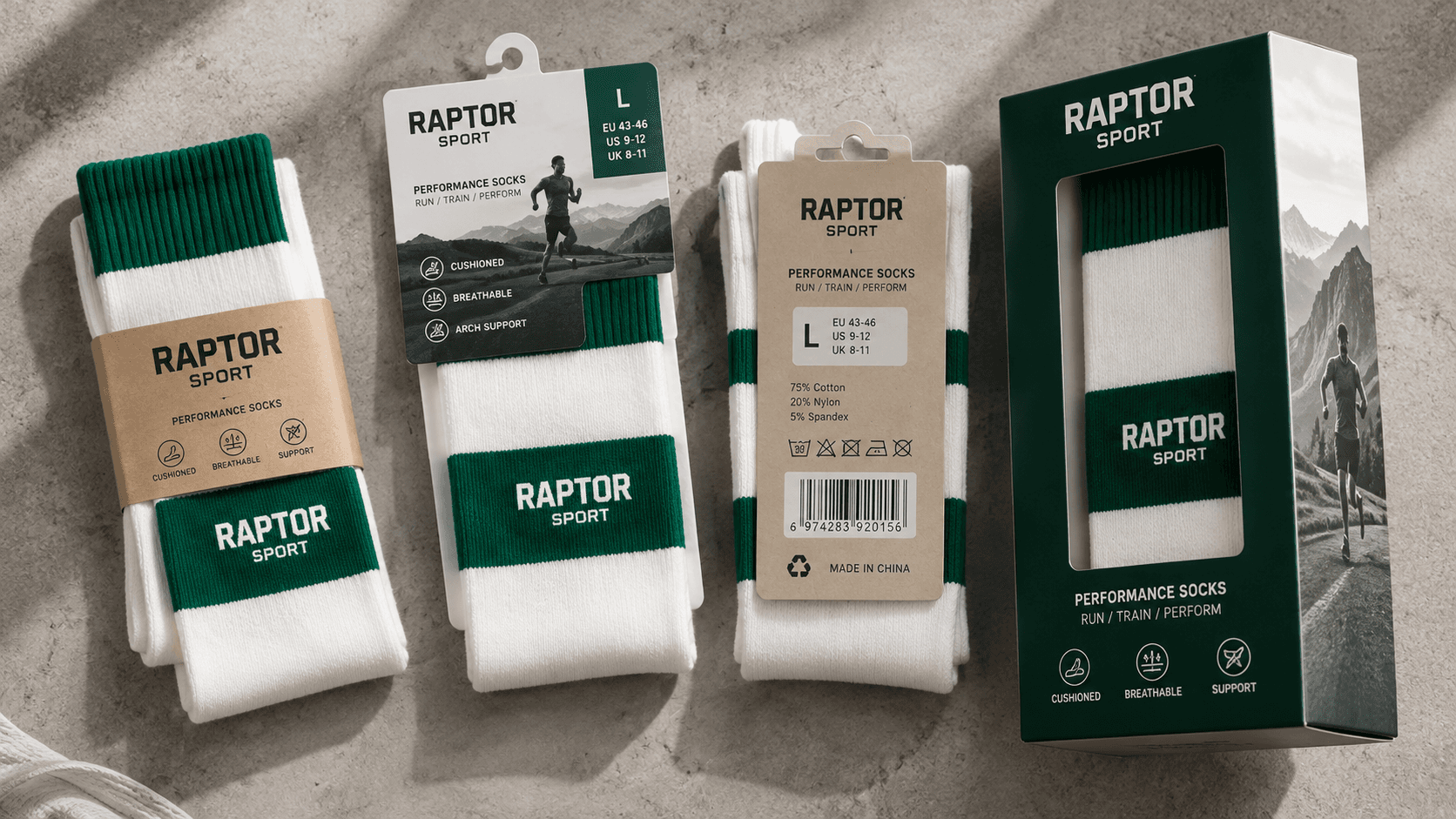
Step 18: What Should Appear on Running Sock Packaging?
Depending on your market, packaging may include:
- Brand name
- Logo
- Size
- Material composition
- Care instructions
- Country of origin
- Barcode
- Product code
Retailers may also require SKU, EAN / UPC barcode, color name.
Confirm packaging requirements before printing.
Step 19: Bulk Production Begins After Approval
Once the product is approved, the factory can prepare bulk manufacturing.
Production may include yarn preparation, knitting, toe linking, finishing, boarding, inspection and packaging.
The exact process depends on the sock construction.
A good buyer should avoid changing major specifications after production starts.
Late changes can create delays, rework and additional cost.
See the broader sock manufacturing process.
.png&w=3840&q=75)
Step 20: Quality Control for Private Label Running Socks
QC should compare the finished product with the approved sample and specification.
Common checks include:
- Sock dimensions
- Logo position
- Color consistency
- Knitting defects
- Heel and toe
- Compression
- Cushioning
- Pair matching
- Packaging
For repeat retail products, consistency is especially important.
Customers expect the second purchase to feel similar to the first.
.png&w=3840&q=75)
.png&w=3840&q=75)
.png&w=3840&q=75)
First Order vs Repeat Order
The first order usually involves more development work.
A repeat order may already have:
- Knitting program
- Yarn references
- Logo artwork
- Color references
- Size specifications
- Packaging files
This can make repeat production easier.
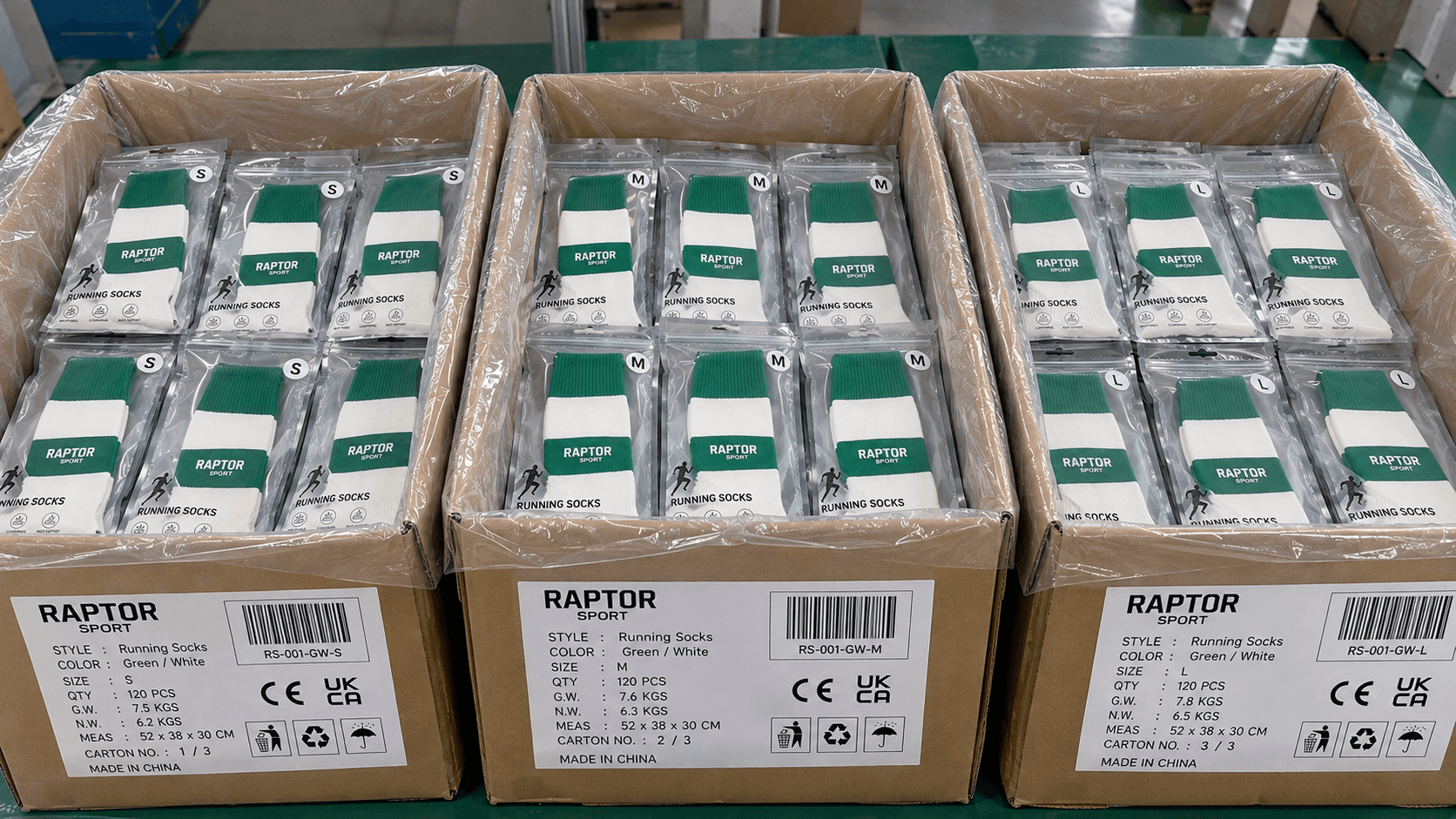
However, every reorder should still confirm quantity, size breakdown, colors, packaging and required delivery date.
Do not assume the original order quantities should always be repeated.
Use Sales Data to Plan Reorders
Your second production run should be more data-driven than your first.
Track best-selling size, best-selling color, fastest-selling style, monthly sales and slow-moving SKUs.
| SKU | Initial Quantity | Remaining |
|---|---|---|
| Black M | 100 | 15 |
| Black L | 100 | 40 |
| White M | 100 | 10 |
| White L | 100 | 55 |
This suggests medium sizes are moving faster.
The reorder should reflect actual demand instead of repeating the original split automatically.
Create Product Codes for Repeat Orders
Product codes help prevent confusion.
For example, RUN-QTR-BLK-M could mean Running / Quarter / Black / Medium.
A product code can connect to artwork, size, yarn, color, packaging and production files.
This is particularly useful if you manage several running sock styles.
When Should You Reorder Running Socks?
Do not wait until inventory reaches zero.
A practical formula is:
Average Weekly Sales × Replenishment Lead Time + Safety Stock = Reorder Point
Example:
- Weekly sales: 25 pairs
- Replenishment time: 8 weeks
- Expected demand: 25 × 8 = 200 pairs
- Safety stock: 50 pairs
- Reorder point: 250 pairs
This is only an illustrative example. Use your real sales rate and confirmed supplier lead time.
Plan the reorder date with our guide to custom sock lead time.
Plan Ahead for Running Events and Marathon Season
Running sock demand may increase around:
- Marathon season
- Race events
- Club launches
- Retail promotions
- Holiday sales
- New collections
If your delivery date is fixed, work backward.
Allow time for sample confirmation, packaging, production, QC and shipping.
Last-minute production can increase both risk and freight cost.
Private Label Running Socks for Marathon Events
Marathon organizers may need:
- Event colors
- Race logo
- Sponsor logo
- Participant sizing
- Bulk packaging
- Event deadline
For event orders, delivery date is especially important.
The product must arrive before expo setup, race day and registration pack assembly.
A missed delivery date can make the entire order unusable.
Therefore, event buyers should start development earlier than ordinary retail buyers.
Private Label Running Socks for Running Clubs
Running clubs may use socks for club uniform, membership packs, merchandise, race events and sponsor programs.
A club program benefits from stable sizing, repeat colors, consistent logo and easy reordering.
The product should be designed as a repeat program, not just one seasonal order.
Private Label Running Socks for Retailers
Retail buyers should pay particular attention to size labels, barcodes, packaging, product codes and repeat production consistency.
Retailers may also need carton labels, SKU tracking, color names and size ratios.
Discuss these requirements before production begins.
How to Reduce Private Label Running Sock Cost Without Reducing Quality
Reducing Color Count
Start with fewer core colors.
Reducing SKU Count
Avoid unnecessary combinations of styles, colors and sizes.
Using an Existing Proven Construction
Customize branding rather than redesigning every technical detail.
Simplifying Packaging
Use a paper band or header card instead of an expensive box when appropriate.
Increasing Quantity After Demand Is Proven
Do not over-order only to get a lower unit cost. Scale the order once the product proves itself.
Common Private Label Running Sock Mistakes
- Choosing materials only based on price
- Adding too many technical features
- Launching too many SKUs
- Skipping wear testing
- Approving only the visual design
- Developing packaging too late
- Reordering the same quantity split automatically
What Should You Send a Running Sock Manufacturer?
For an accurate quotation, prepare:
- Logo
- Product reference
- Sock height
- Material preference
- Cushioning requirement
- Compression requirement
- Colors
- Size range
- Quantity
- Packaging
- Delivery country
- Required delivery date
The more complete your brief, the more accurate the quotation and development plan will be.
Private Label Running Socks Development Checklist
Product
- Sock height
- Fit
- Yarn
- Cushioning
- Compression
- Mesh
- Reinforcement
Branding
- Logo
- Position
- Colors
Sizing
- Size ranges
- Measurements
- Quantity by size
Packaging
- Packaging type
- Size label
- Barcode
- Product code
Production
- Final sample approved
- Quantity confirmed
- Delivery date confirmed
Frequently Asked Questions
What is the MOQ for private label running socks?
MOQ depends on the sock construction, colors, sizes, materials and customization level. Always confirm whether the MOQ applies per style, color and size or to the total order.
How long does it take to make private label running socks?
The timeline normally includes design confirmation, sampling, approval, production, packing and shipping. Complex constructions and custom packaging can require additional time.
Can I put my logo on running socks?
Yes. Logos can often be knitted, embroidered or printed depending on the design and sock construction.
Can running socks be customized with cushioning and compression?
Yes. Custom constructions can include targeted cushioning, arch support, compression zones, mesh ventilation and reinforcement.
Should I order a sample before bulk production?
Yes. A sample allows you to evaluate fit, comfort, logo, color and construction before a larger production run.
Are repeat orders easier?
They can be easier because product specifications and production files have already been approved, but quantity, materials and delivery schedules should still be reconfirmed.
Can sizes be mixed in one order?
This depends on the manufacturer's MOQ policy. Confirm the quantity requirement for each size before placing the order.
What packaging is available for private label running socks?
Common options include paper bands, header cards, hang tags, polybags, barcode labels and retail boxes.
Build a Running Sock Product That Can Be Reordered
A successful private label program should not be designed only for the first production run.
The real goal is to create a product that can be reproduced consistently.
The first sample establishes the specification. The first order tests the market. The second order uses real sales data.
Over time, the program becomes easier to manage because you know which sizes sell, which colors sell, which styles sell, when to reorder and how much inventory to hold.
That is what turns private label running socks from a one-time product into a scalable brand program.
PeakMotion supports running brands, clubs, marathon organizers, retailers and distributors with custom running sock development, sampling, private label packaging and repeat production.
If you are developing a running sock collection, send us:
- Your logo
- Product reference
- Target customer
- Quantity
- Sizes
- Colors
- Packaging
- Delivery destination
and we can review the project before sampling.
Discuss development and repeat production with our running socks manufacturer.
Start your running sock program
Planning a Private Label Running Sock Project?
Send your running sock reference, logo, target quantity, sizes, packaging and delivery destination. Our running sock team can review the sample and production route with you.