MOQ & Pricing
50 vs 100 vs 500 Pairs MOQ: Which Order Size Is Right for Your Sock Brand?
Compare custom socks MOQ, unit cost, inventory exposure and SKU planning to choose a production quantity that fits your current demand confidence.
PeakMotion Editorial Team · 12 min read
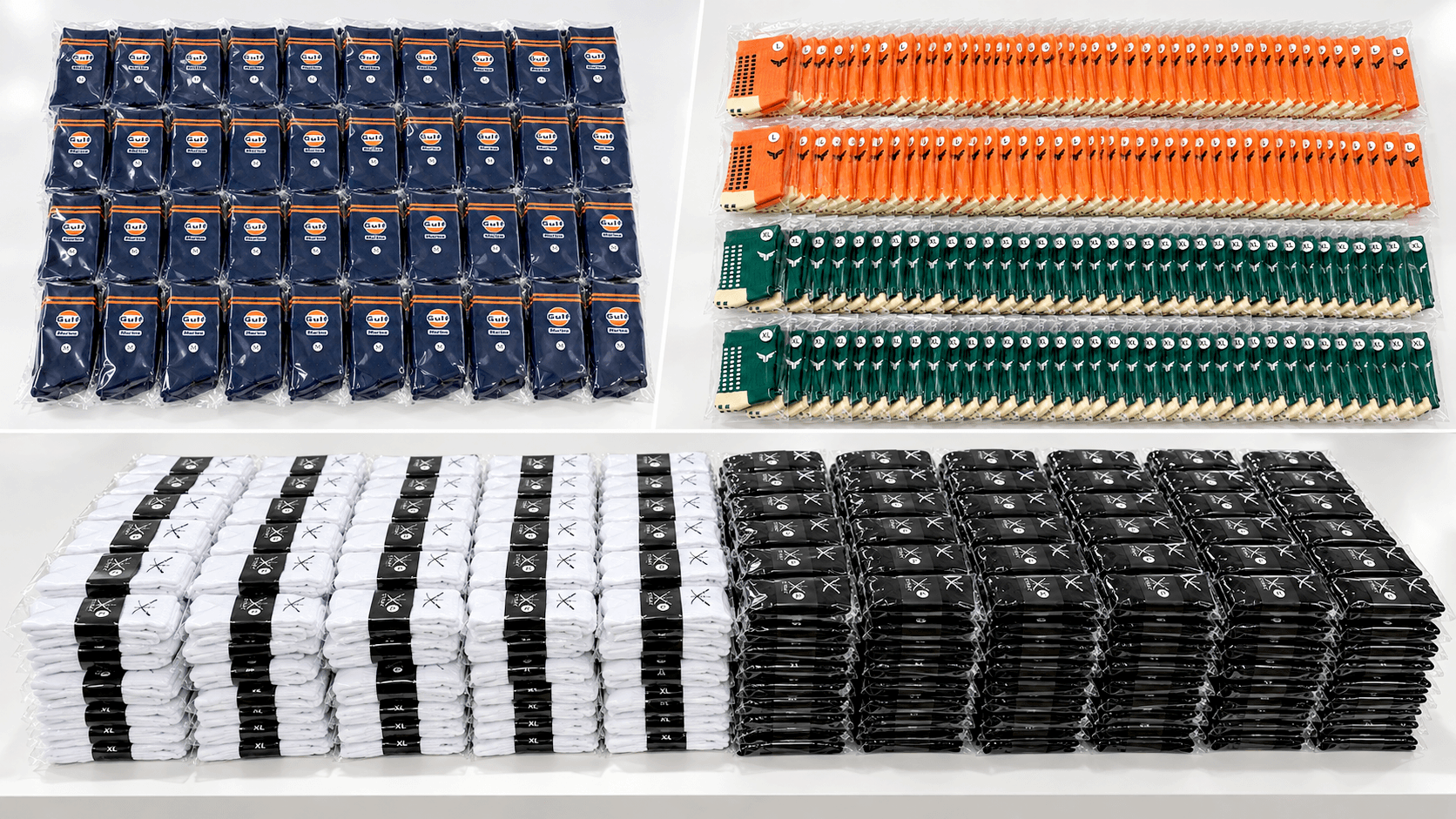
If you are starting a sock brand, one of the first production decisions is not only which manufacturer to choose, but how many pairs to order for the first run. Should you start with 50 pairs to reduce risk, use 100 pairs for a proper launch, or move to 500 pairs for stronger unit economics?
There is no single custom socks MOQ that suits every project. The right order size depends on your business stage, designs, size range, packaging, sales channel, target retail price and how confident you are that the product will sell.
Quick comparison
50 vs 100 vs 500 pairs at a glance
| Order size | Best for | Main advantage | Main limitation |
|---|---|---|---|
| 50 pairs | Product testing, samples, very small launches | Lowest inventory risk | Higher unit cost and fewer customization options |
| 100 pairs | New brands and first commercial launches | Balance between risk and customization | Limited economies of scale |
| 500 pairs | Established products, clubs, studios, retailers and growing brands | Better unit economics and production efficiency | Higher upfront investment and inventory risk |
Treat these quantities as planning examples, not universal factory rules. A manufacturer may calculate MOQ per order, design, color, size, yarn requirement, grip artwork or packaging type. Five hundred total pairs across ten designs is not the same production situation as 500 pairs of one design.
What does custom socks MOQ actually apply to?
When a buyer asks “What is your MOQ?”, the more useful follow-up is: “Is the MOQ per order, per design, per color or per size?” A project with two designs, two colors and three sizes creates many SKU variations, even when the total quantity looks substantial.
New brands can compare the commercial route on our private label socks manufacturer page, then use the sports socks MOQ guide to prepare the quantity breakdown for a quotation.
- Total order quantity
- Quantity per design, color and size
- Yarn and knitting setup requirements
- Grip artwork or silicone application
- Packaging type and minimums
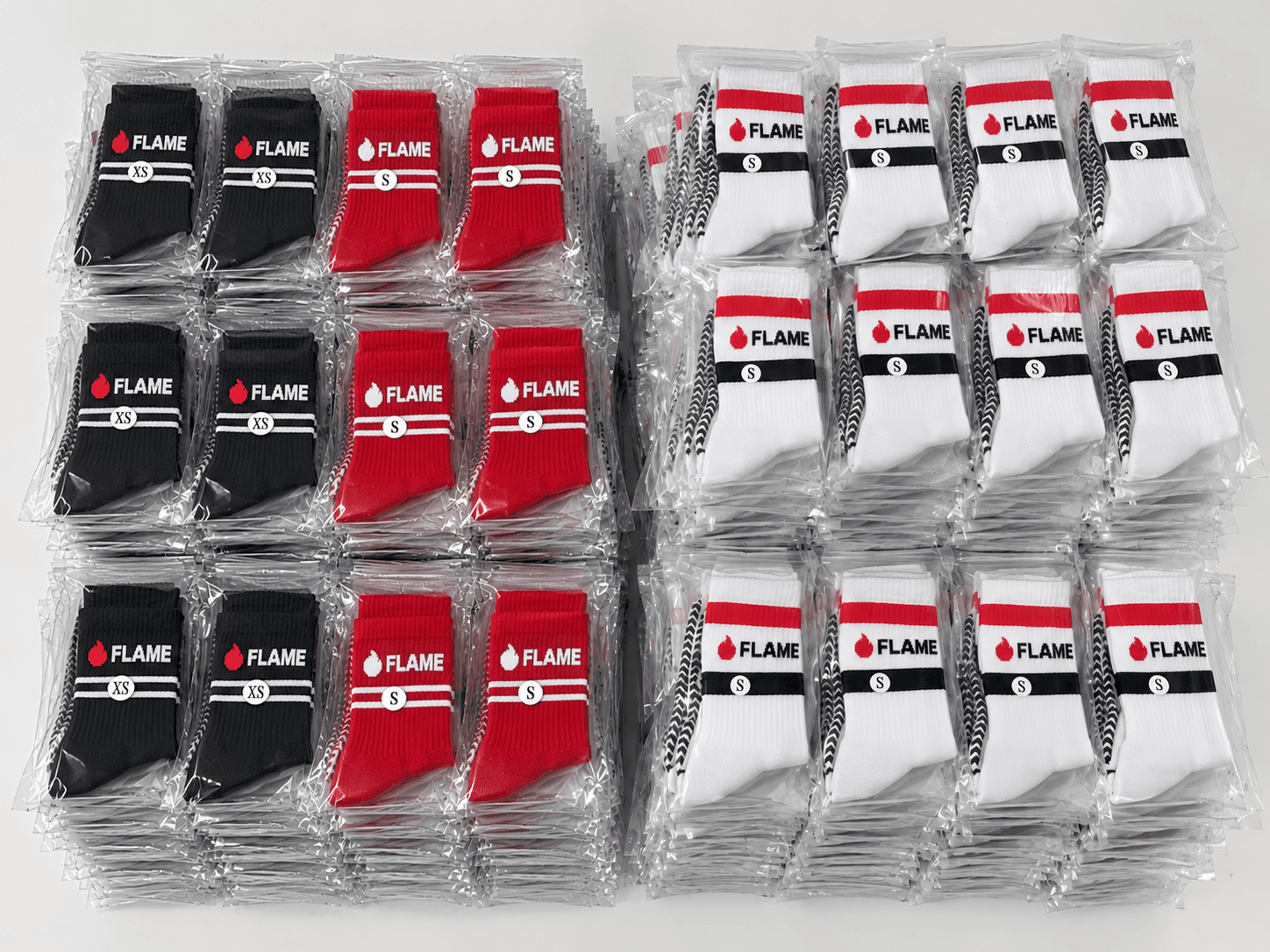
Option 1
Is 50 pairs enough for custom socks?
A 50-pair order keeps the financial commitment low. For startups, creators, small teams or studios, it can be a sensible test quantity. However, it is usually better viewed as validation inventory than an ideal bulk manufacturing quantity.
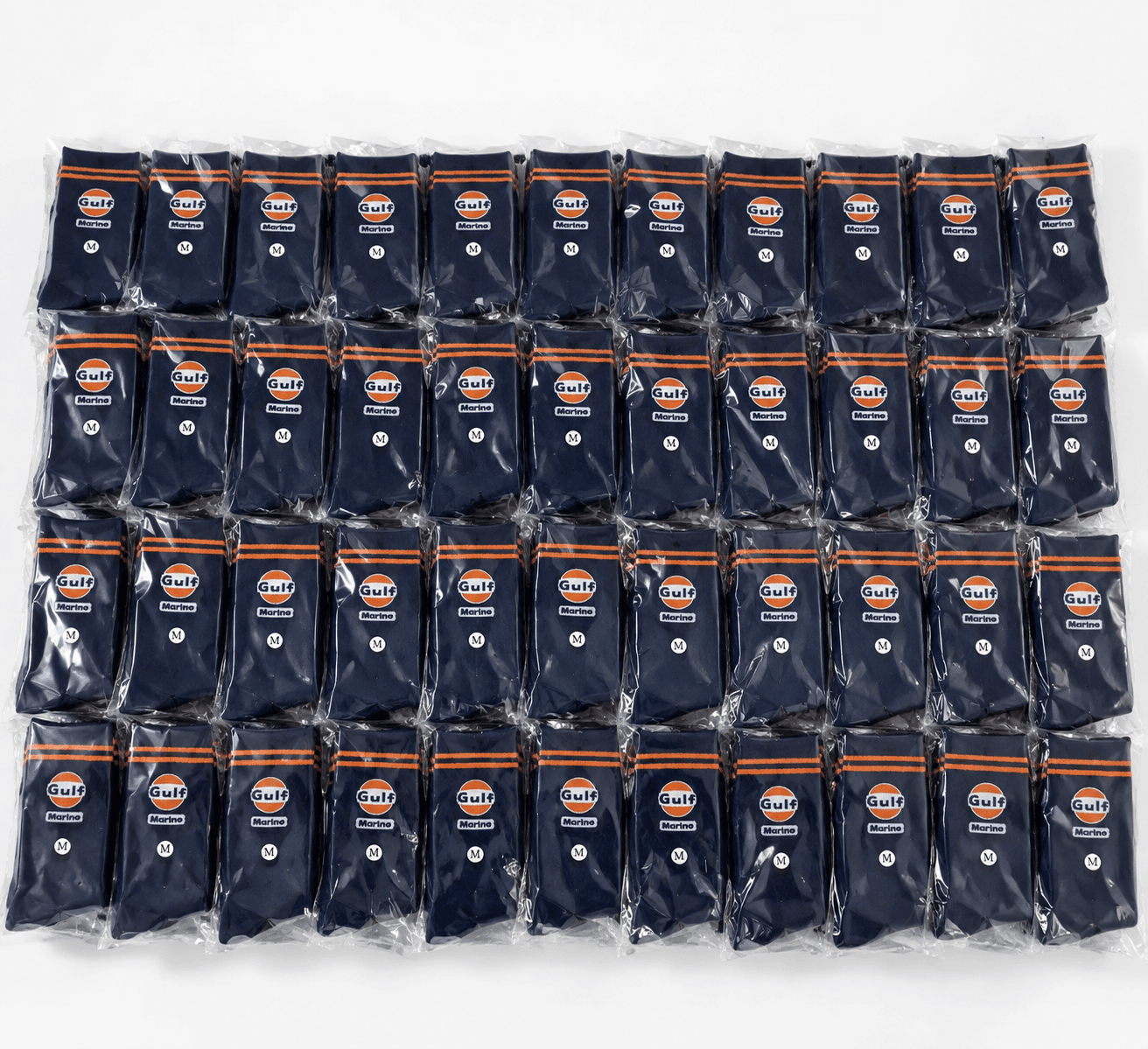
When 50 pairs can make sense
- Testing a completely new product idea
- Creating merchandise for a small community or event
- Launching through pre-orders
- Making samples for photographers, athletes or influencers
- Evaluating a supplier before scaling
The limitation of ordering only 50 pairs
Artwork review, knitting programming, yarn preparation, color setup, sizing, grip artwork, labels, packaging and quality control can require work regardless of quantity. Those fixed activities are spread across fewer pairs, so the cost per pair is often higher. The quantity also fragments quickly: three sizes and two colors leave only around eight pairs per SKU.
Option 2
Is 100 pairs a good MOQ for a new sock brand?
For many early-stage brands, 100 pairs is a more practical testing point. It remains a controlled inventory commitment while allowing a commercially realistic launch, especially when you focus on one core design, limited colors and a simple size structure.
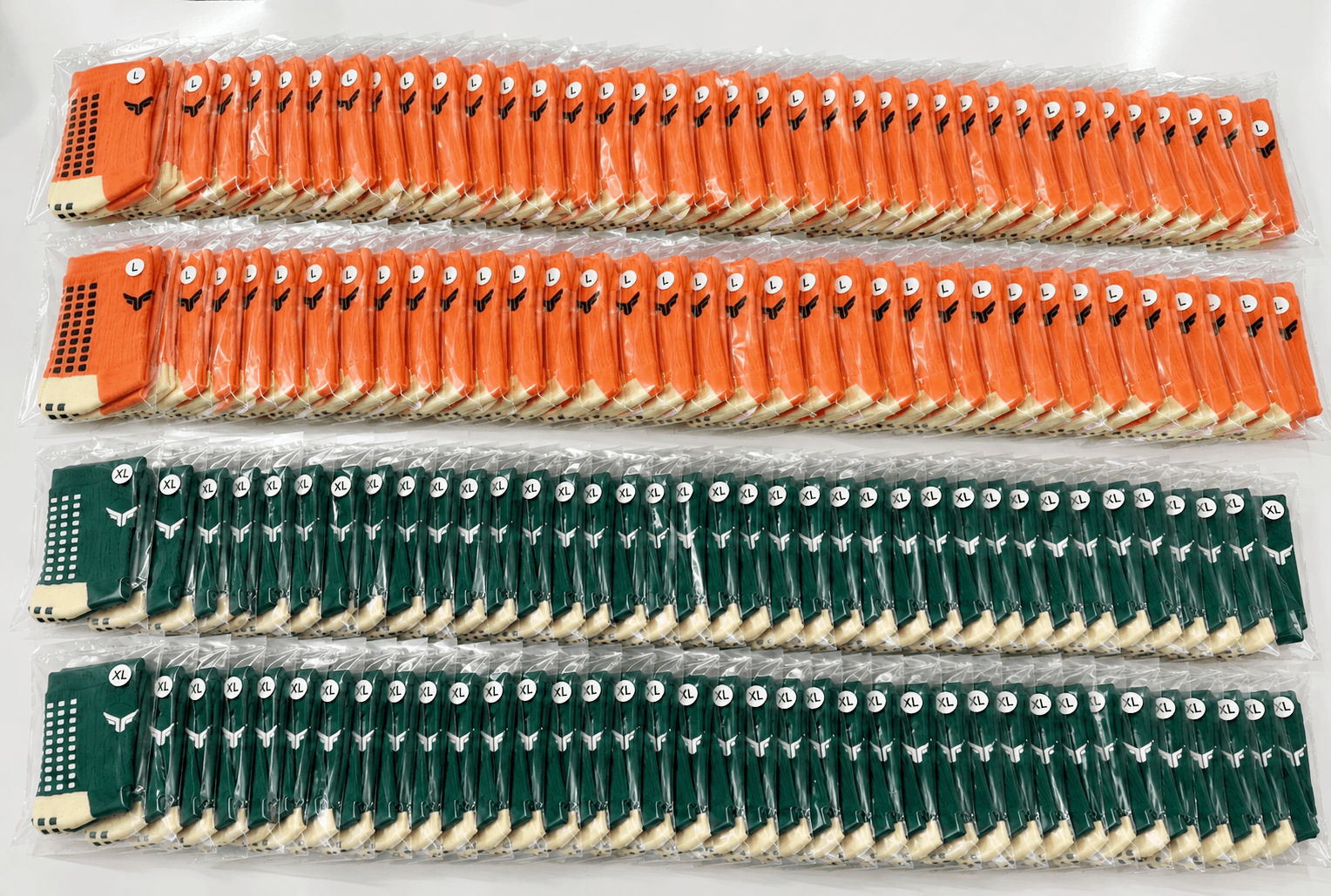
- Launching your first branded sock
- Testing Shopify or Amazon demand
- Selling through a fitness studio or small football academy
- Building a crowdfunding product
- Moving beyond samples into retail sales
A Pilates studio, for example, could start with one black crew grip sock in S/M and M/L, with 50 pairs of each. The first run can answer real questions about size demand, retail price, sell-through and whether the next order should be 200, 300 or 500 pairs.
Option 3
When does a 500-pair MOQ make more sense?
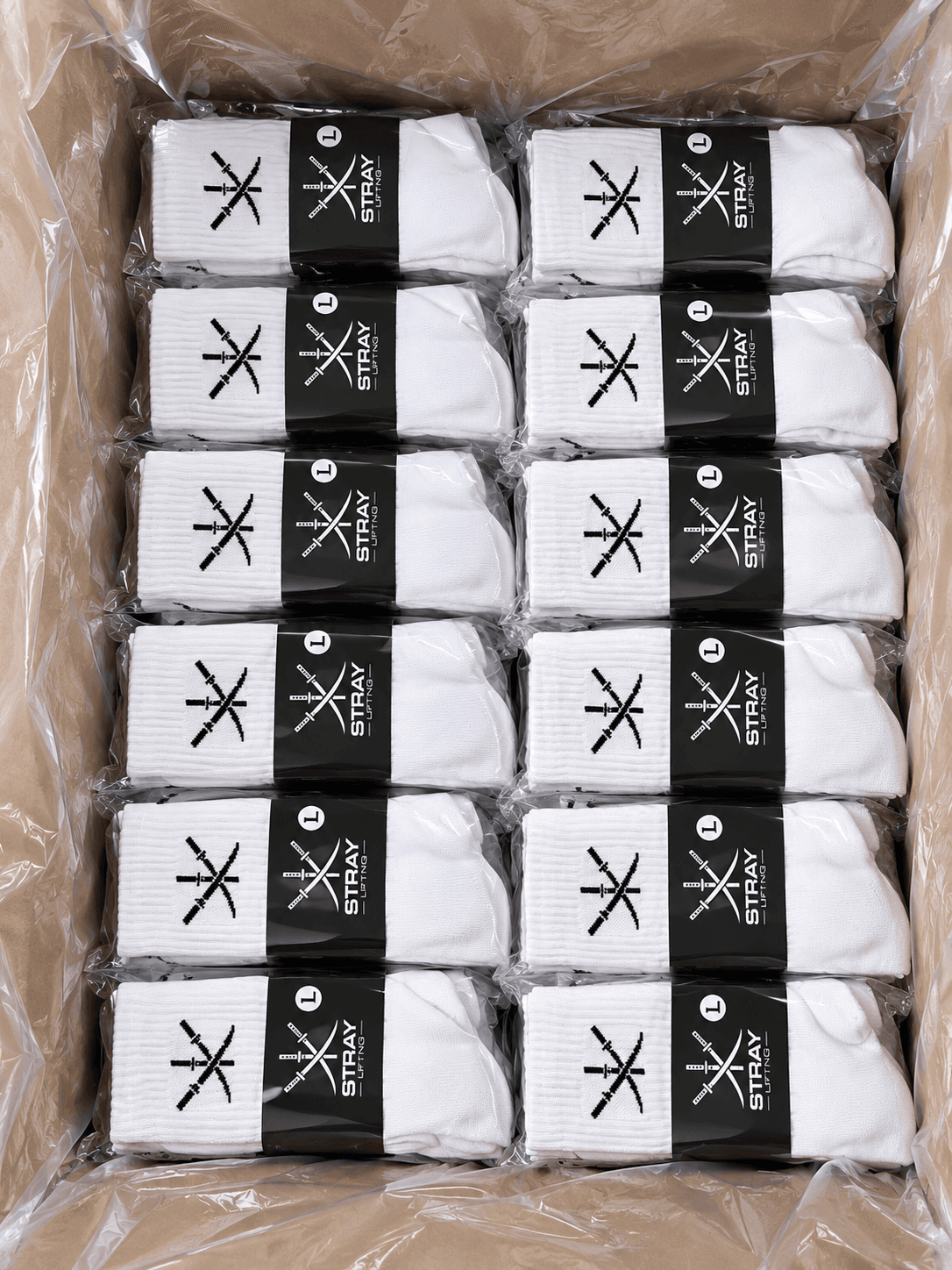
Once you are confident in the product, 500 pairs can change the economics. Setup, material handling, packaging and quality-control costs are usually spread across more units, which can improve landed cost per pair and make retail margin more attractive.
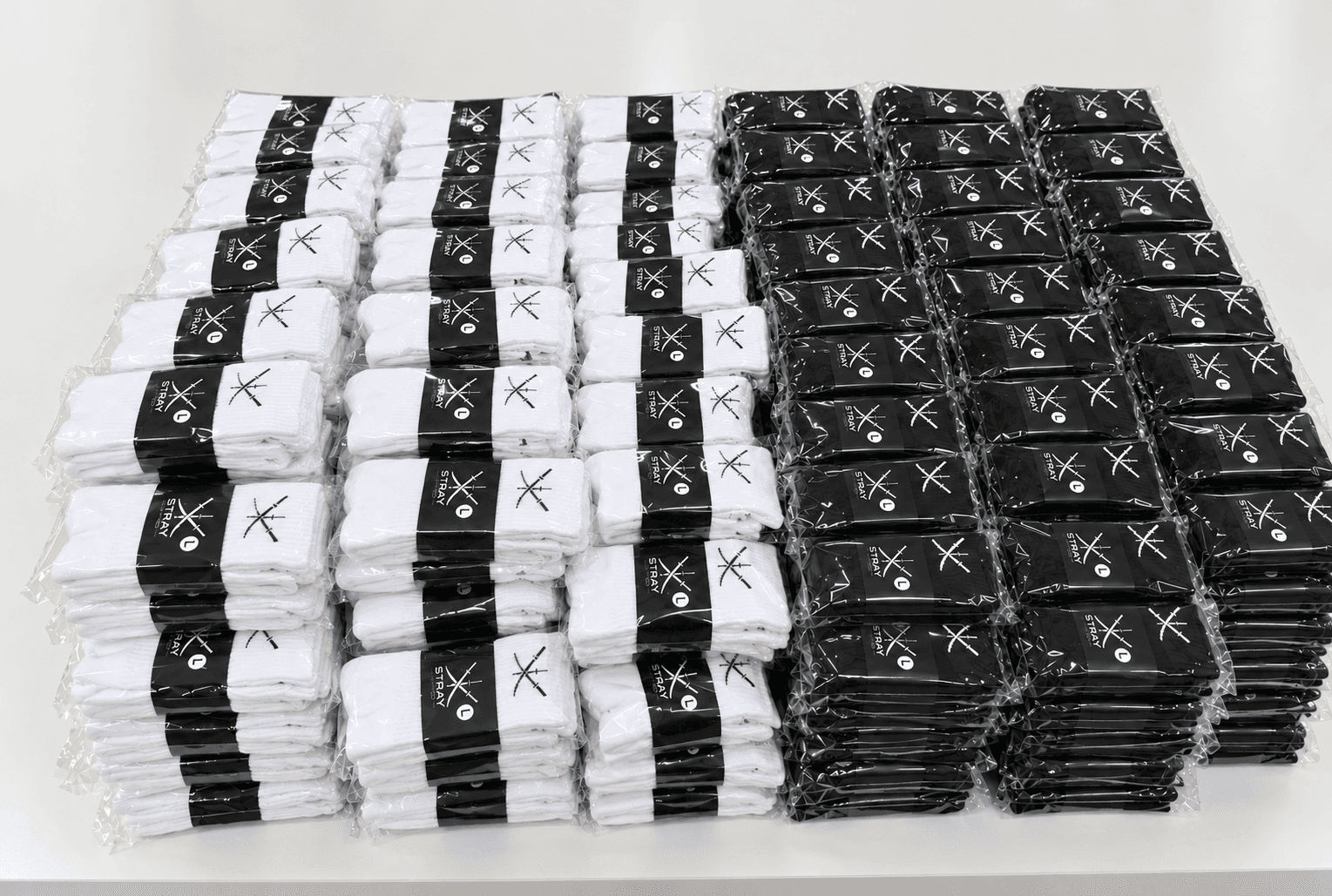
Who should consider 500 pairs?
- Established sock brands, retailers and distributors
- Football clubs, sports academies and studio chains
- Event or corporate merchandise programs
- Brands with proven pre-orders or repeat sales
- Products that have already sold successfully
The key word is proven. A 500-pair order is not automatically cheaper overall because total investment is higher. It can be more efficient per unit, but the product still needs to sell.
Unit economics
Which quantity gives the best profit margin?
Compare landed cost per pair with expected selling price, not only the total order value.
Gross Profit Per Pair = Selling Price − Landed Cost Per Pair
Gross Margin % = Gross Profit ÷ Selling Price × 100
The lowest unit price is not always the best decision. A theoretical 70% gross margin is not attractive if hundreds of pairs sit unsold for two years. Balance unit cost, inventory risk, demand confidence, cash flow and expected sell-through.
The hidden problem: too many designs at a low MOQ
Four colors, three designs and three sizes create 36 SKUs. Divide a total order of 500 pairs by 36 and you have approximately 14 pairs per SKU. Some sizes may sell out immediately while other combinations barely move.
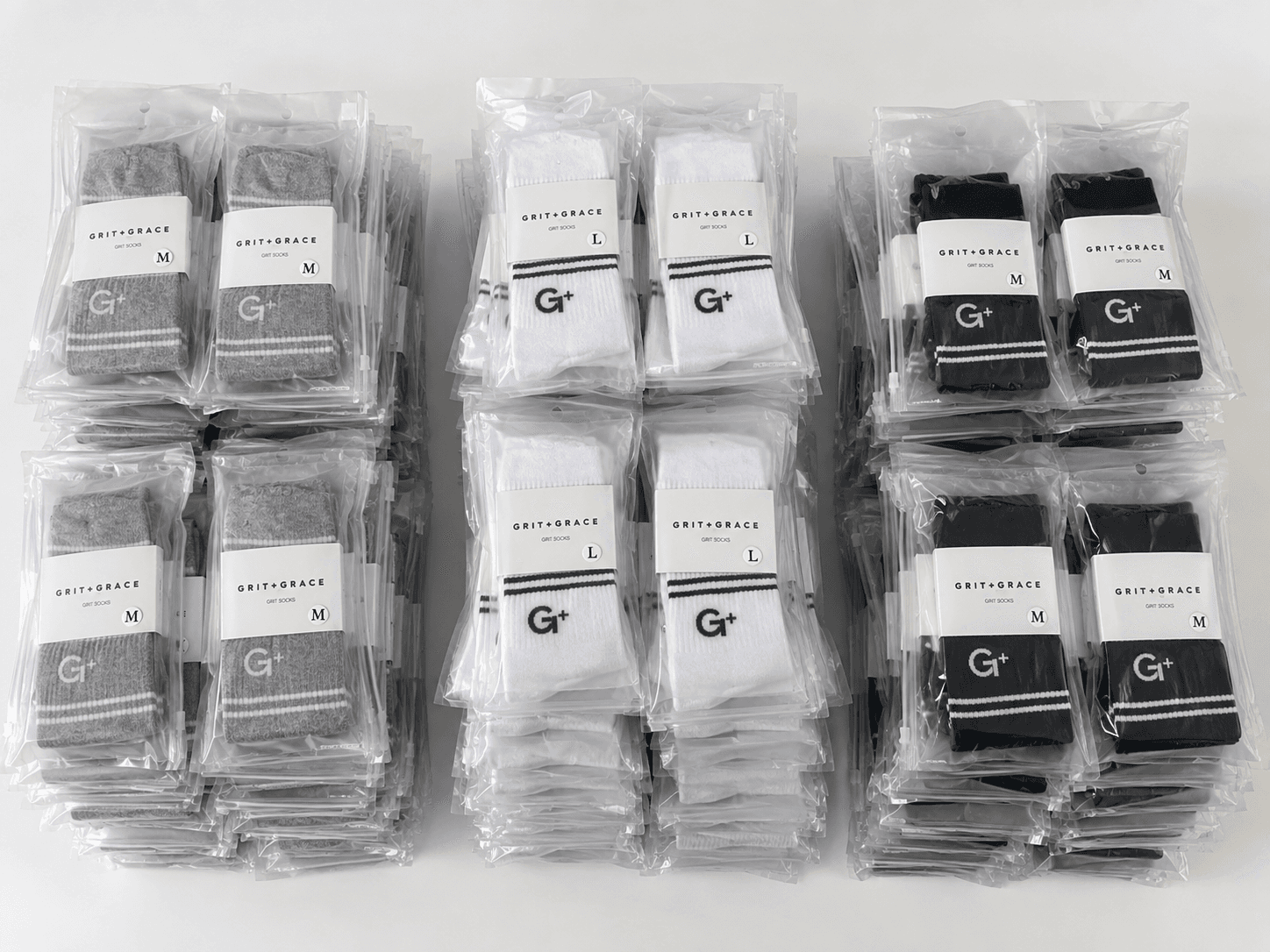
For a new brand, start with one or two designs, one or two core colors and essential sizes. Use real sales data to decide which combinations deserve expansion.
Does a higher custom socks MOQ mean better quality?
Not necessarily. MOQ and quality are different things. A factory may require a quantity because of machine efficiency, yarn sourcing, dyeing requirements, packaging minimums, production scheduling or setup costs. Evaluate a manufacturer using sample quality, yarn selection, fit consistency, logo execution, knitting quality, cushioning, compression, grip performance, inspection and repeat-production consistency.
Also keep sample quantity separate from bulk MOQ. A supplier may make one or several samples for development while requiring a higher quantity for commercial production. The sample lets you review construction, sizing, yarn, color, logo, grip and packaging before the product moves to bulk manufacturing.
Custom socks MOQ, packaging and shipping
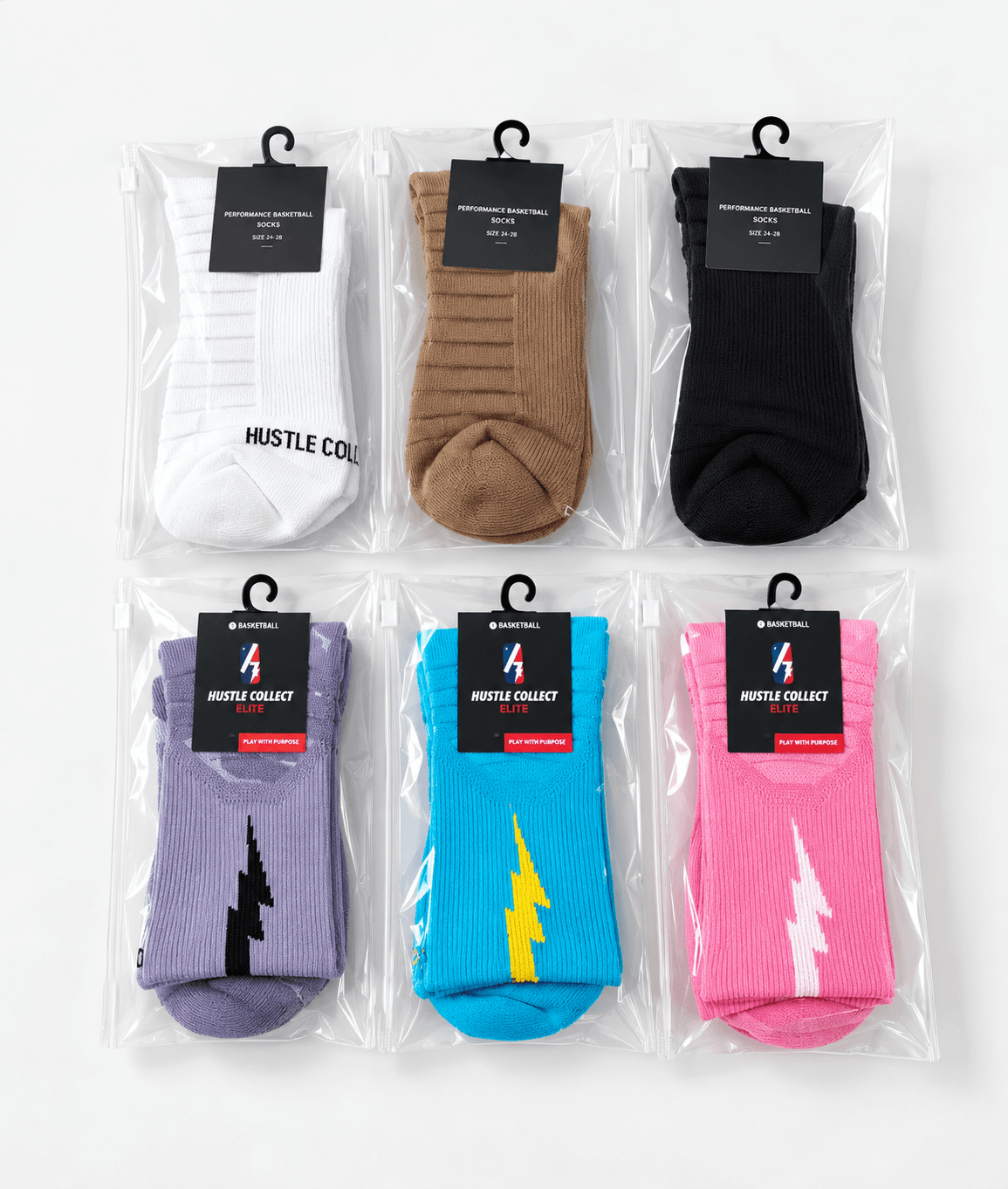
Packaging can change MOQ economics more than many new brands expect. Printed header cards, paper bands, hang tags, barcode labels, custom poly bags and retail boxes can each have their own production minimums. Discuss packaging before you confirm the final sock quantity.
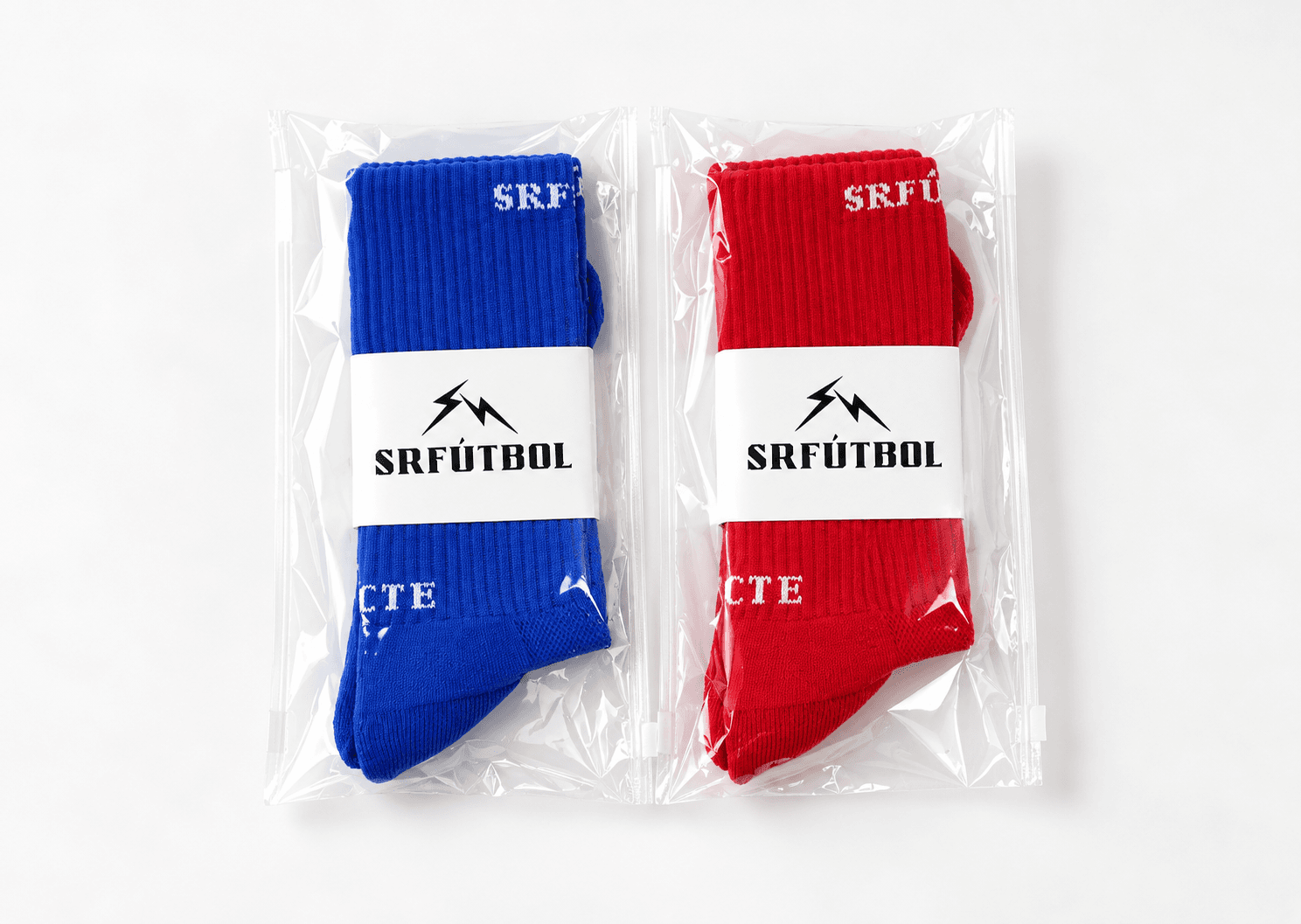
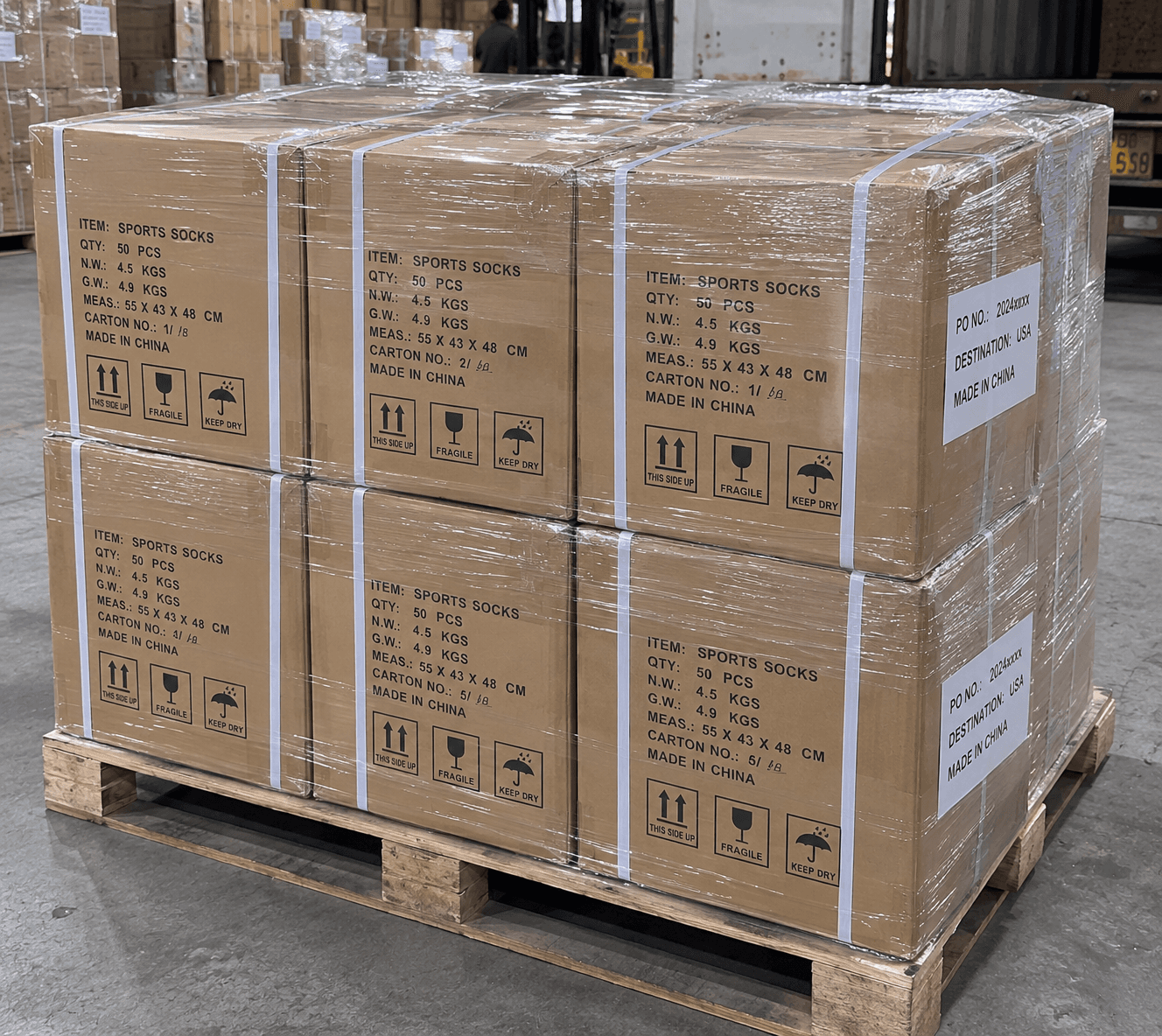
For a lower-volume launch, standard packaging with a custom sticker, simple paper band or small-batch label may offer more flexibility. Freight is also part of the decision: a very small order can have a surprisingly high shipping cost per pair. Compare total landed cost, including product, sampling, packaging, shipping, duties, taxes and local delivery.
Decision framework
How much should your first custom sock order be?
Choose around 50 pairs if
- You are validating an idea
- You have almost no sales history
- You want minimal inventory exposure
- Unit cost matters less than risk reduction
Validation inventory
Choose around 100 pairs if
- You are ready for a real first launch
- You have a small audience, studio, club or community
- You need limited size options
- You want a risk–economics balance
Launch inventory
Choose around 500 pairs if
- You have customers or pre-orders
- Your first order sold successfully
- You know your best-selling designs
- You expect repeat sales
Scaling inventory
50 vs 100 vs 500 pairs: final decision table
| Question | 50 pairs | 100 pairs | 500 pairs |
|---|---|---|---|
| Inventory risk | Lowest | Low–moderate | Higher |
| Upfront investment | Lowest | Moderate | Higher |
| Cost per pair | Usually highest | Better | Usually more efficient |
| SKU flexibility | Limited | Moderate | Better |
| Best for market testing | Excellent | Excellent | Less suitable |
| Best for commercial launch | Limited | Strong | Strong |
| Best for established demand | Weak | Moderate | Strong |
| Best for scaling | Weak | Moderate | Strong |
The right quantity is not necessarily the largest quantity you can afford. It is the quantity that matches your current level of demand confidence.
Ask for a clearer quote, not only the lowest MOQ
A better supplier conversation is: “We are launching a custom sports sock brand. Our first order may be between 100 and 500 pairs. Could you quote different quantity levels and explain how the unit cost changes?”
- Sock type, logo, artwork and reference images
- Quantities at 100, 300 and 500 pairs
- Size range and expected split
- Material and performance requirements
- Packaging options and target delivery date
FAQ
Frequently asked questions about custom socks MOQ
What is the minimum order quantity for custom socks?
There is no universal custom socks MOQ. It depends on the manufacturer, sock construction, design, color count, sizes, materials, grip requirements and packaging. Confirm whether the stated MOQ applies per design, per color or to the total order.
Can I order only 50 pairs of custom socks?
Some suppliers support very small production runs, while others do not. Fifty pairs is generally more suitable for testing, small teams, events or early product validation. Complex custom products may require higher quantities.
Is 100 pairs enough to start a sock brand?
For a focused first launch, 100 pairs can be practical when you limit designs, colors and sizes. It gives you enough stock to collect real sales data without committing to excessive inventory.
Is 500 pairs cheaper per pair than 100 pairs?
In many manufacturing situations, larger quantities improve production efficiency because setup and other fixed costs are distributed across more units. Actual pricing still depends on the product specification, materials, packaging and supplier.
Does custom packaging have a separate MOQ?
It can. Printed cards, boxes, labels and other packaging components may have their own supplier minimums, so packaging should be discussed at the quotation stage.
Plan with the right quantity
Choose a custom socks MOQ that fits your business stage.
Share your logo or artwork, sock reference, quantity, size range, target market, packaging needs and delivery destination. PeakMotion can help you compare the production route before you commit to an order.