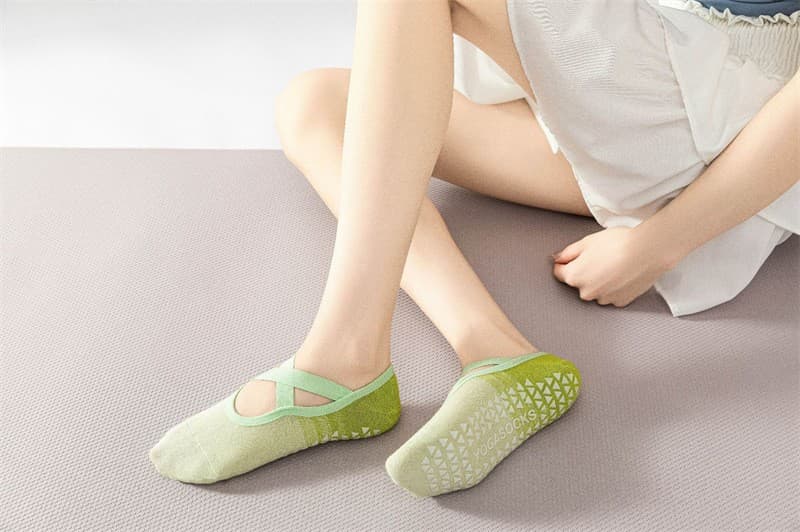
Why studios sell grip socks
A product connected directly to the class experience
Unlike unrelated merchandise, Pilates studio socks can be used during the class itself. Customers understand what they are, why they need them and when a replacement pair may be useful.
- ✓Front-desk retail
- ✓Class requirements
- ✓New-member welcome packs
- ✓Membership benefits
- ✓Instructor merchandise
- ✓Seasonal collections
- ✓Events and promotions
- ✓Online sales
The product is functional, visible, compact and relatively easy for members to repurchase.
Section 01
Retail Resale: Turn Grip Socks Into a Studio Product
Grip socks are directly connected to Pilates classes. A member who forgets their socks may need a pair immediately, while an existing customer may buy additional colors or replace worn pairs.
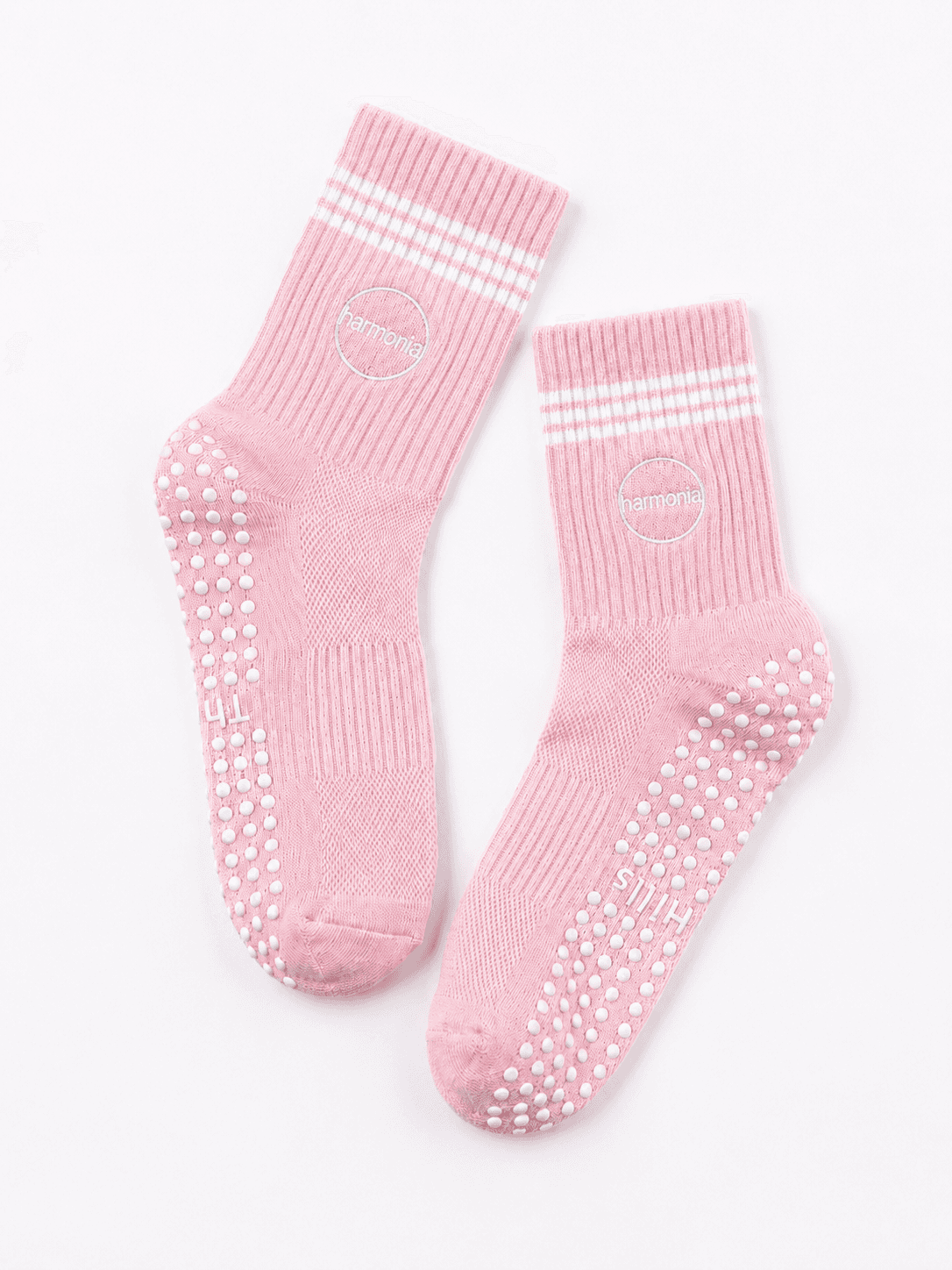
A strong retail product combines attractive design, comfortable fit, reliable grip, clear sizing and professional packaging. It should look like something a customer would willingly buy—not simply a promotional giveaway.
Entry-Level Retail
- ✓One or two colors
- ✓Standard grip
- ✓Basic branding
- ✓Simple packaging
Premium Studio Merchandise
- ✓Custom colors
- ✓Custom grip patterns
- ✓Stronger packaging
- ✓Coordinated brand presentation
Section 02
Welcome Packs: Create a Better First-Member Experience
A new-member pack can combine branded grip socks with studio information, a class schedule, a discount card and a small branded accessory. The socks are practical, immediately usable, compact and visible during classes.
Keep the first welcome-pack product simple: one studio color, one logo placement, one standard grip design, limited sizes and straightforward branded packaging. This controls cost while creating a professional introduction.
Section 03
Member Merchandise: Build More Than a Logo Product
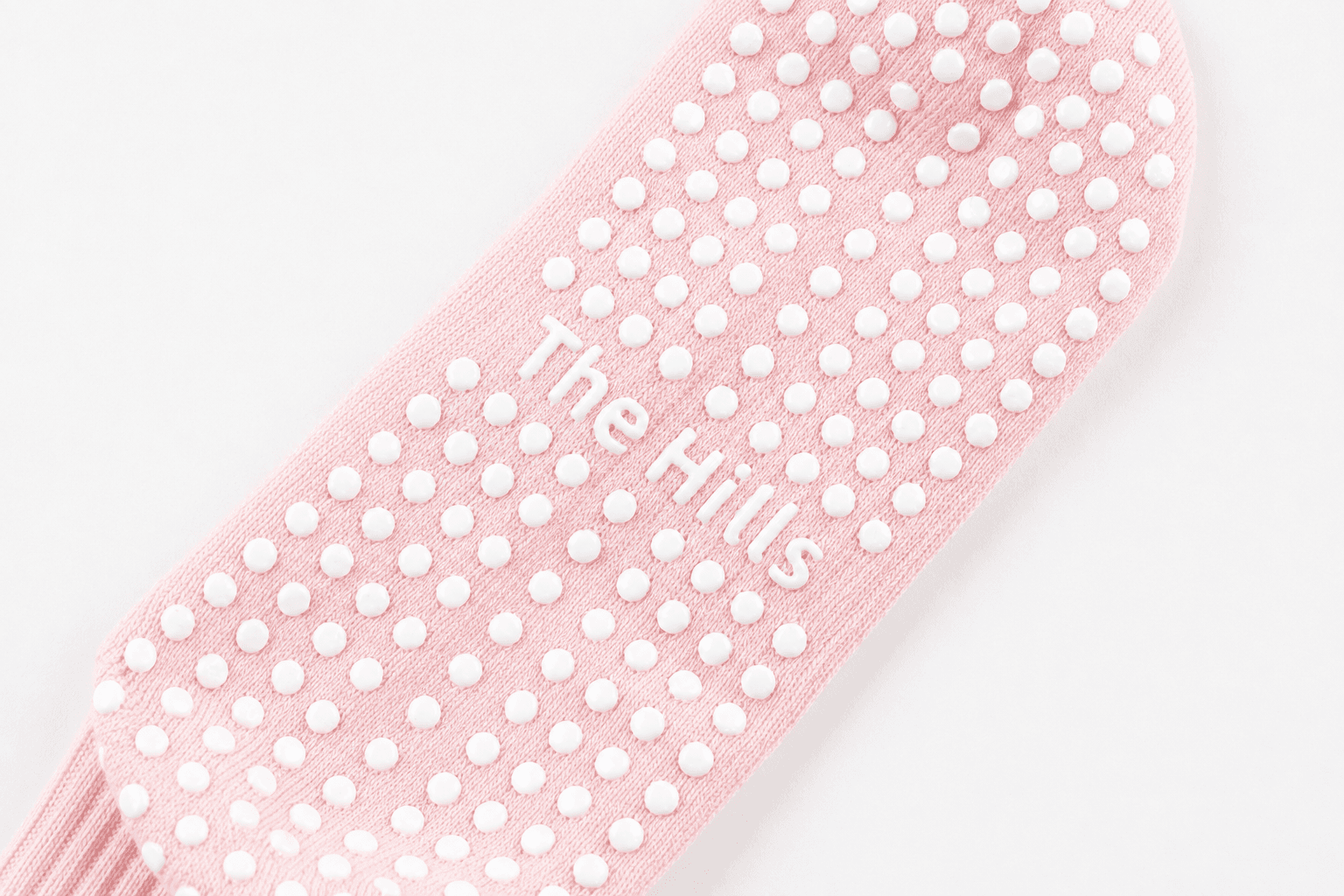
The strongest Pilates studio socks feel like part of the studio brand, not generic socks with a logo added later. Coordinate studio colors, typography, logo placement, grip pattern, sock structure and packaging.
A minimalist studio may prefer neutrals, subtle logos and geometric grip. A more energetic fitness brand may use brighter colors, stronger contrast and more expressive grip patterns.
Section 04
Branding: Decide Where the Studio Logo Should Go
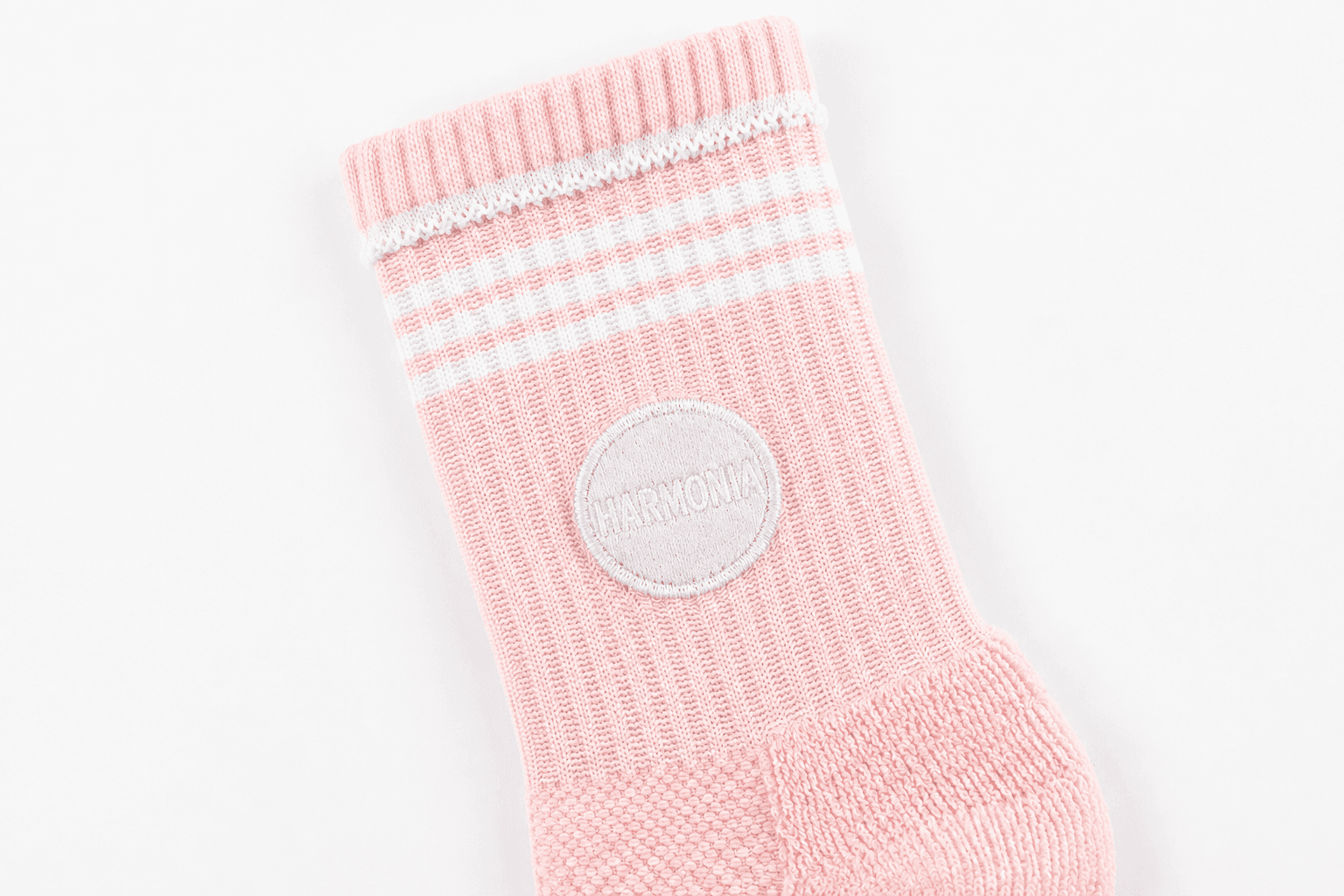
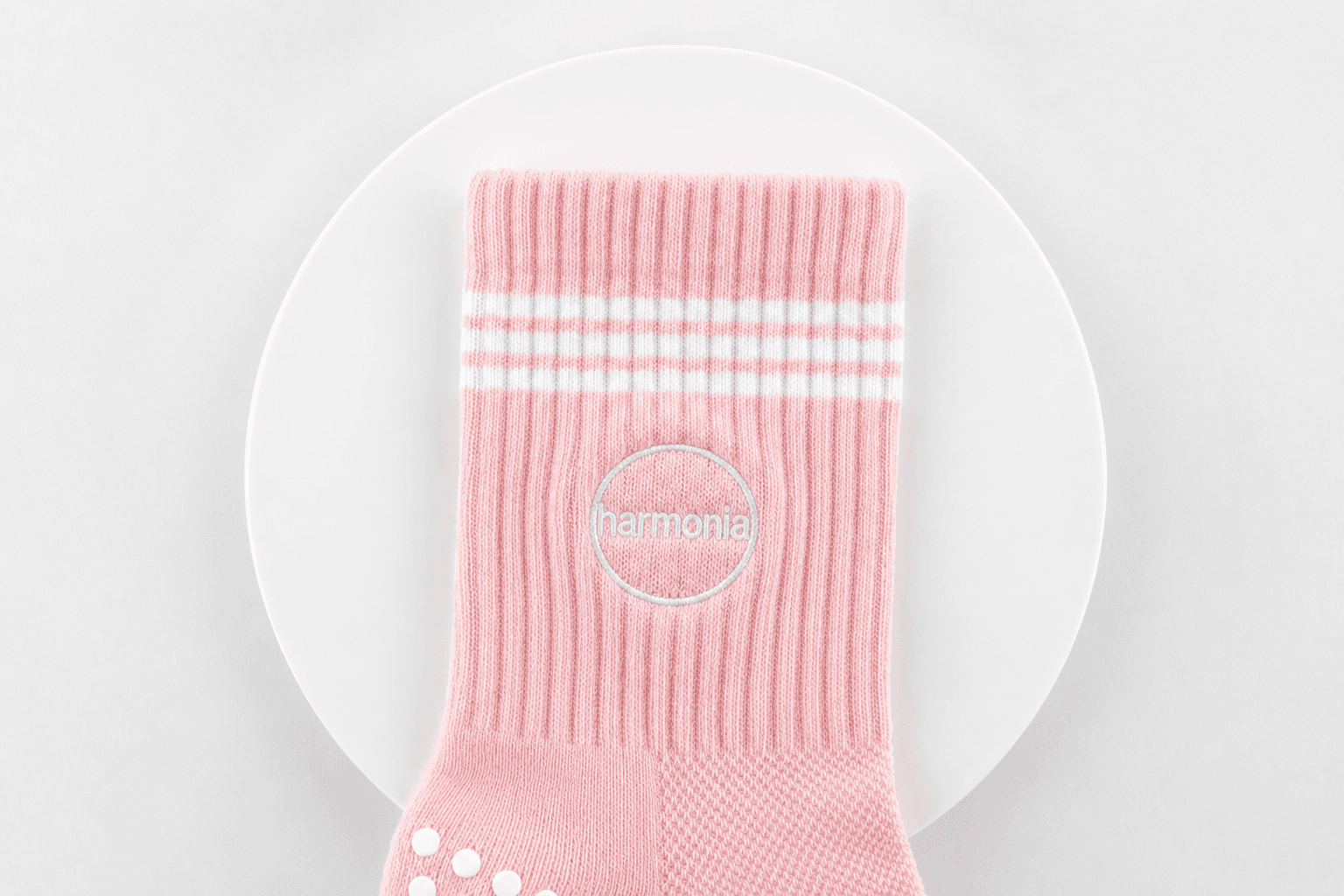
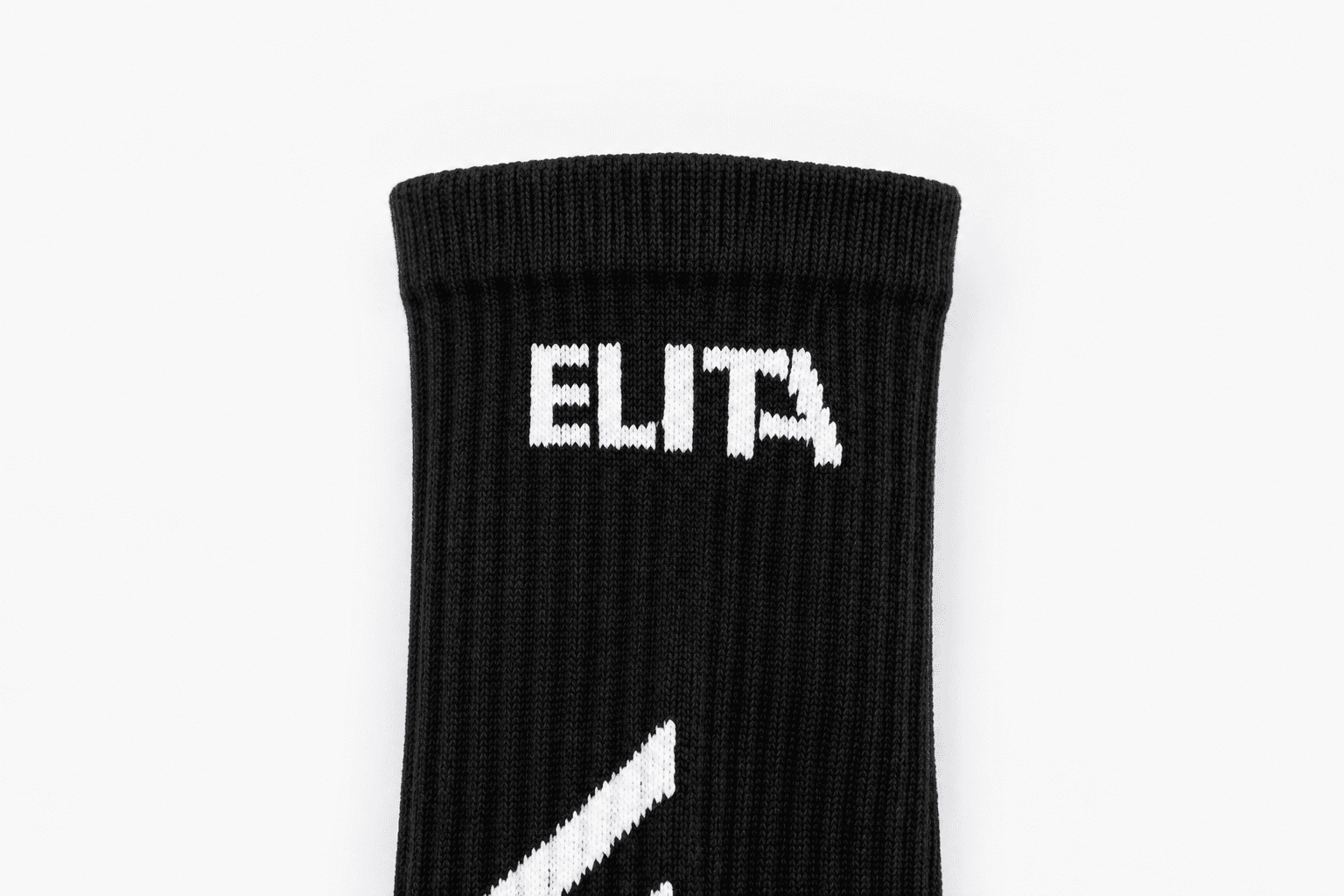
Cuff logo
Top-of-foot logo
Heel or side logo
Sole branding
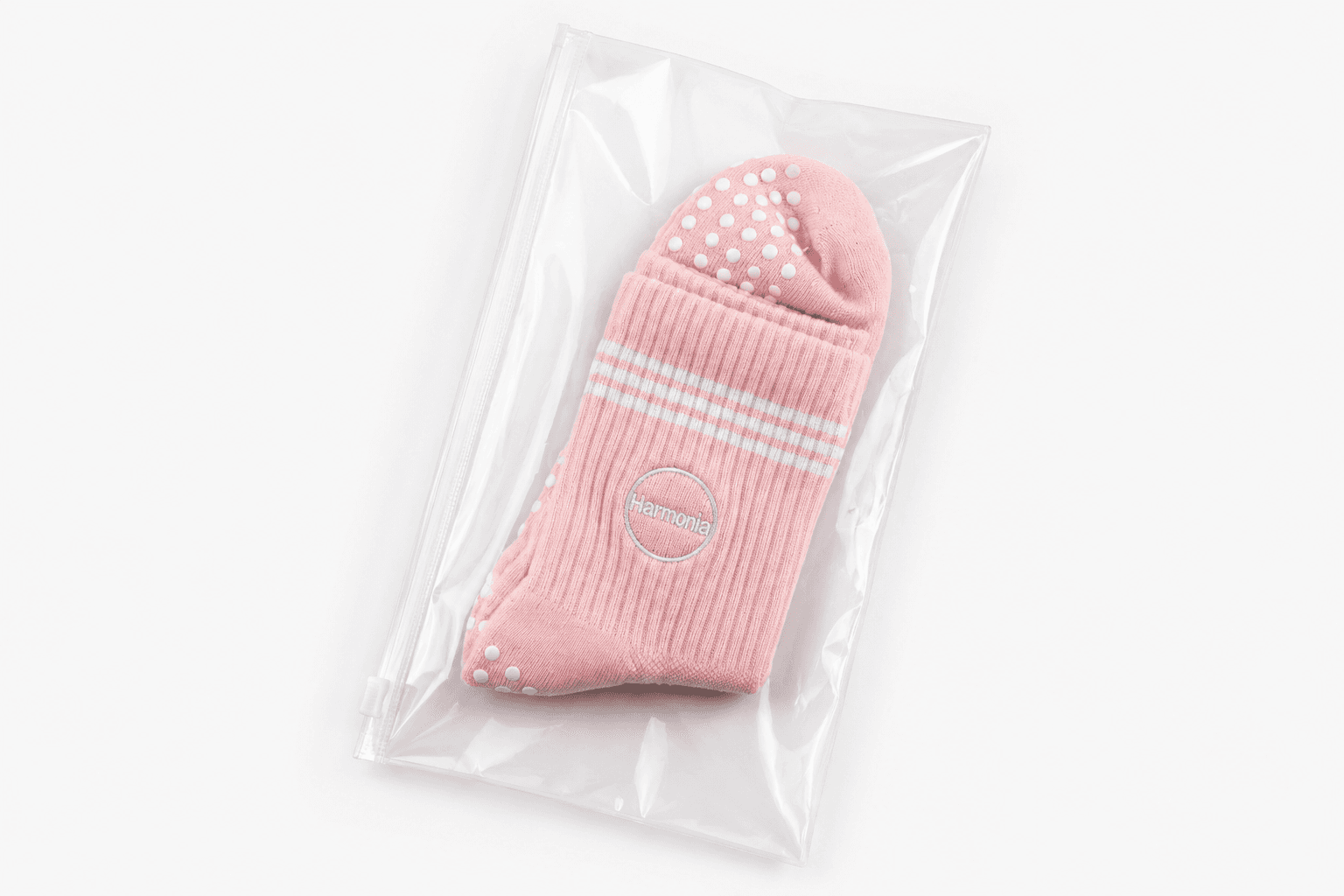
Packaging can carry the logo, studio colors, website, social media, care instructions and product information even when the sock branding is deliberately subtle.
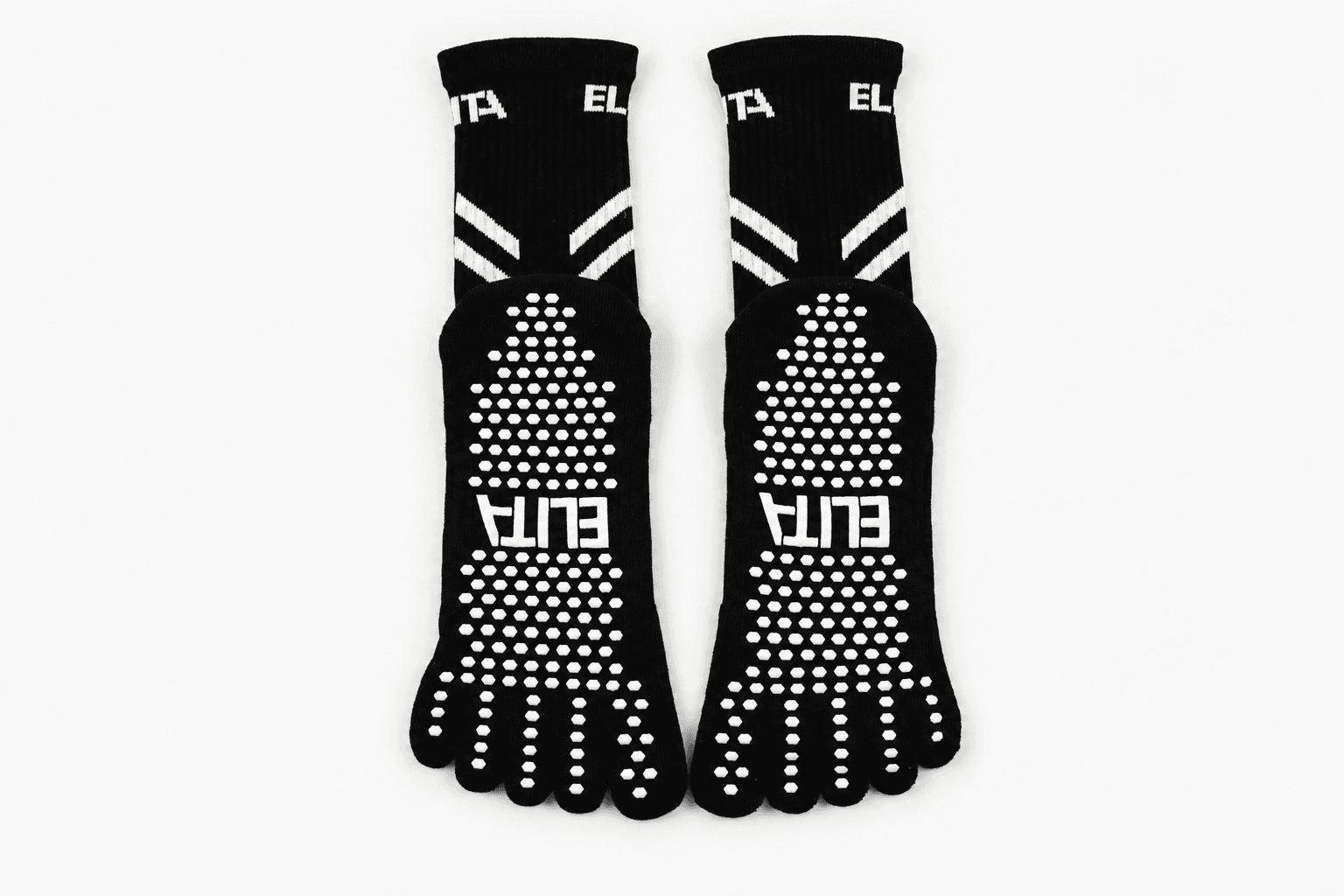
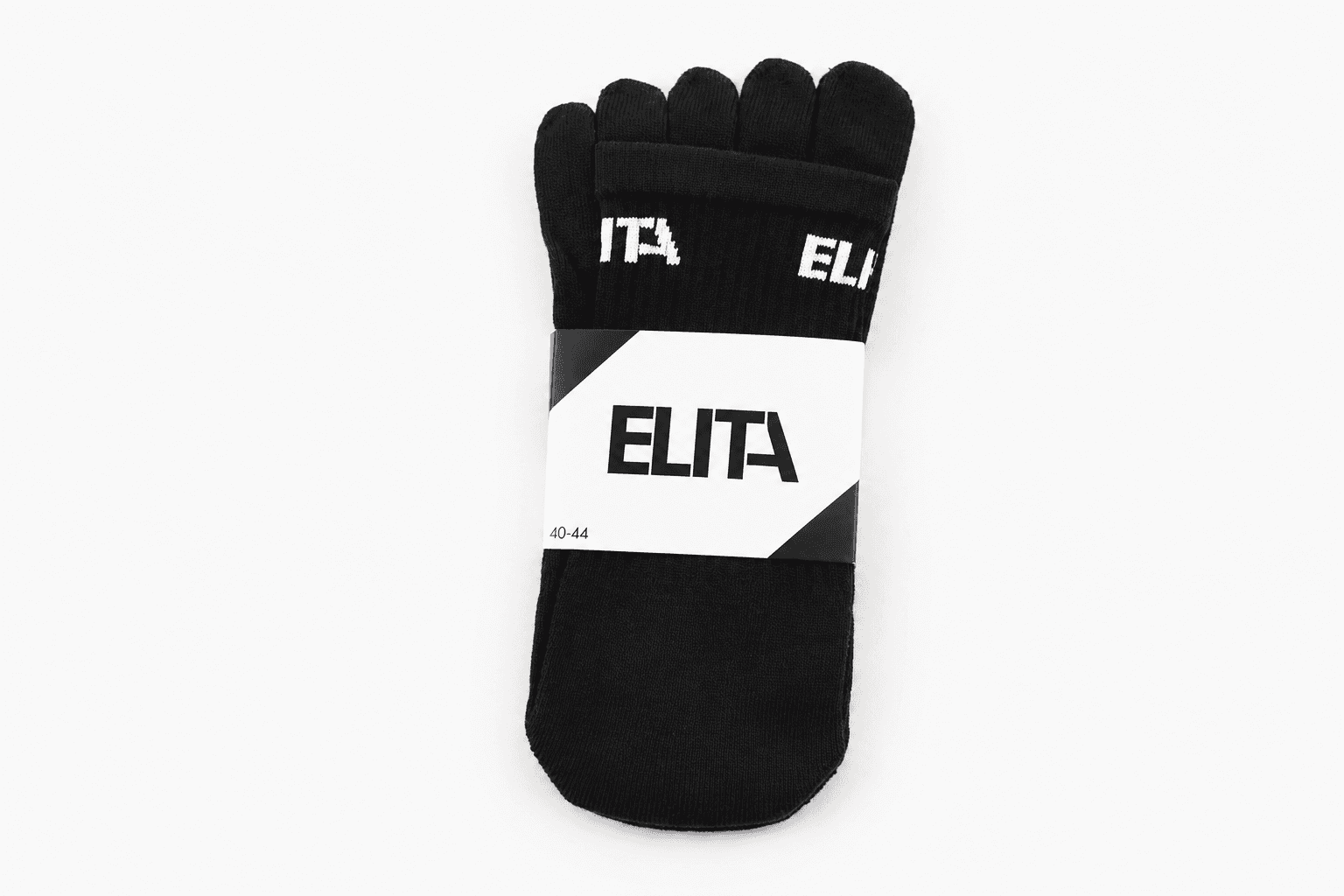
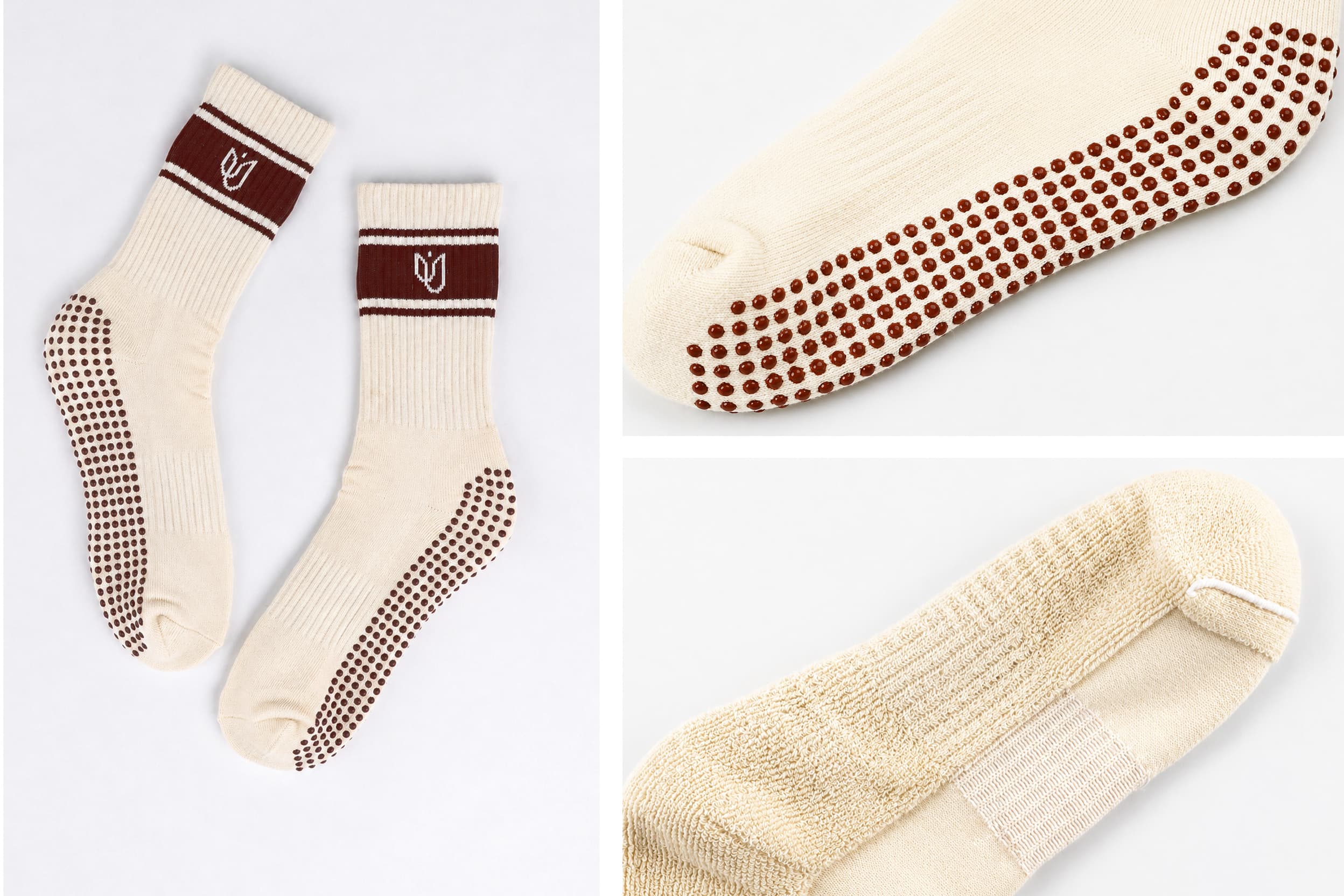
Branded Pilates Studio Grip Socks
These product details show how cuff branding, sole branding and retail packaging can be coordinated within one studio program.
Section 05
Choose the Right Grip Coverage
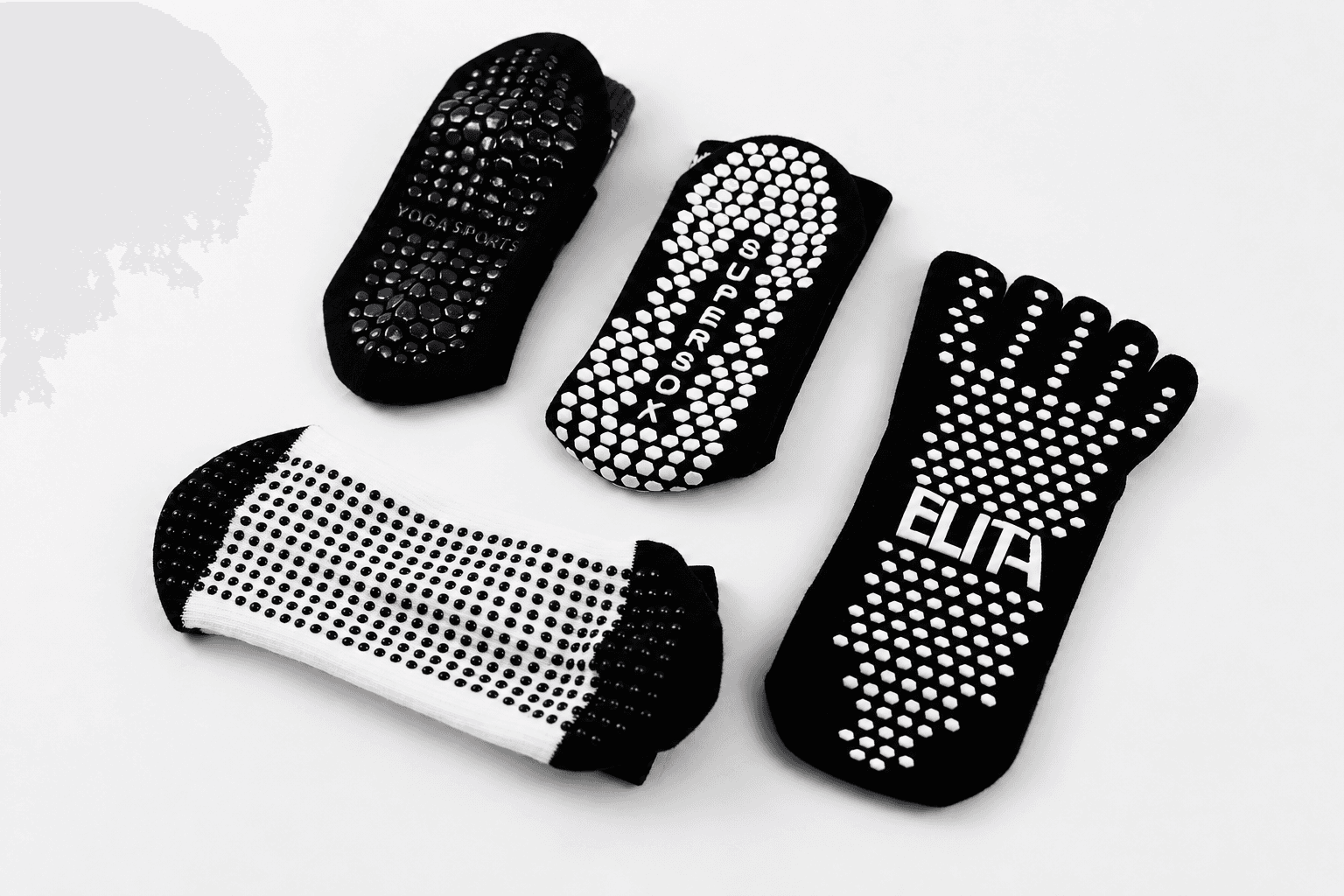
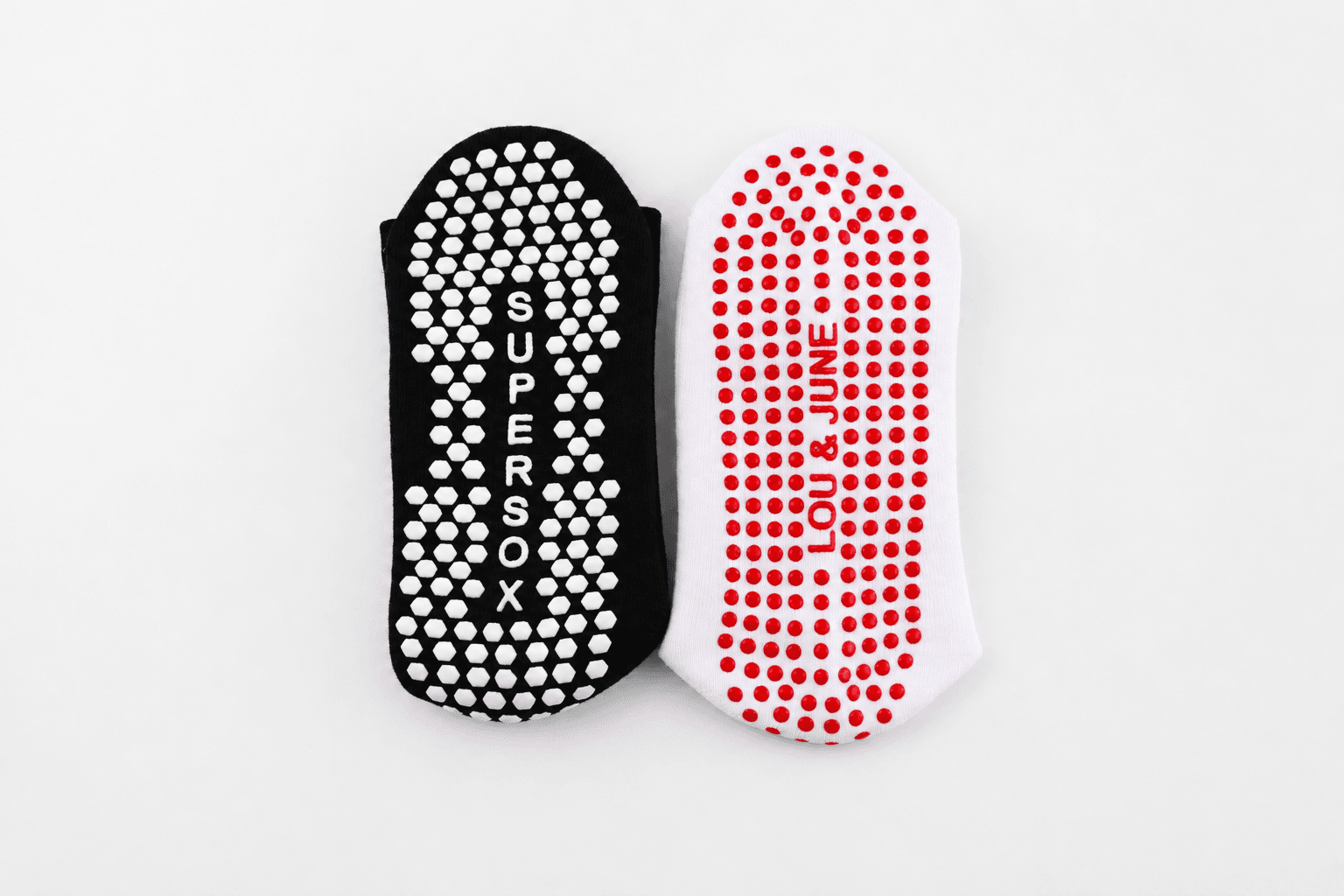
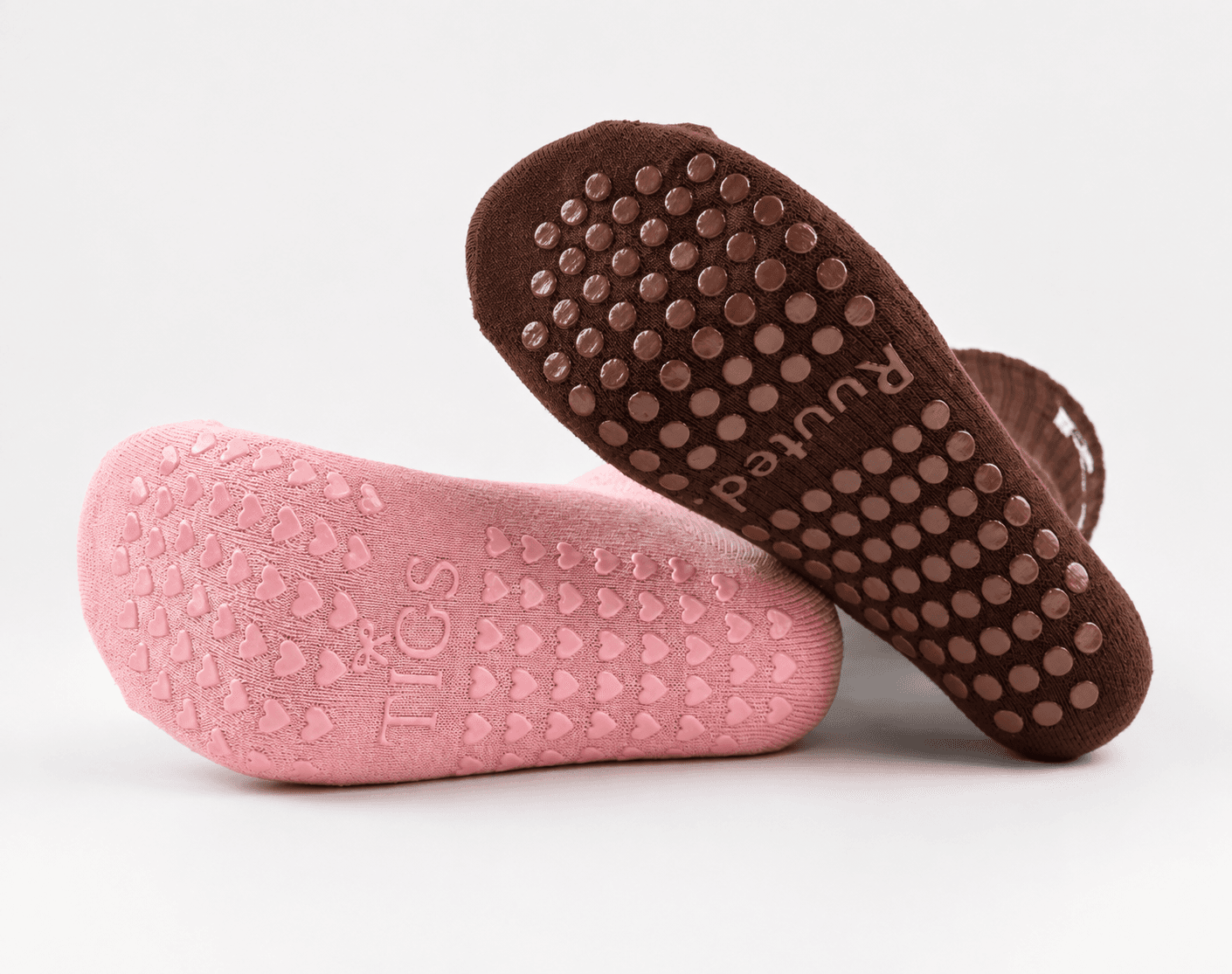
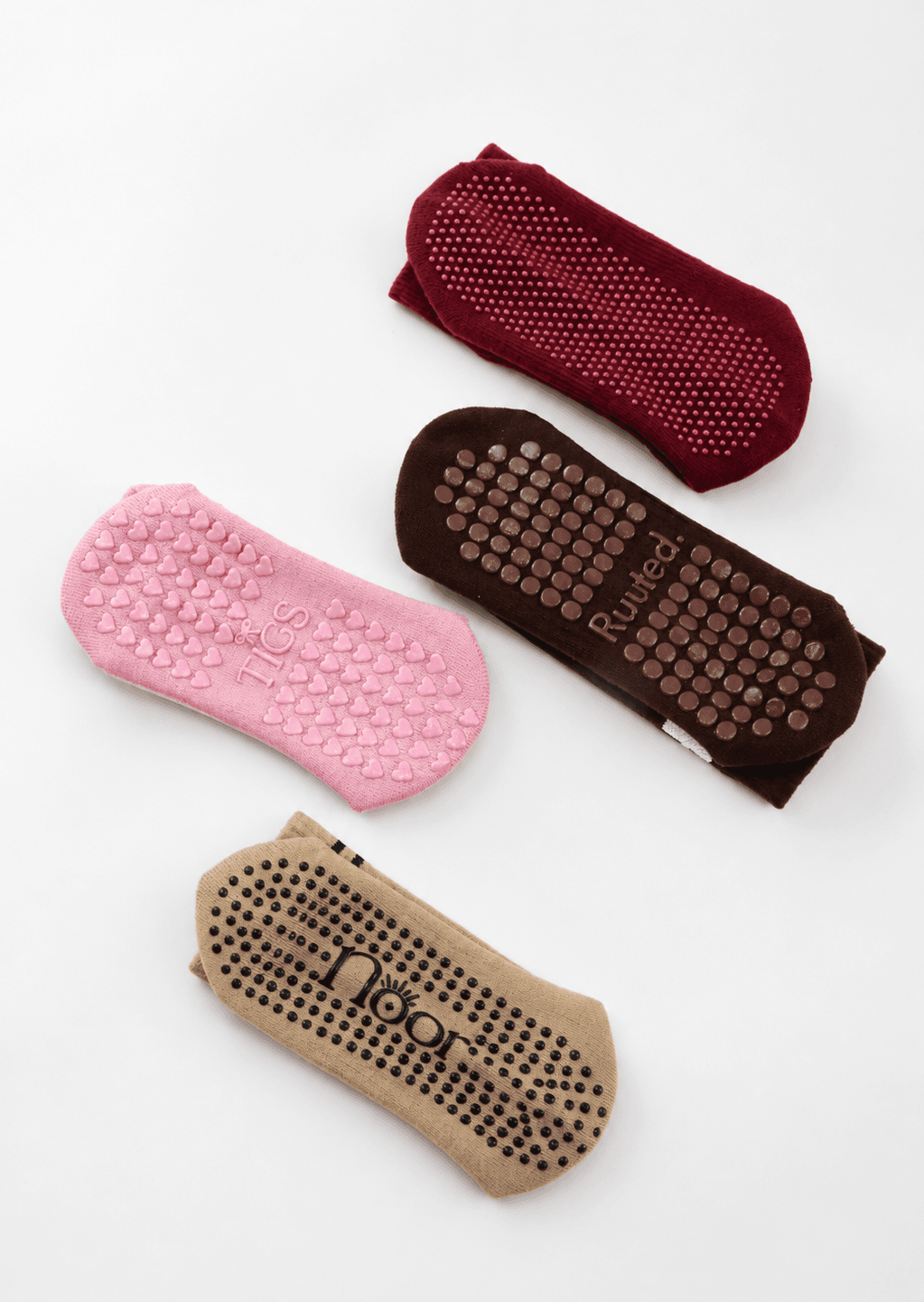
Grip may cover the forefoot, heel, full sole or targeted contact zones. The layout should support stability, comfort, natural movement and durability on reformers, mats and studio floors.
More grip is not automatically better. Ask for real sole examples and review grip density, pattern consistency, heel coverage, forefoot coverage, spacing and flexibility.
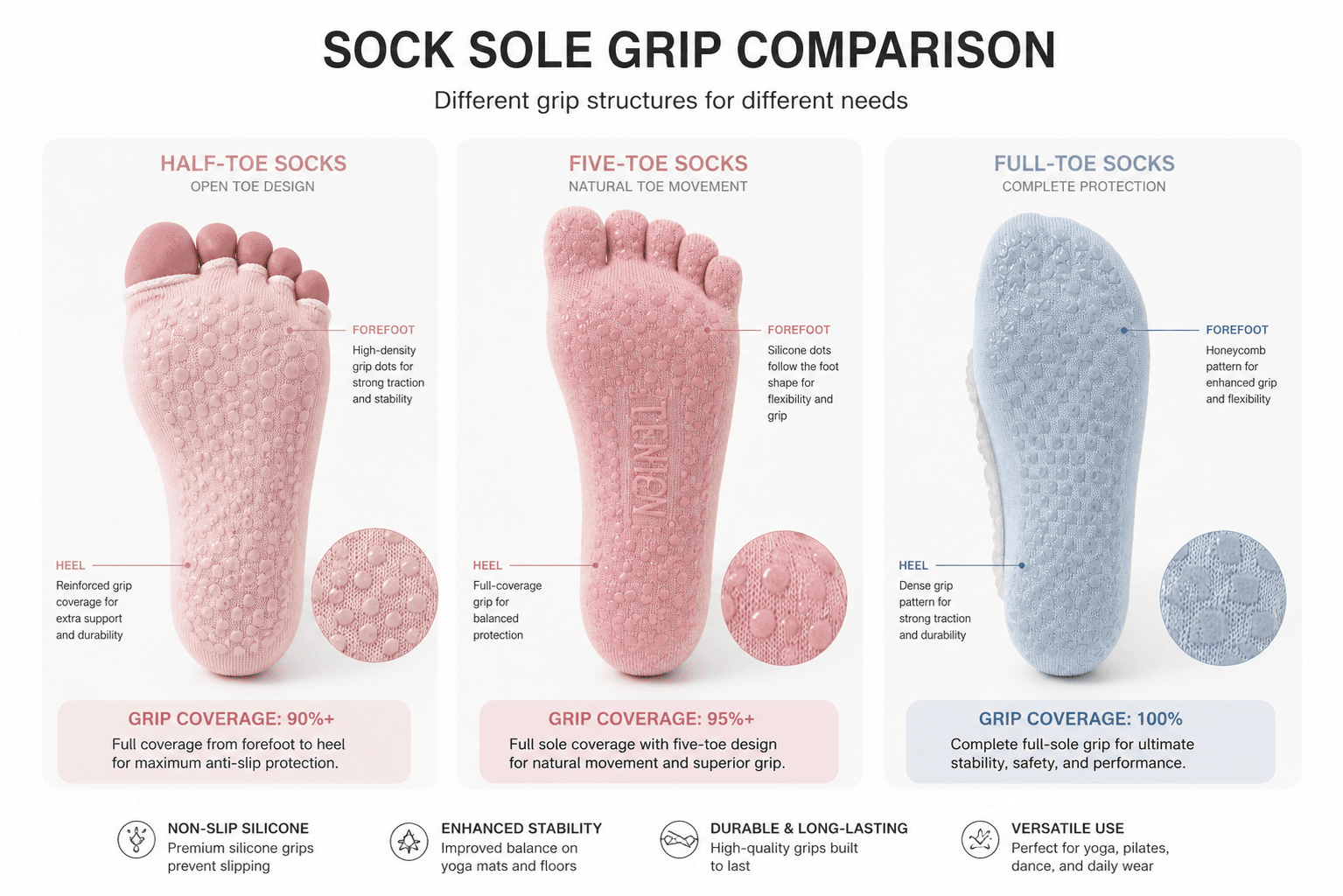
Real Grip Pattern Options
Compare grip density, spacing, motifs and logo-led layouts before selecting the sample direction.
Section 06
Select the Sock Structure for Your Customer
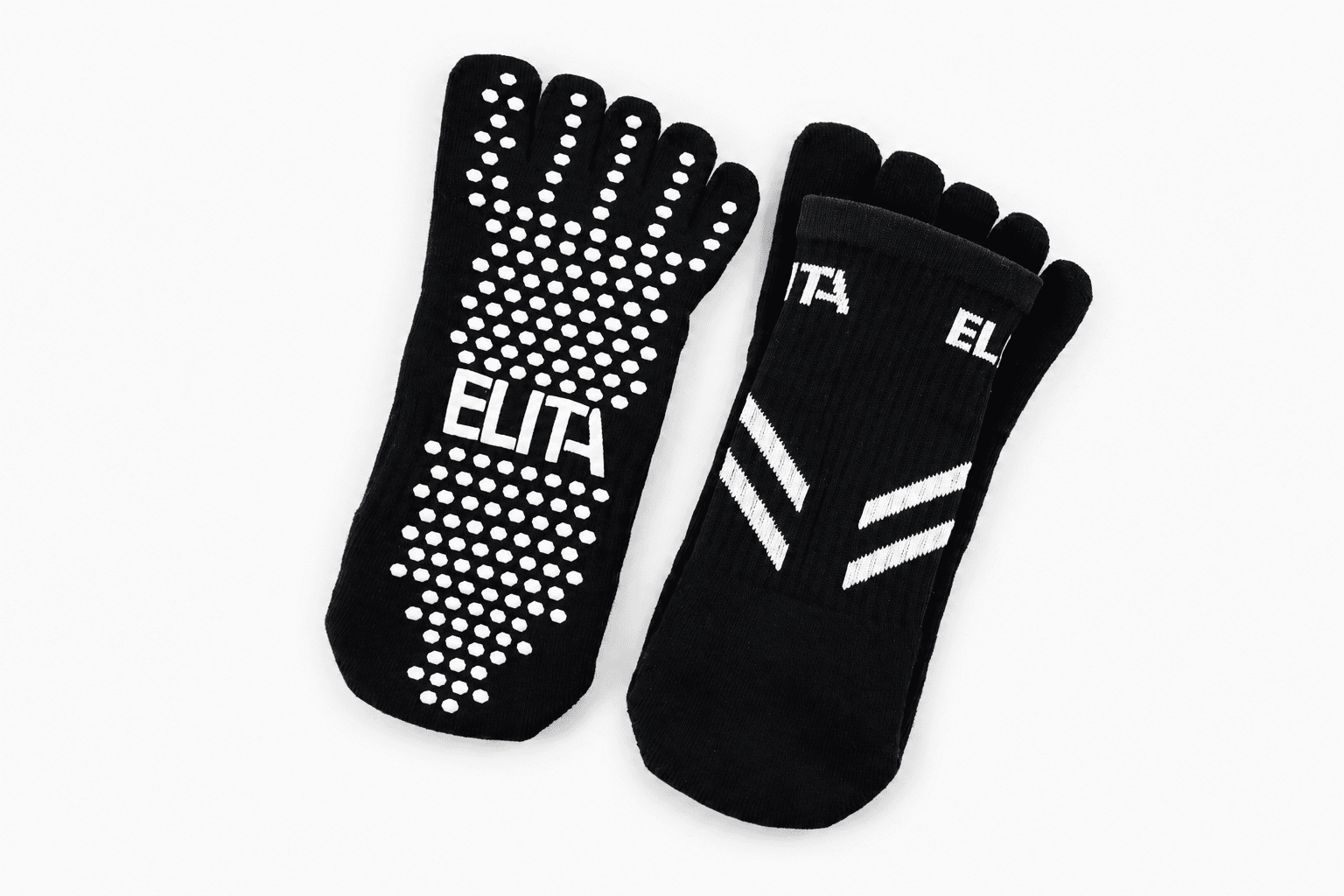
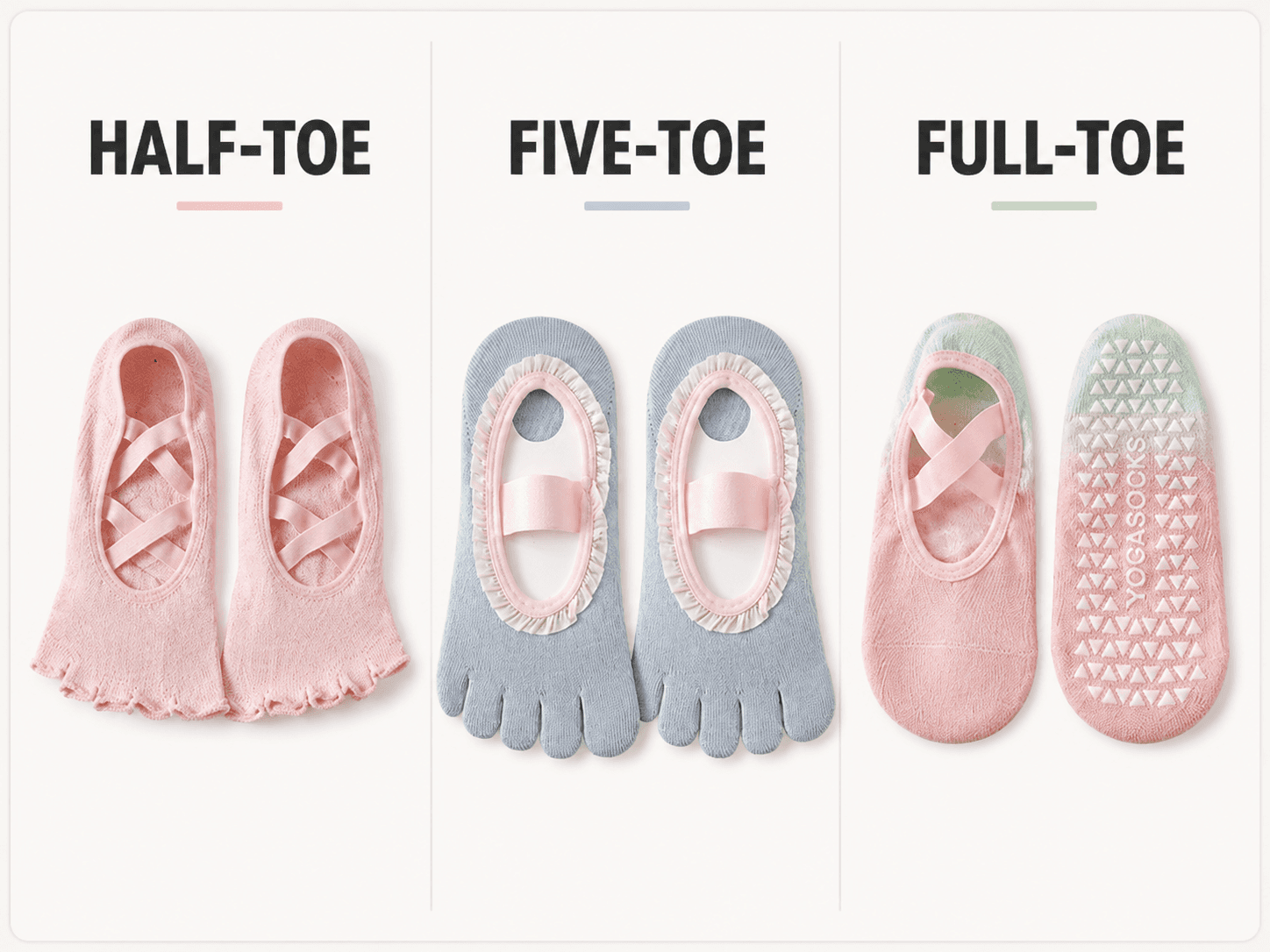
Common structures include full-toe, five-toe, half-toe, low-cut, ankle, ballet and cross-strap styles. Each appeals to a different customer preference.
Full-toe
Five-toe
Half-toe
Section 07
Choose Fabric Based on Comfort and Positioning
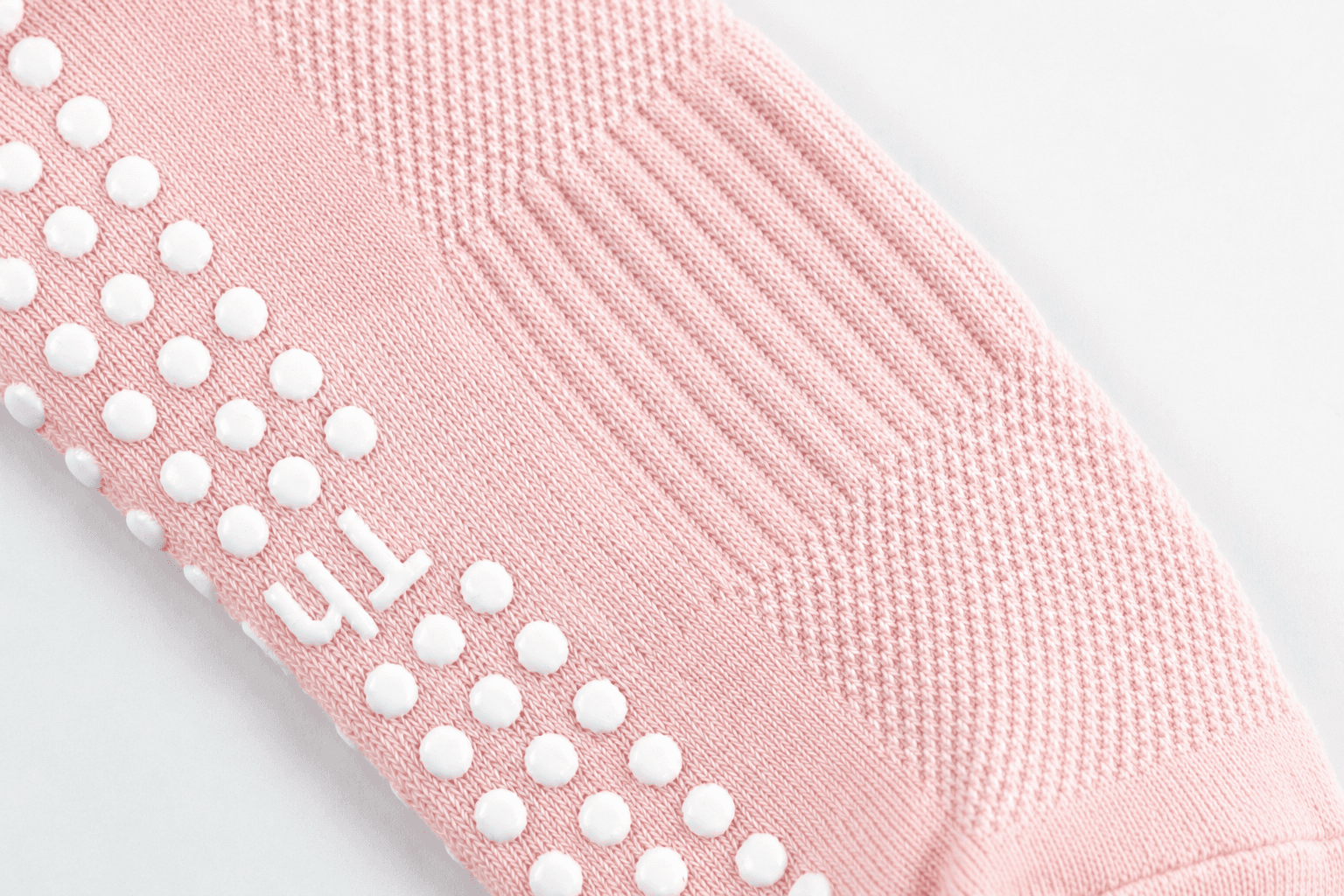
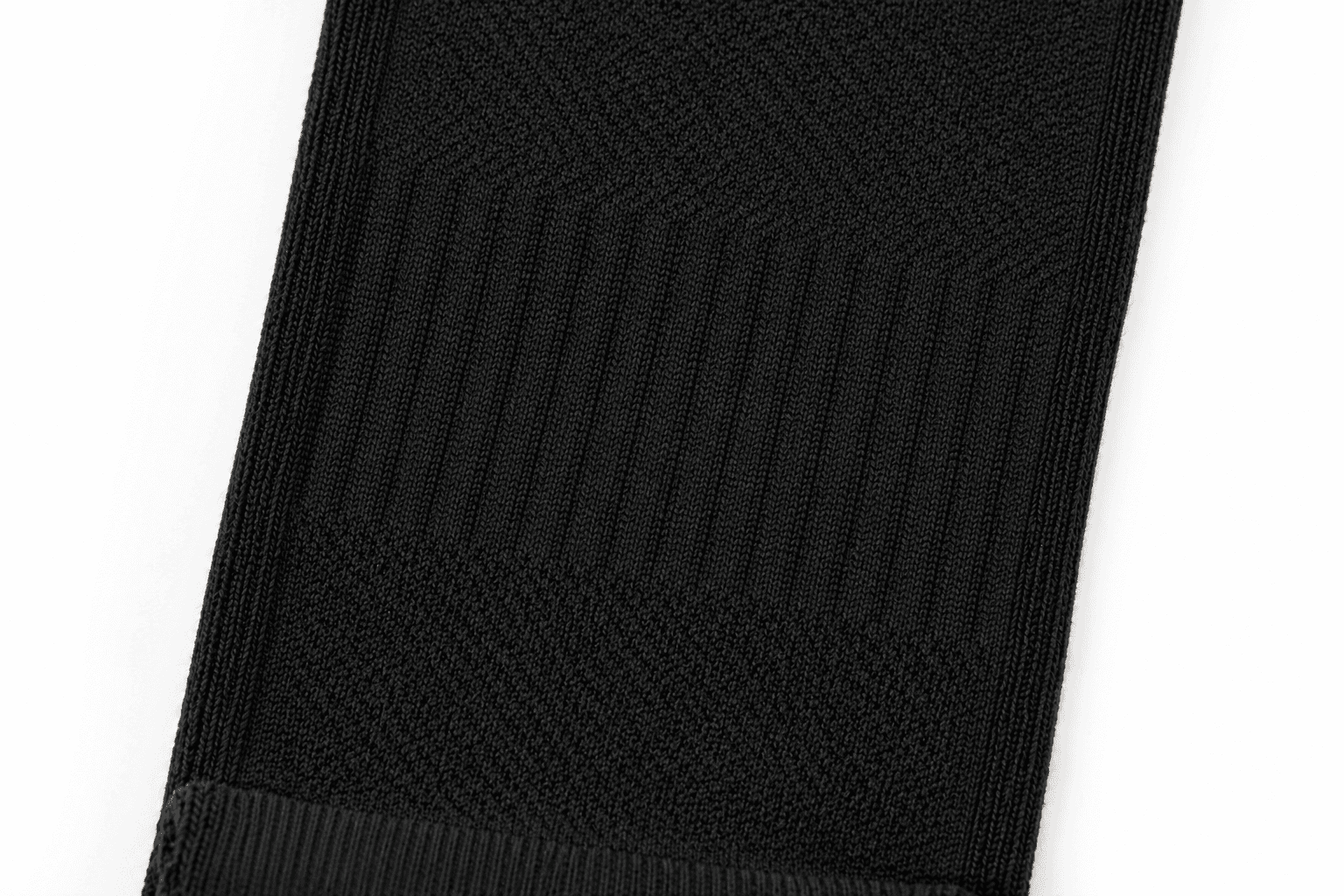
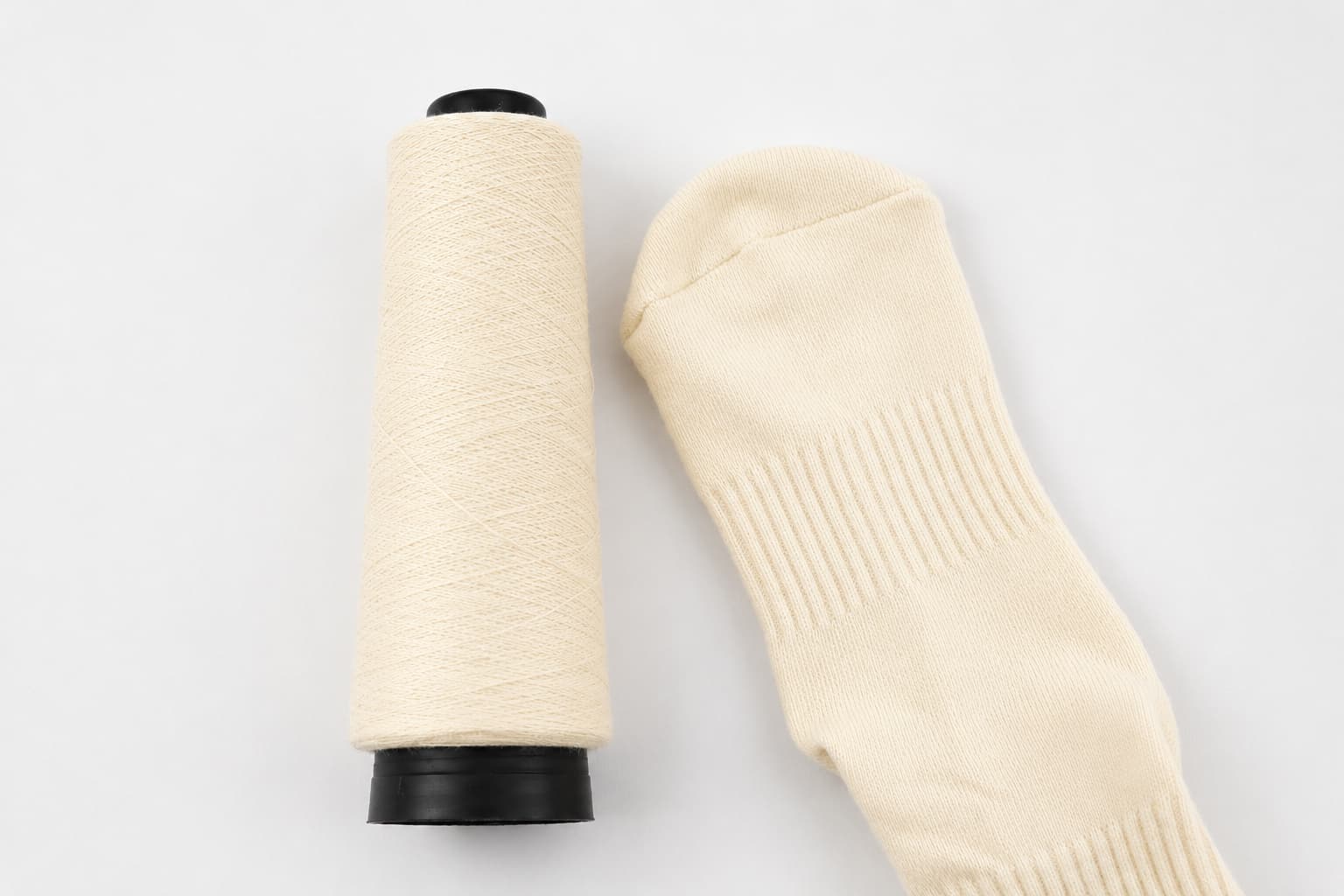
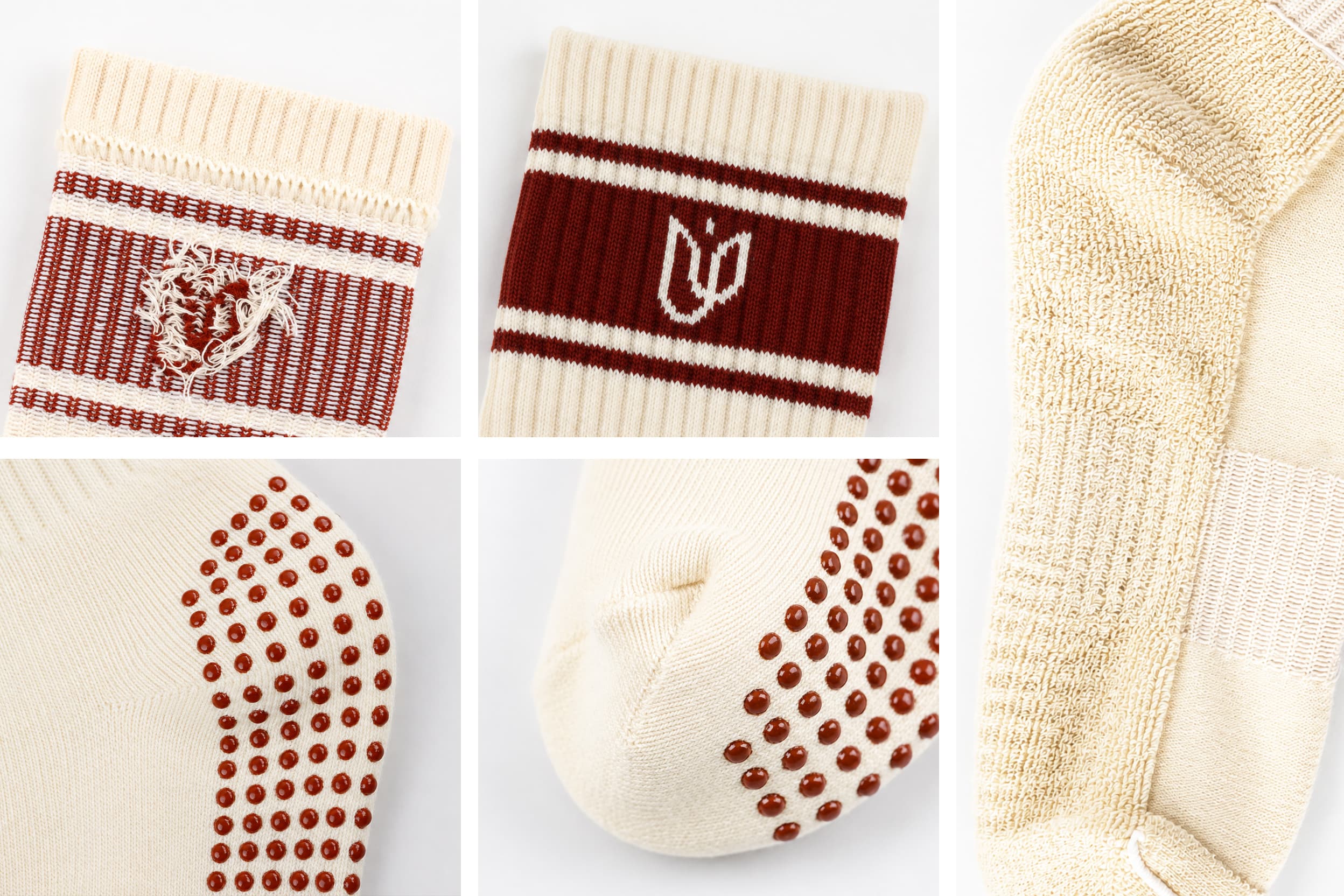
Cotton-rich constructions can provide a softer, familiar feel. Technical nylon or polyester blends may improve durability, moisture management, drying time and athletic appearance. Spandex or elastane supports recovery and fit.
The right construction should match the studio’s customer, climate, retail price and performance expectations.
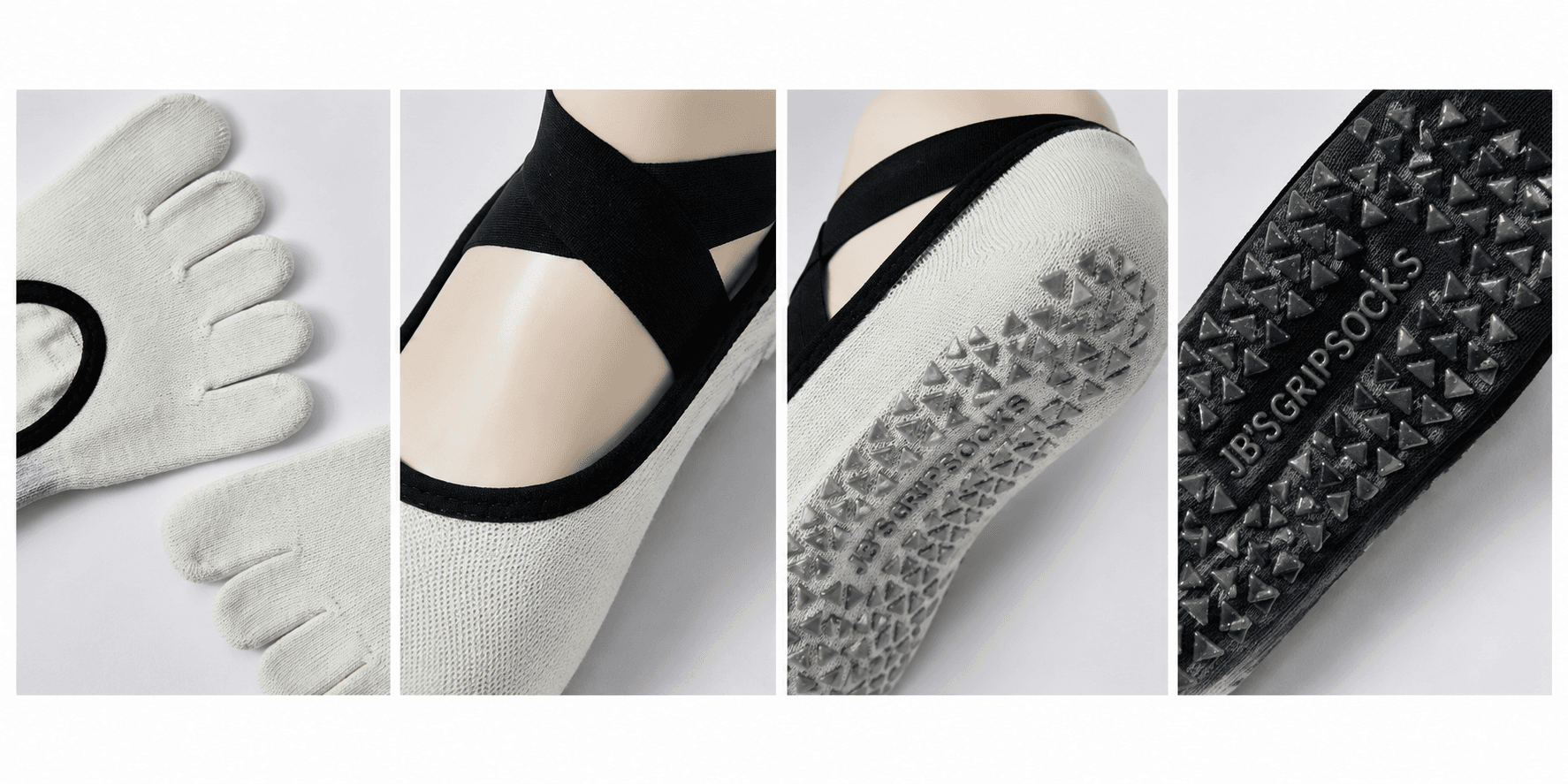
Fabric and Construction Details
Use close-up evidence to compare yarn, knit texture, cushioning, heel construction and finishing.
Section 08
Plan Sizes Carefully
Too many size options make a first order more complex; too few may create fit problems. A simplified S/M and M/L approach can work for selected styles, but the supplier should confirm the foot-length range and stretch behavior.
- ✓Size chart
- ✓Foot-length range
- ✓Stretch range
- ✓Sample fitting information
Section 09
Treat Packaging as Part of the Retail Product
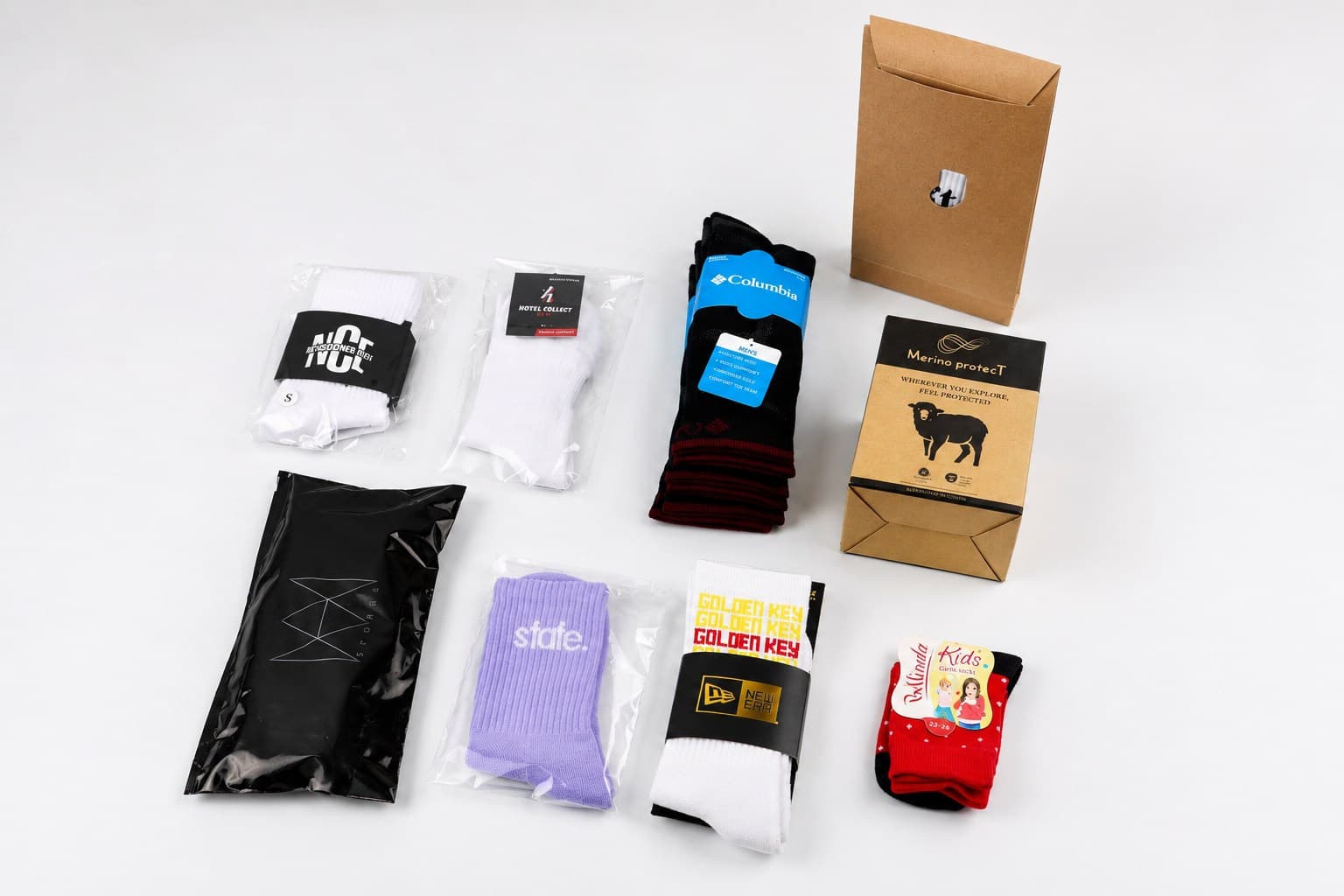
Front-desk retail packaging may include paper bands, hang tags, branded cards, bags, boxes, size labels and barcodes. Small studios may only need a paper band; premium retail may require a more coordinated presentation.
Plan packaging before bulk production so product dimensions, branding, labeling and lead time remain coordinated.
Section 10
MOQ: Start With a Practical Quantity
MOQ depends on sock structure, colors, logo method, grip design, material, size range and packaging. A smaller first order can test demand, preferred colors, best-selling sizes, retail price and reorder timing.
A practical first collection usually means one or two styles, two or three colors, simplified sizing and one packaging format.
Section 11
Calculate Retail Margin Before Ordering
Work backward from the target retail price. Include manufacturing, packaging, freight, import-related costs and payment fees before deciding the final specification.
“Our target retail price is X. What product specification gives us the best value within that range?”
This gives the supplier a more realistic commercial brief than simply requesting the best possible sock.
Section 12
Use Grip Socks in Membership Programs
New member
Premium membership
Anniversary reward
Referral program
This makes the sock part of the member experience and can encourage customers to collect additional colors or designs.
Section 13
Create Seasonal and Limited-Edition Collections
After establishing stable repeat demand, studios can introduce spring colors, summer pastels, holiday editions, anniversary designs, instructor collaborations and limited grip patterns.
Build one successful core product first. Frequent new designs should follow proven reorder demand rather than replace it.
Section 14
Make Repeat Ordering a Supplier Priority
The ability to reorder reliably is often more important than the lowest first-order price. Production records should preserve color, sizing, yarn, logo position, grip pattern, packaging and construction.
First trial order
Member feedback
Best-seller identification
Repeat production
New colors or styles
Ask whether the same colors can be reproduced, whether best-selling colors can be reordered separately, how quantities can scale and how repeat-order lead times are managed.
Section 15
Build a Simple Reorder System
Do not wait until stock is almost gone. Track starting inventory, weekly sales, size sales, color sales, current stock, production time and freight time.
Set a reorder point for dependable best sellers such as black, white, grey, beige and studio signature colors.
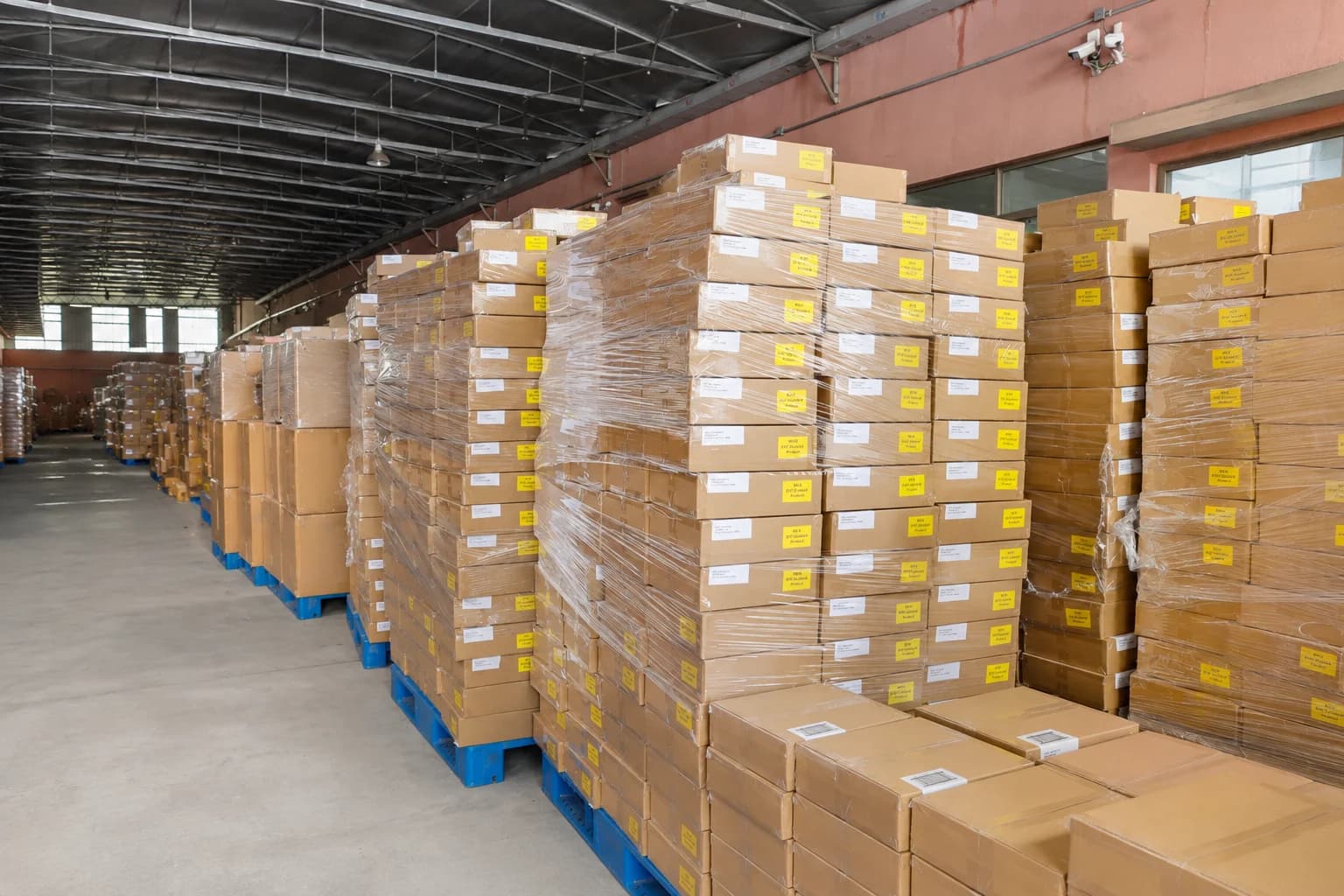
Plan repeat orders through dispatch
Factory dispatch reference: carton staging, pallet handling and truck loading. Packing details and the shipping plan are confirmed for each order.

Section 16
Questions to Ask Before Choosing a Supplier
- 1.What grip material do you use?
- 2.Can the grip pattern be customized?
- 3.What sock structures can you manufacture?
- 4.Can you make full-toe, five-toe and half-toe styles?
- 5.Which fabric do you recommend?
- 6.What logo methods are available?
- 7.What is the MOQ for my exact design?
- 8.What packaging options are available?
- 9.What is the sample lead time?
- 10.How do you inspect grip quality?
- 11.Can you support repeat orders?
- 12.Can you reproduce the same colors and sizing later?
Section 17
Plan a Practical First Order
Start with one or two sock structures, two or three colors, manageable sizing and one packaging format. A neutral, a studio brand color and one optional seasonal color provide enough variety without creating unnecessary inventory risk.
- ✓Track which style sells faster
- ✓Identify the best-performing color
- ✓Record which size runs out first
- ✓Measure member repurchase
- ✓Use sales data for the second order
Section 18
Common Mistakes Pilates Studios Make
Too many variations
Design over performance
Late packaging decisions
Unit price only
No real-class testing
No reorder plan
Manufacturer brief
How to Brief Your Grip Socks Manufacturer
Prepare the following details before requesting a quotation, and explain whether the socks are intended for retail, welcome packs, member merchandise, events or online sales.
- ✓Studio logo
- ✓Brand colors
- ✓Preferred sock structure
- ✓Grip preference
- ✓Size range
- ✓Estimated quantity
- ✓Target retail price
- ✓Packaging preference
- ✓Launch date
- ✓Delivery destination