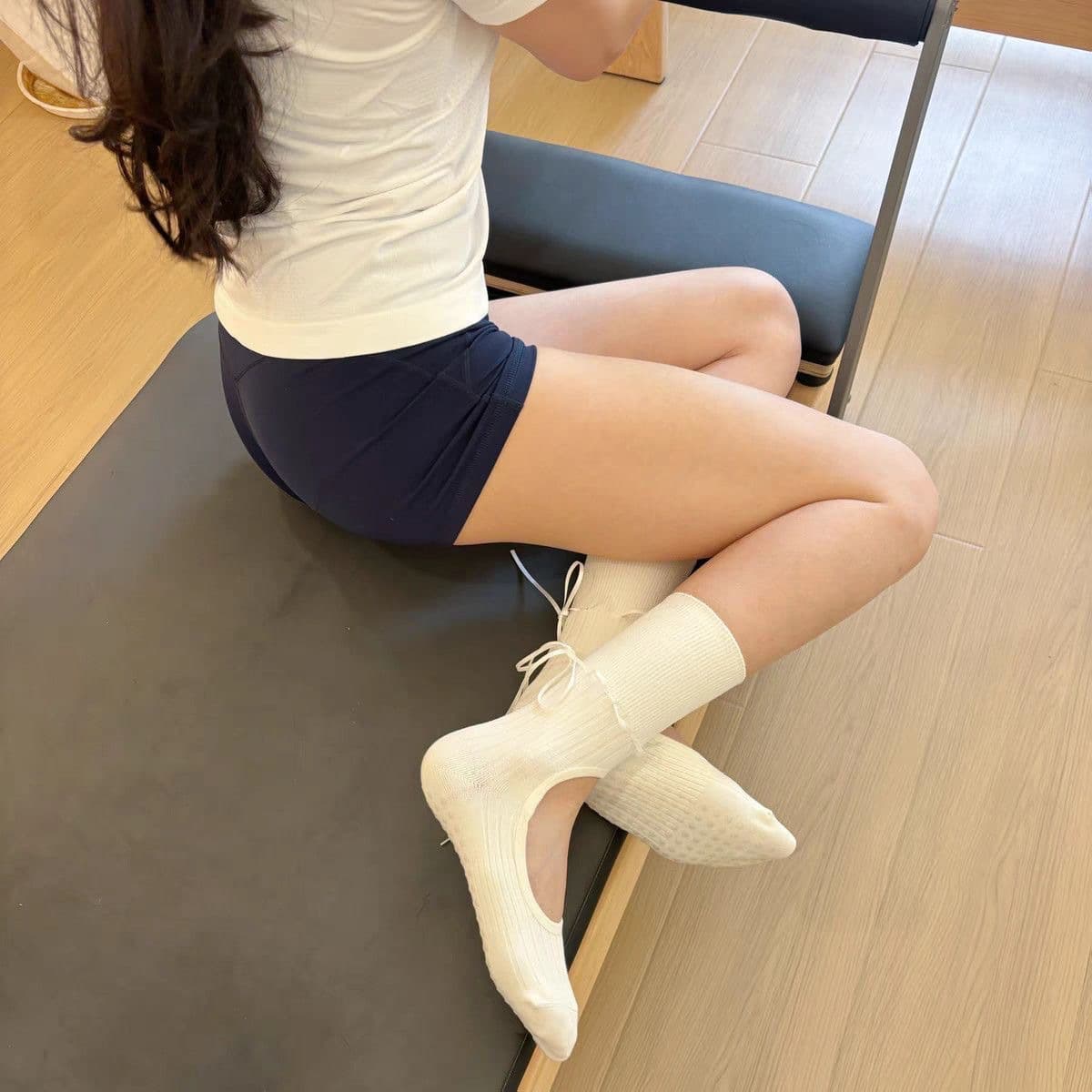
Factor 01
Start With the Grip Material
Grip performance is a defining feature of Pilates socks. Suppliers may use silicone, PVC-based grip, rubber-like compounds or other anti-slip applications, each with a different feel and production route.
Ask what material is used, whether it stays flexible after washing, how firm it feels on studio floors and whether the shape and layout can be customized.
A capable manufacturer should explain the material and application process—not simply describe the product as “anti-slip.”
Factor 02
Compare Grip Coverage
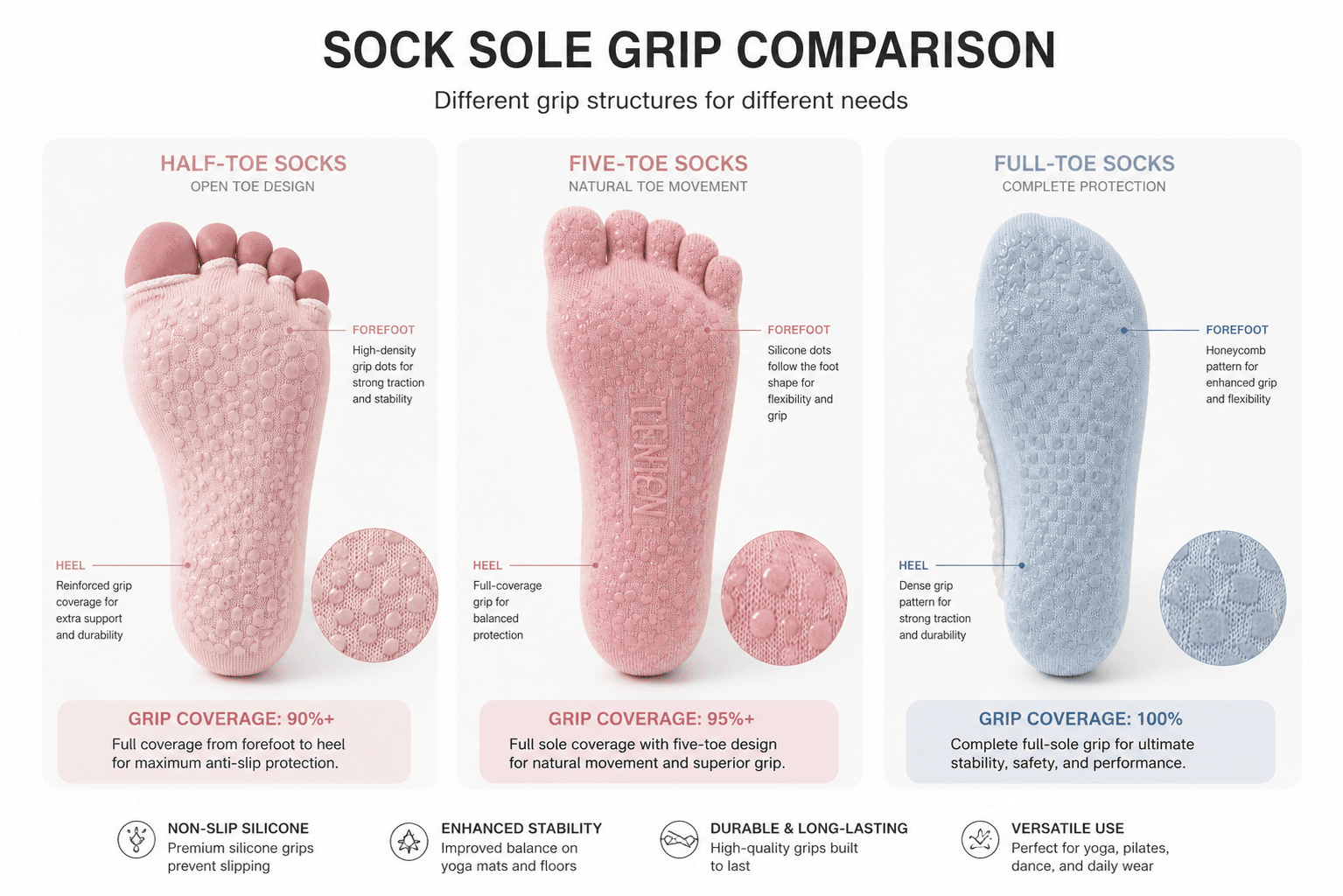
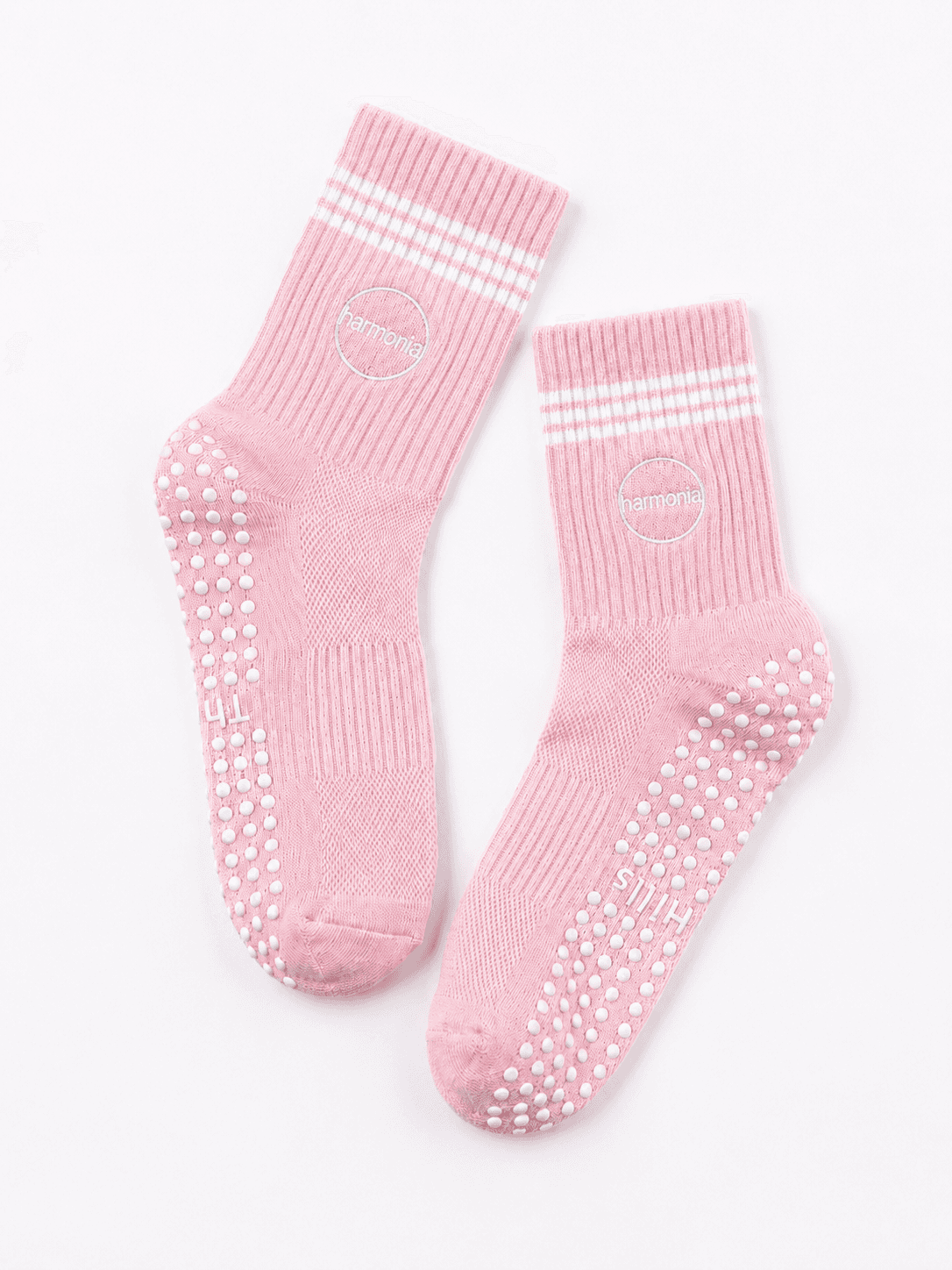
The pattern should be placed where the foot contacts the floor. Options include forefoot, heel, full-sole, targeted pressure-zone, logo-led and geometric layouts.
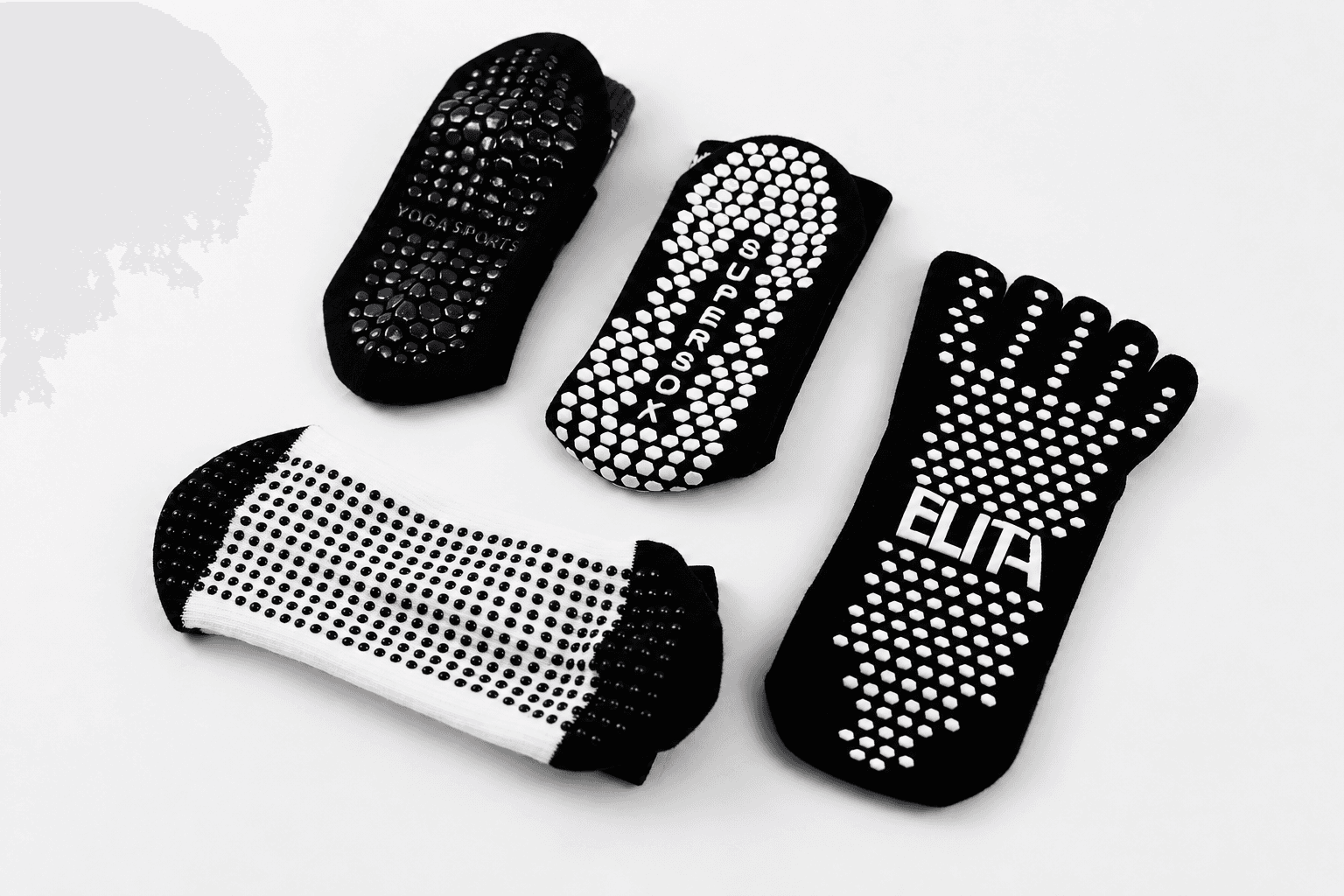
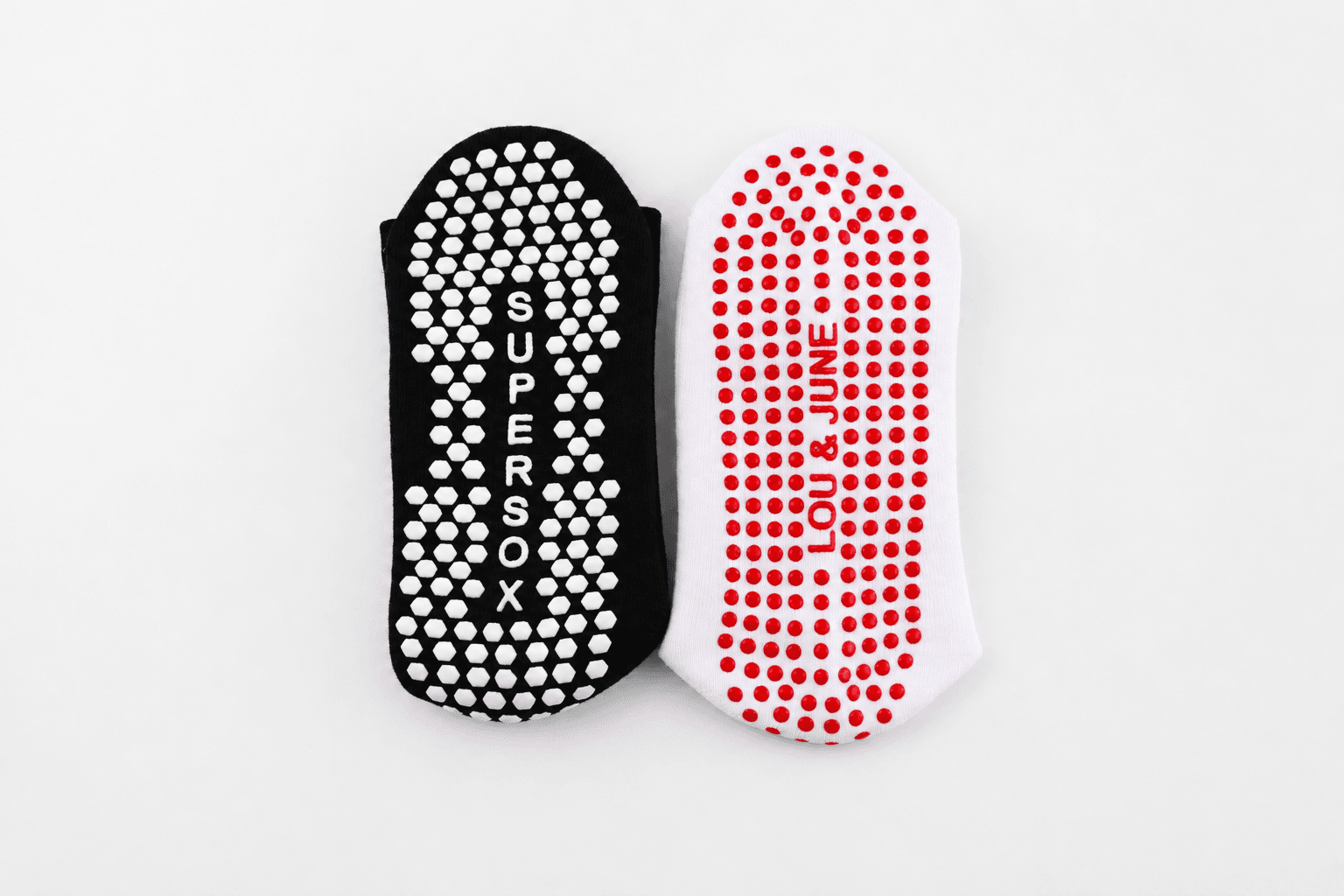
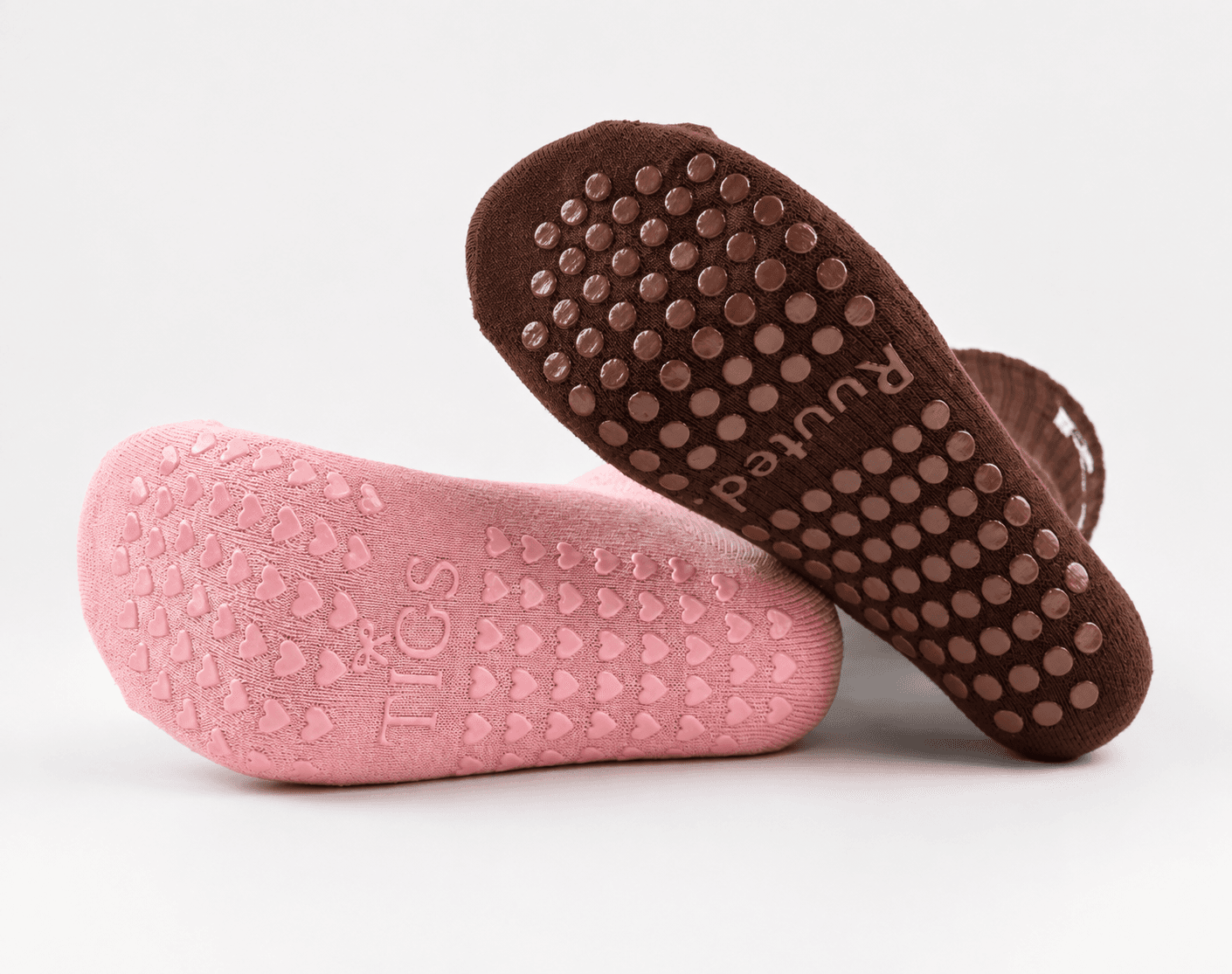
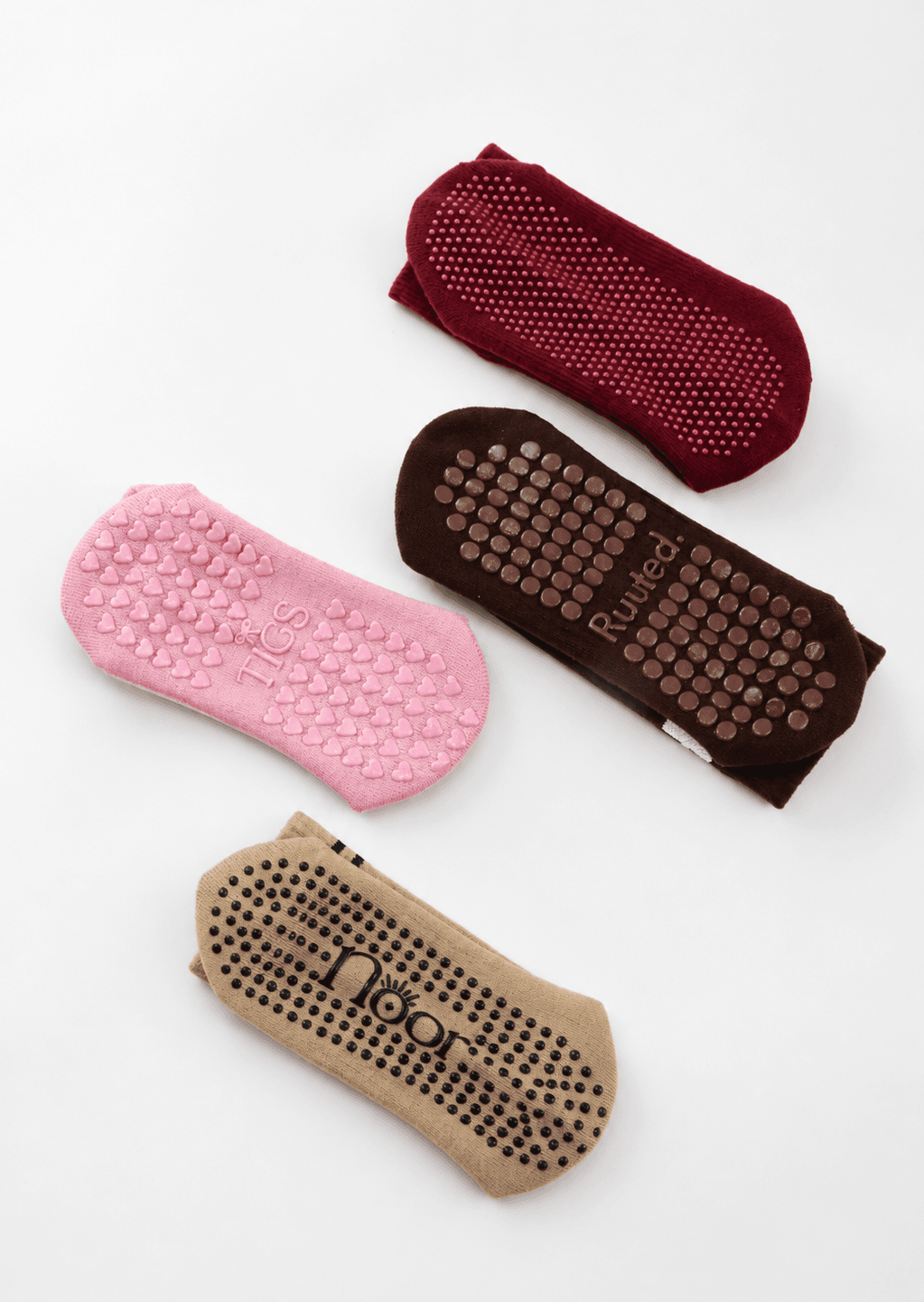
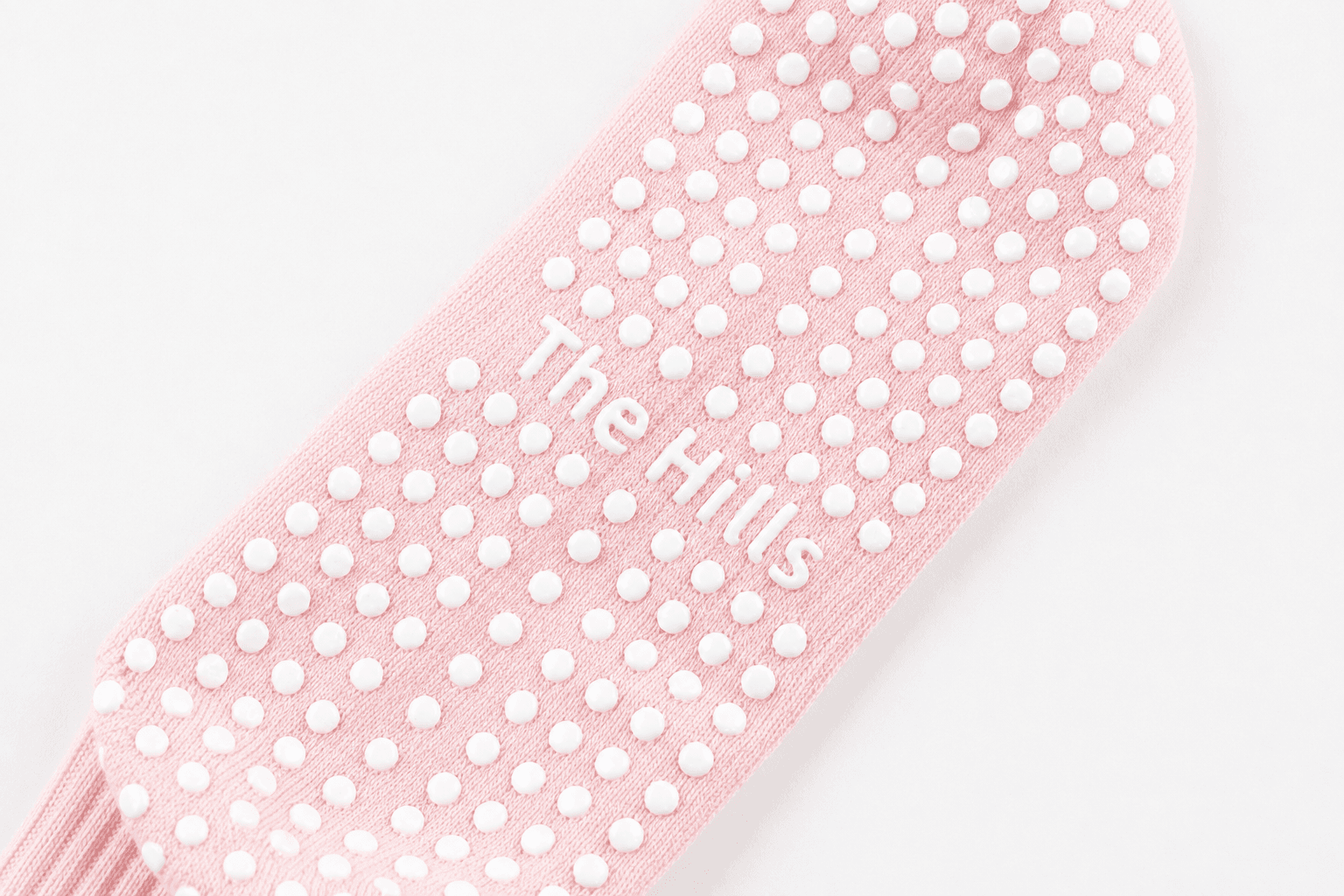
More grip is not automatically better. Coverage also affects flexibility, comfort, appearance, weight and cost. Ask for real sole photos so you can review position, density, heel coverage, forefoot coverage and spacing.
Pilates Grip Sock Sole Patterns
Compare real grip density, spacing, motifs and logo-led layouts before selecting the sample direction.
Factor 03
Match the Fabric to the Studio Environment
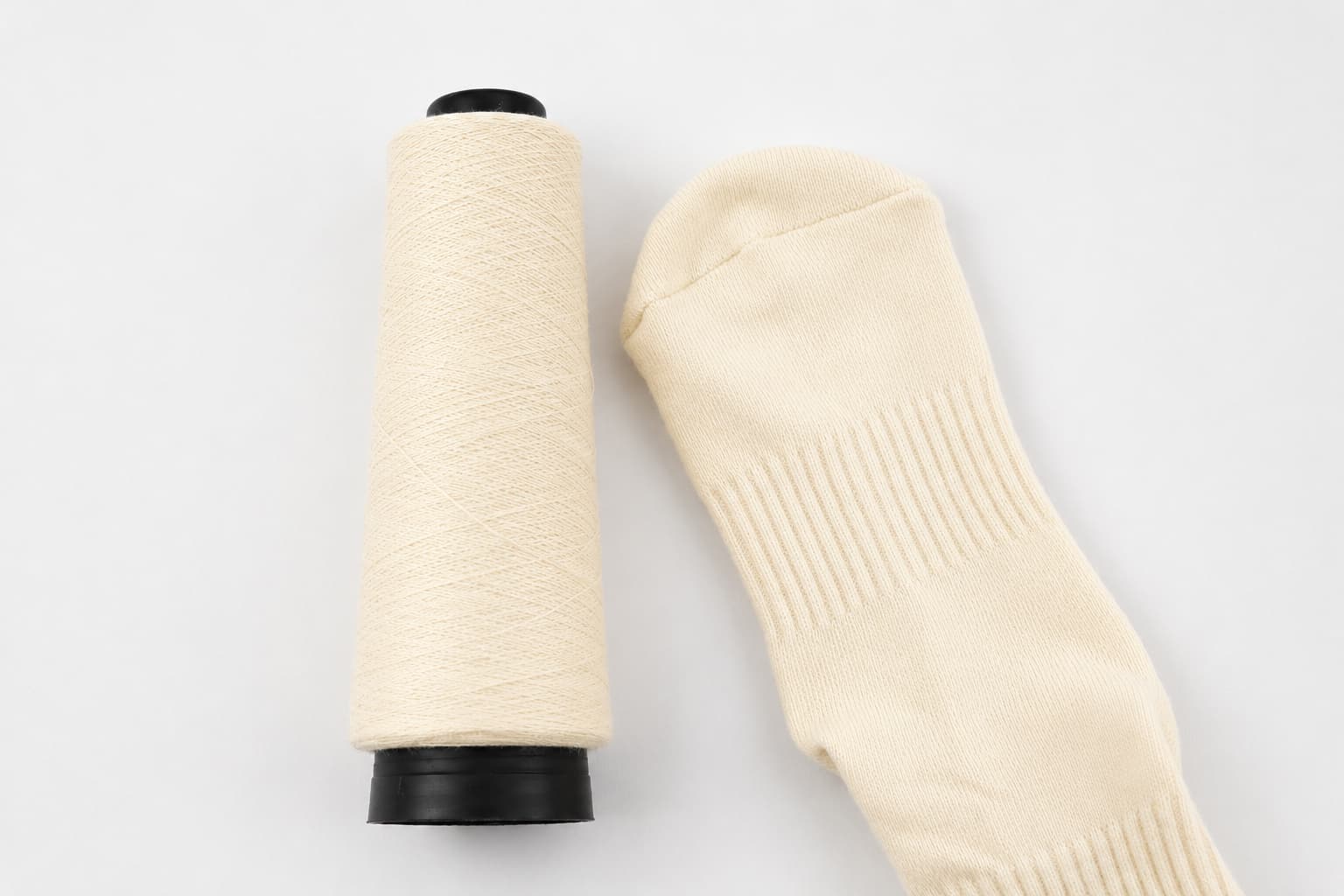
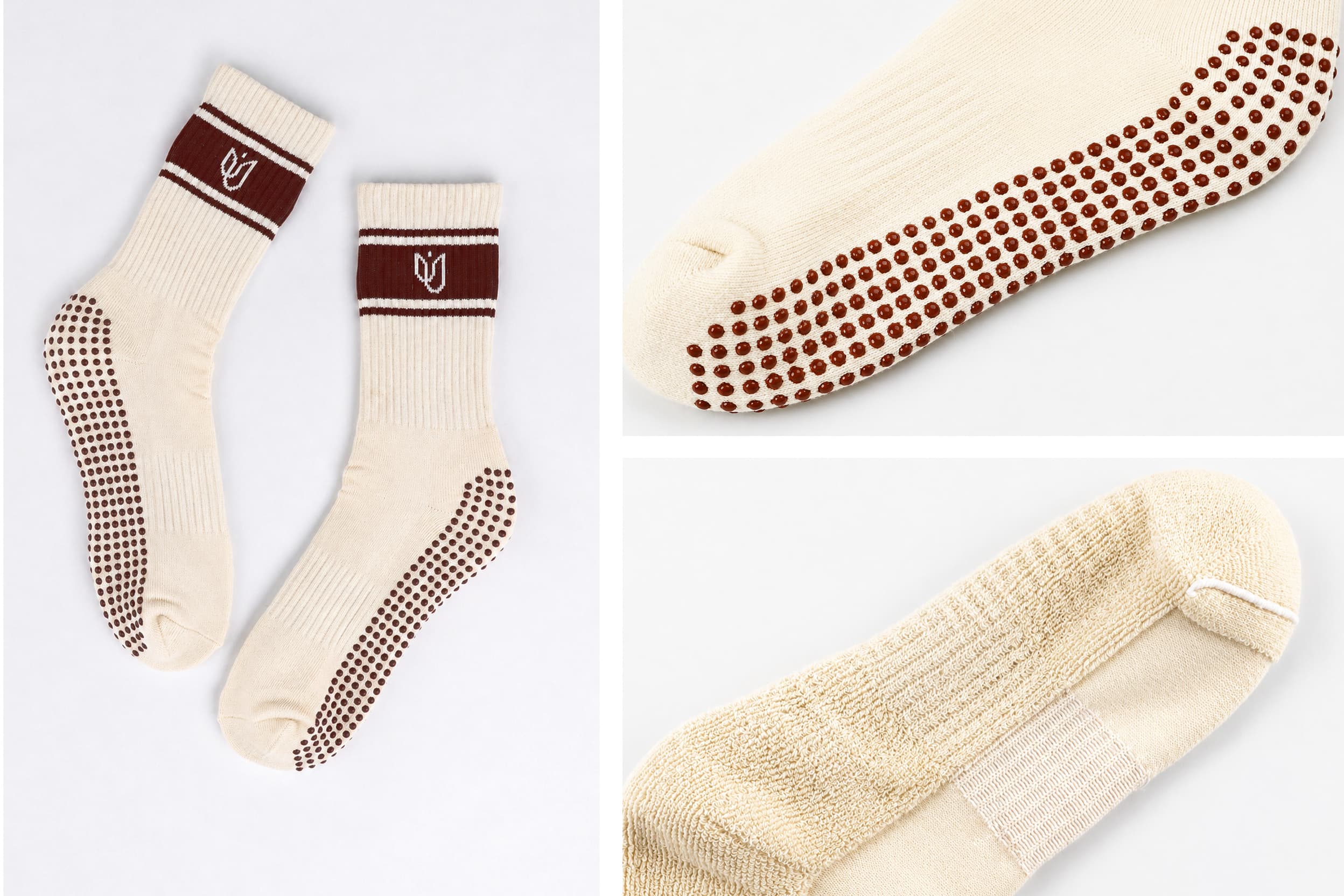
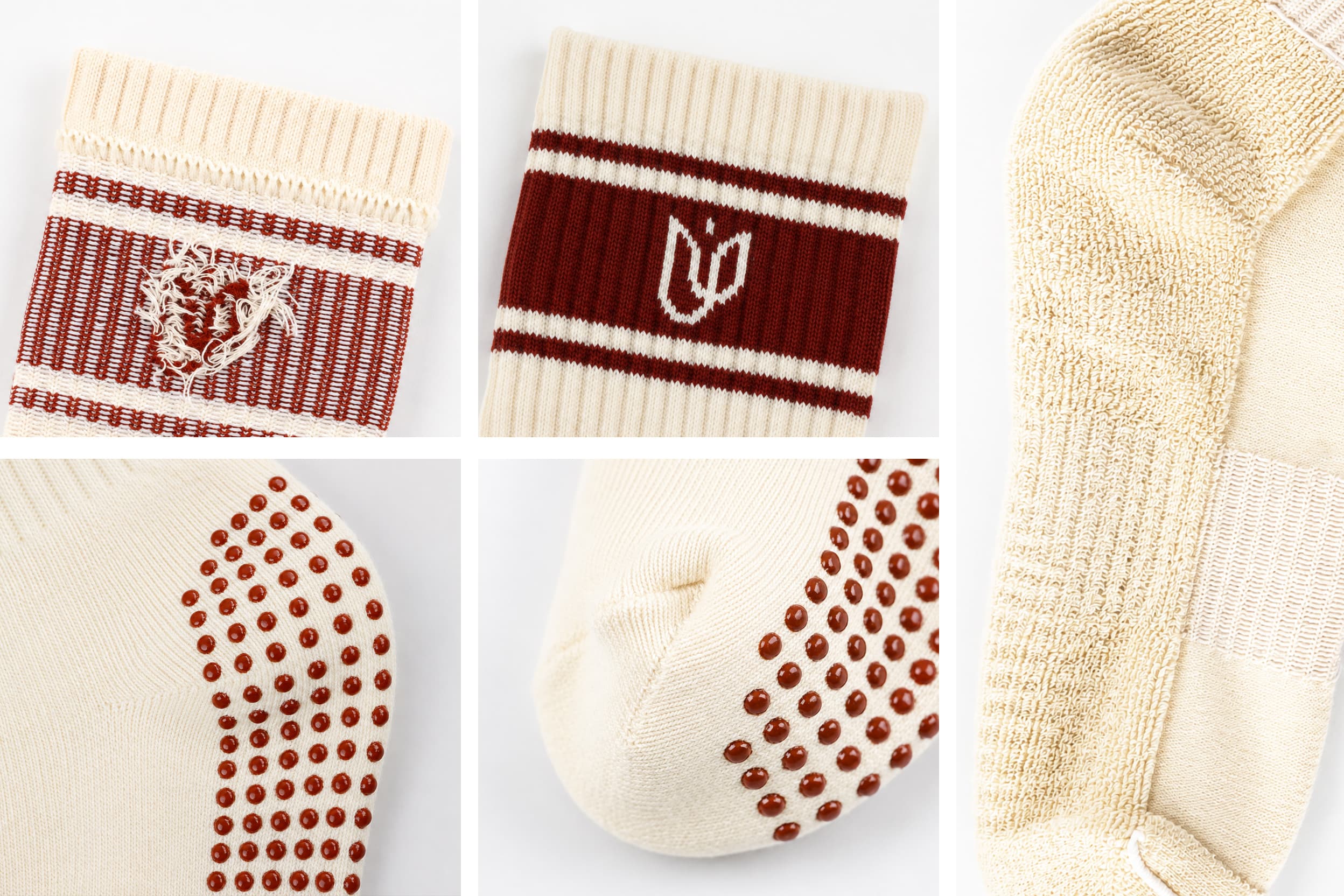
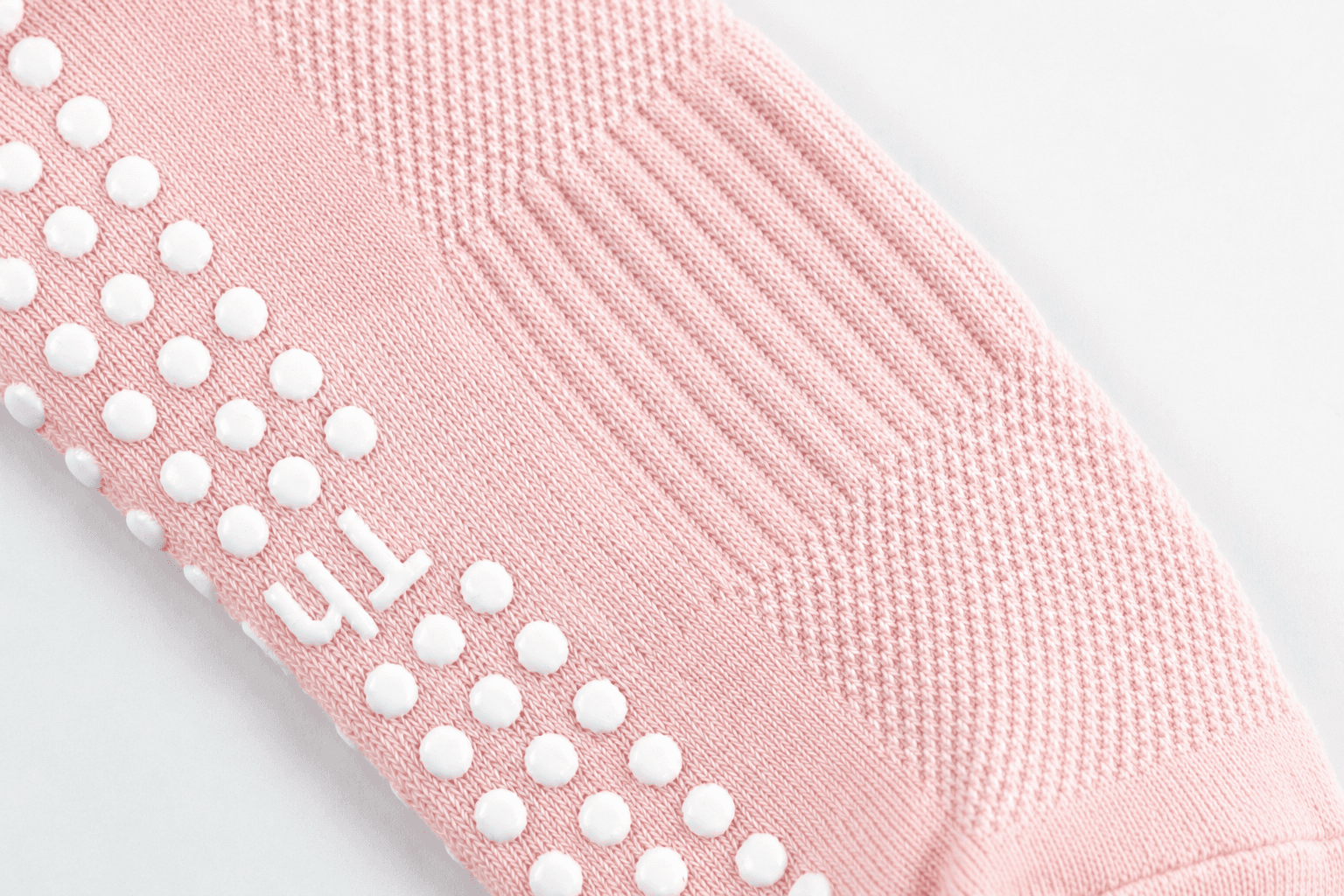
Fabric influences breathability, moisture management, softness, elasticity and durability. Cotton-rich blends can give a familiar studio feel, while nylon or polyester-rich performance blends may improve quick drying and durability.
- ✓Cuff elasticity and recovery
- ✓Arch fit and heel hold
- ✓Toe structure
- ✓Breathable or mesh zones
- ✓Durability after repeated use
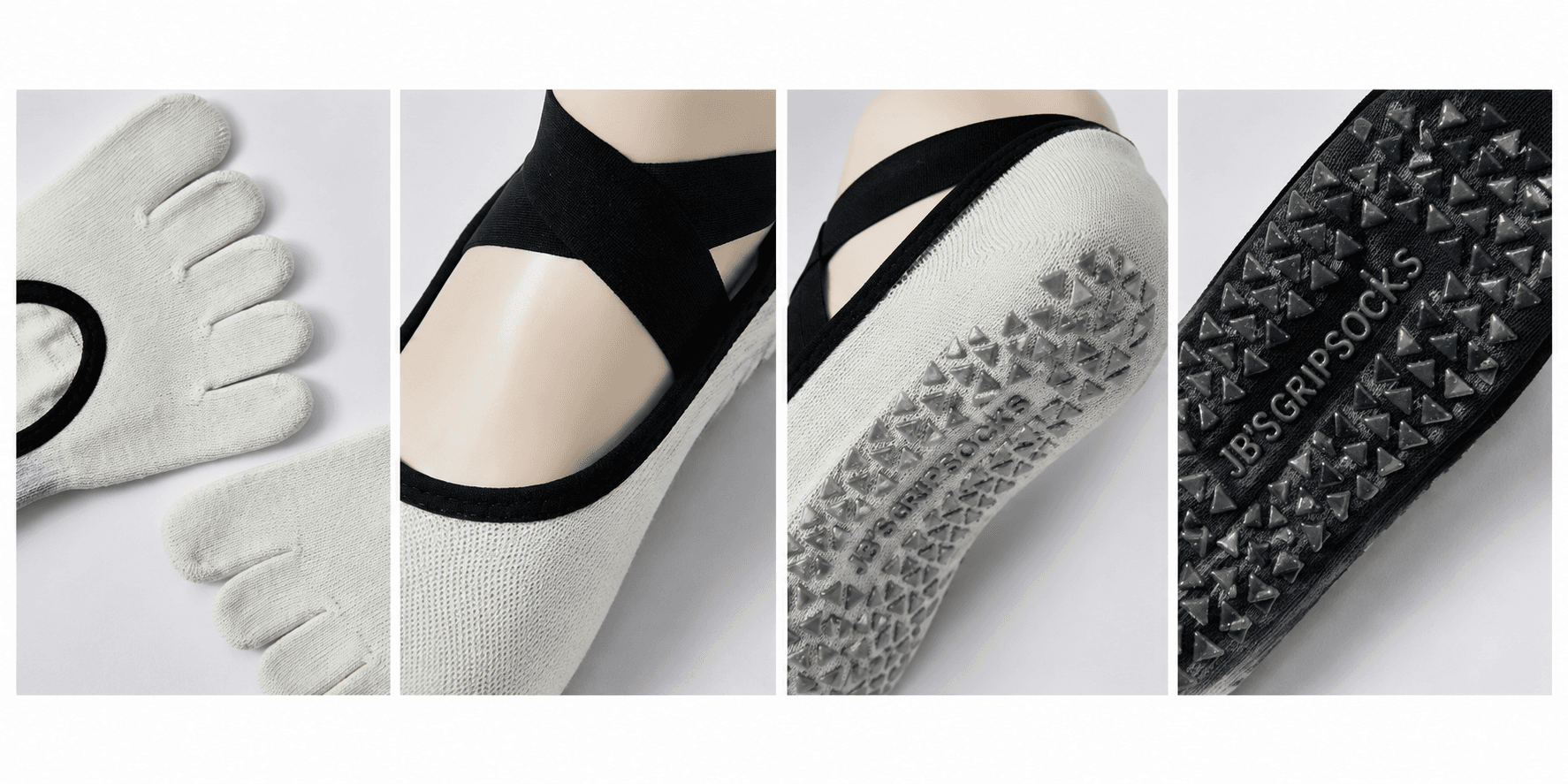
Pilates Grip Sock Fabric Details
Use close-up evidence to compare yarn, knit texture, cushioning, heel construction and finishing.
Factor 04
Evaluate the Sock Structure
Similar yarns and grip materials can feel very different when the structure changes. Review sock height, cuff design, arch support, heel construction, cushioning, mesh zones, toe design and opening shape.
- ✓Low-cut grip socks
- ✓Ankle grip socks
- ✓Ballet and cross-strap styles
- ✓Full-toe socks
- ✓Five-toe socks
- ✓Half-toe socks
Factor 05
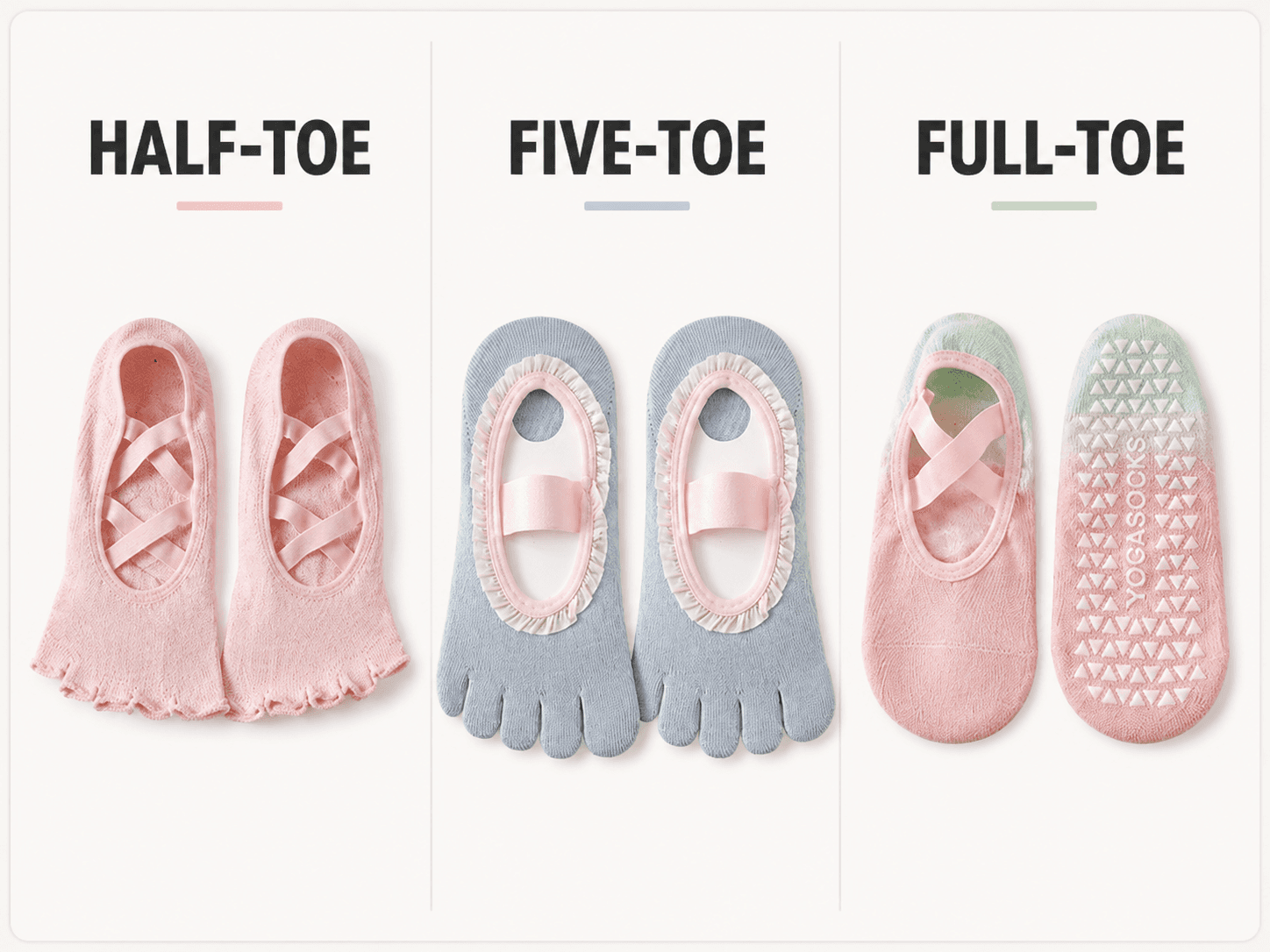
Compare Five-Toe, Half-Toe and Full-Toe Designs
Five-toe
Separates each toe for a barefoot-style feel and strong product differentiation.
Half-toe
Leaves toe tips exposed for direct floor contact and a lightweight studio aesthetic.
Full-toe
Feels familiar to first-time users and offers more warmth and broad consumer appeal.
The right choice depends on customer preference, studio positioning, climate, target retail price and brand style. Some studios test more than one structure before scaling.
Factor 06
Check Studio Logo Customization
Branded grip socks can become studio merchandise, member welcome products, class accessories, event products and promotional gifts.
- ✓Jacquard knitting
- ✓Printed branding
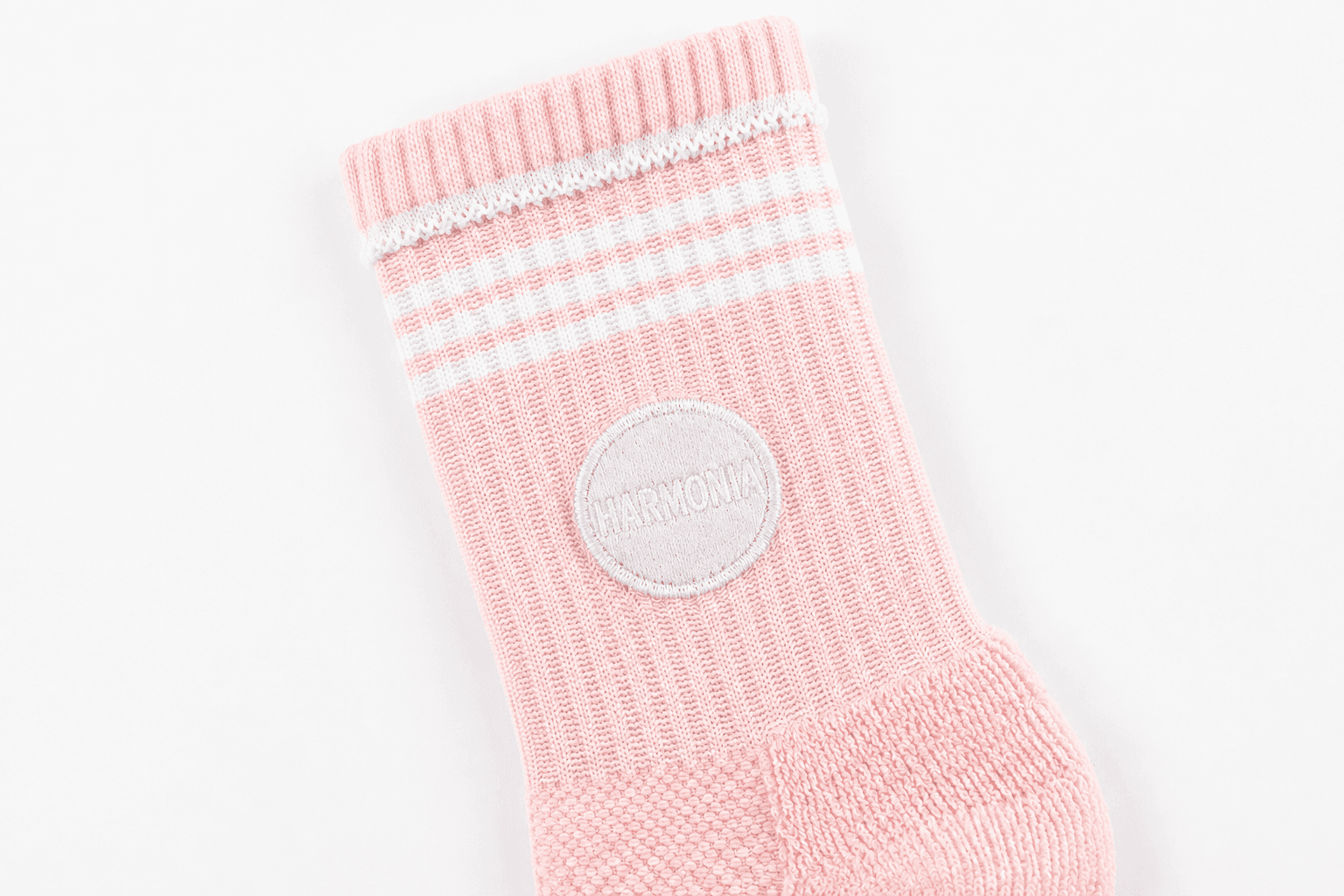
- ✓Embroidery
- ✓Silicone logo grip
- ✓Branded labels and packaging
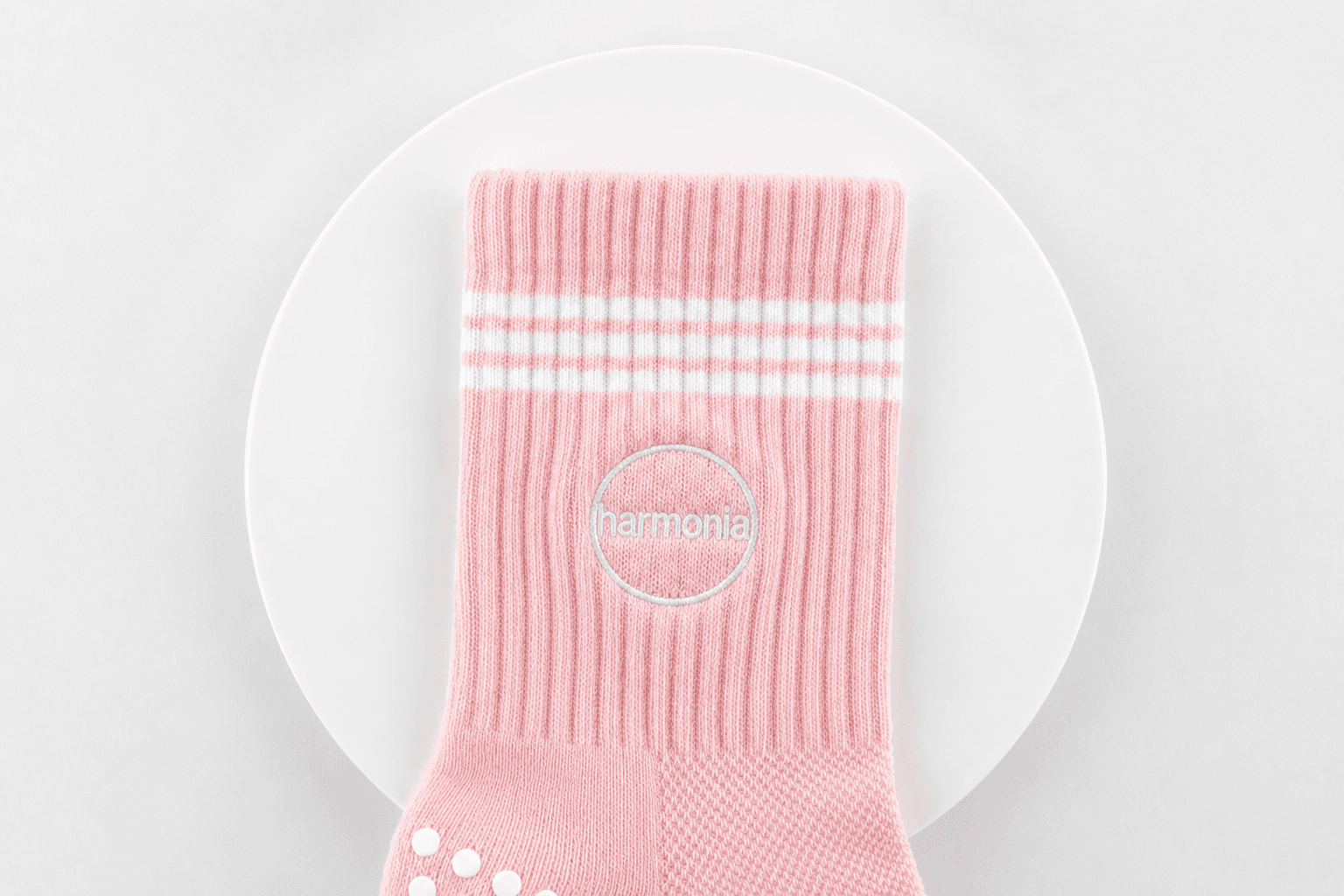
Logo placement can include the cuff, top of foot, heel, side, sole grip or packaging. The method should support stretch, comfort, grip and fit rather than interfere with them.
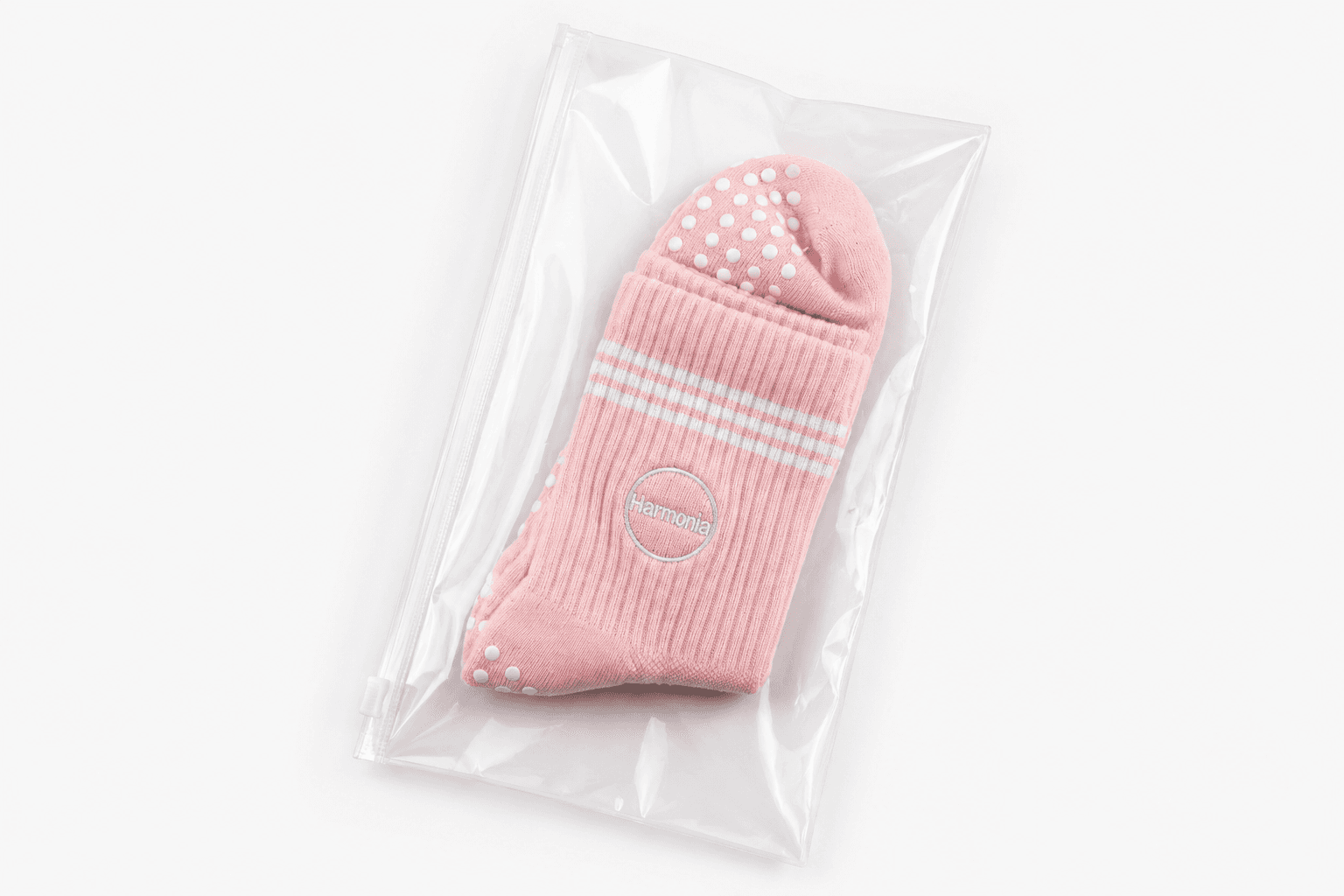
Custom Pilates Socks Studio Logo Options
Compare cuff embroidery, silicone sole branding and simple retail presentation using real product details.
Factor 07
Understand MOQ Before You Order
The practical MOQ depends on the sock structure, yarn, colors, logo method, grip design, size range and packaging. Ask for the MOQ of the exact product—not a generic factory minimum.
A smaller first order can help test customer interest, colors, sizes, retail pricing and feedback before production is increased.
Factor 08
Plan Packaging for Studio Retail
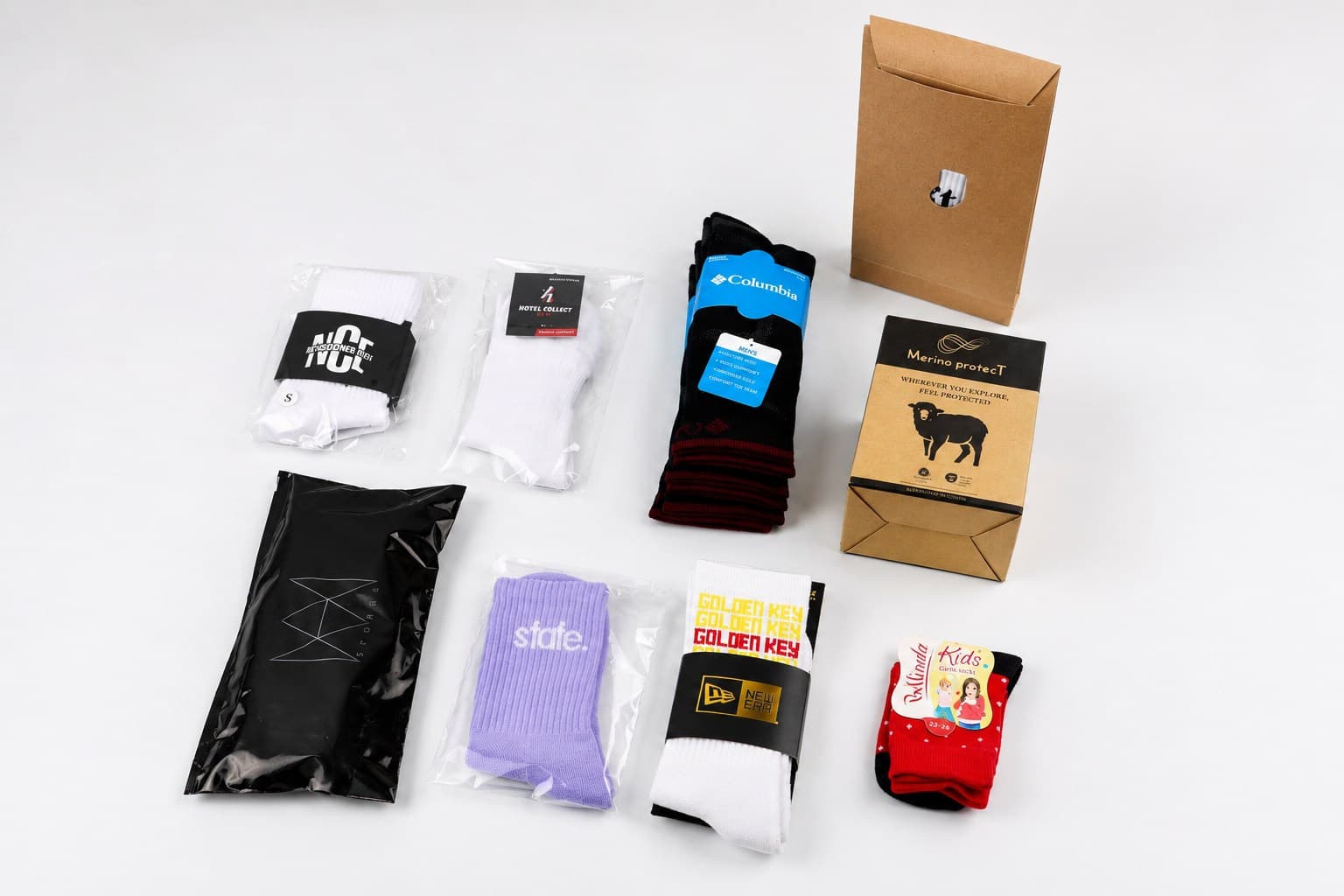
If socks will be sold at reception, online or in a retail area, packaging is part of the product. Options include paper bands, hang tags, branded cards, polybags, custom boxes, barcode labels and size stickers.
A simple branded band may suit a studio launch, while private label brands may need printed boxes, inserts, barcodes, retail labels and a fuller brand story. Confirm the packaging MOQ separately because it may differ from the sock MOQ.
Factor 09
Confirm Repeat-Order Capability
Grip socks can generate repeat demand as customers replace worn pairs, buy additional colors or choose seasonal designs. Ask whether the supplier can reproduce yarn colors, grip layouts, sizing and packaging—and how long production records are retained.
A supplier that completes the first order but cannot reproduce it consistently may create problems later.
Factor 10
Evaluate Sampling Before Bulk Production
Use sampling to inspect fit, toe construction, grip placement and adhesion, logo size, colors, elasticity, sock height and packaging.
Do not approve a sample only because it looks attractive. Test it during Pilates, yoga, barre or studio movement and after repeated washing. Clear feedback should lead to specific, traceable revisions.
Factor 11
Ask About Quality Control
Inspection should cover size, toe structure, stitching, grip placement and completeness, logo position, color consistency, pairing and packaging. Sole inspection is especially important for grip socks.
Ask: “What exactly do you inspect before packing the socks?” A detailed answer is more useful than a general quality claim.
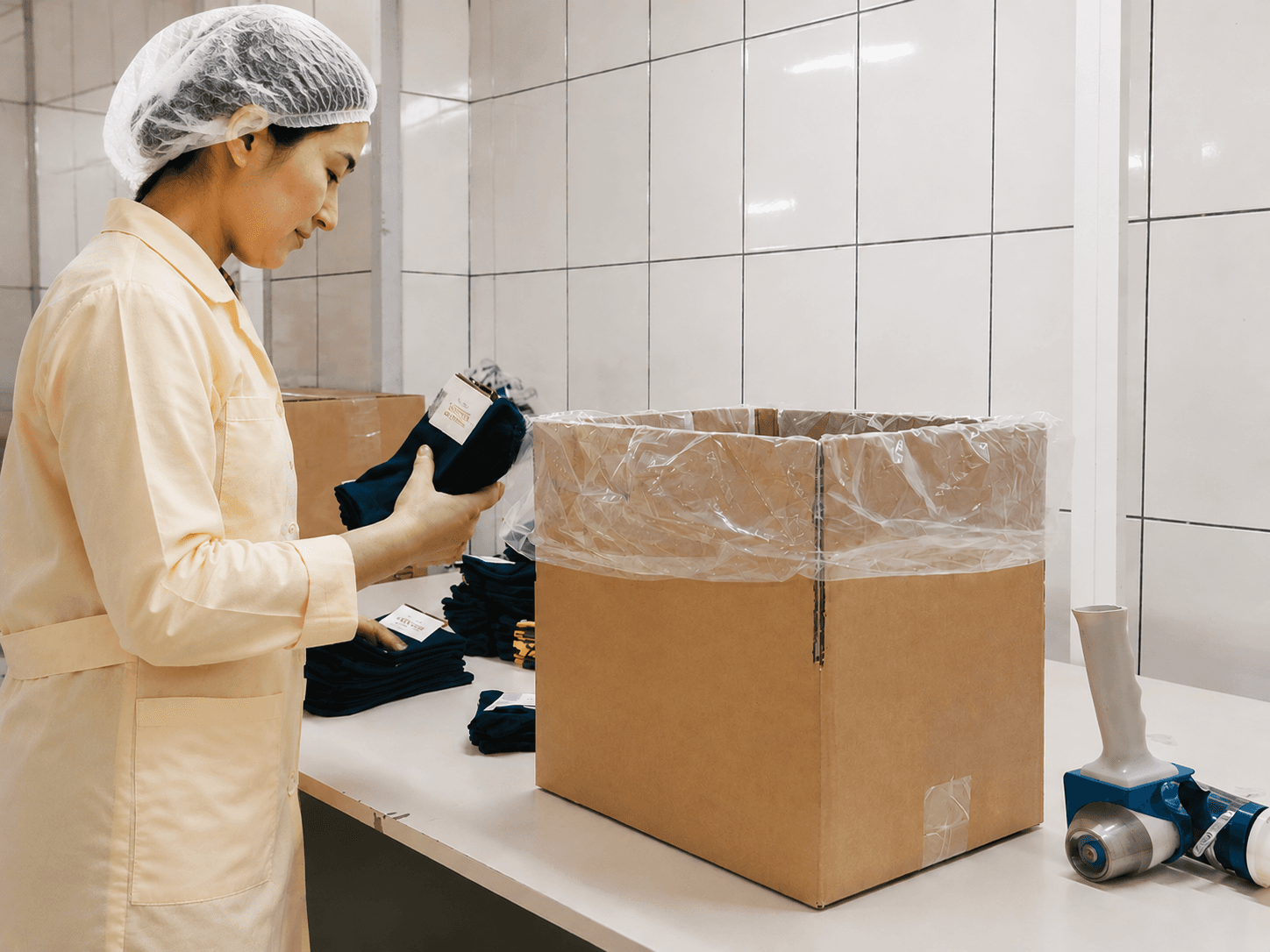
Check finished pairs, branding, packaging and carton preparation against the approved specification.
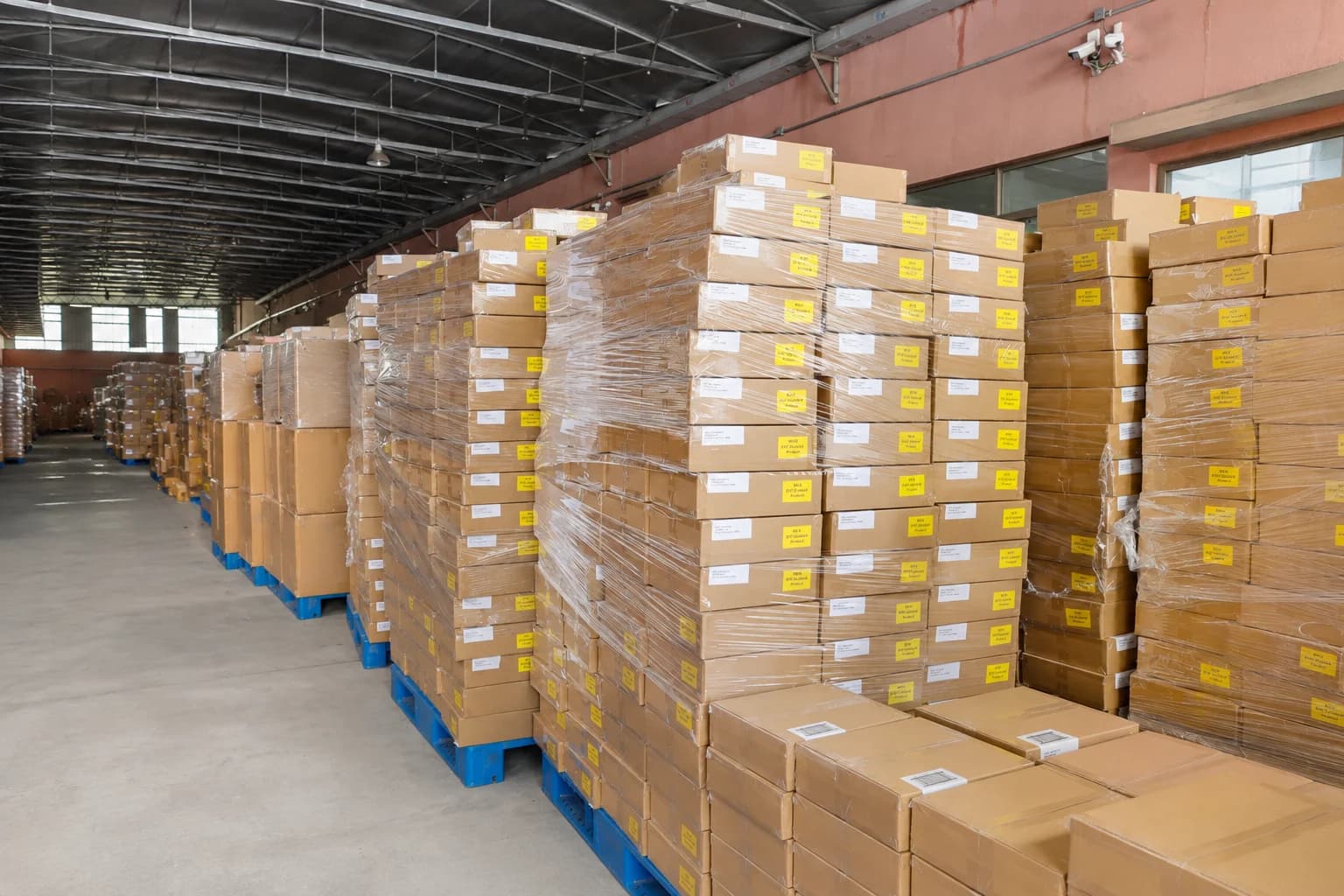
Repeat production should preserve the approved colors, sizes, grip pattern, packing format and shipment records.
Factor 12
Compare Suppliers Using the Same Specification
Use one specification when requesting quotations. Otherwise, you may compare a basic sock from one supplier with a more customized product from another.
| Factor | Supplier A | Supplier B | Supplier C |
|---|---|---|---|
| Grip material | — | — | — |
| Grip coverage | — | — | — |
| Fabric | — | — | — |
| Sock structure | — | — | — |
| Toe design | — | — | — |
| Logo method | — | — | — |
| MOQ | — | — | — |
| Packaging | — | — | — |
| Sampling | — | — | — |
| Repeat-order support | — | — | — |
Factor 13
Questions to Ask a Pilates Grip Socks Supplier
- ✓What grip material do you use?
- ✓Can the grip layout be customized?
- ✓Can you show real sole photos?
- ✓Which fabric do you recommend?
- ✓Can you make five-toe, half-toe and full-toe styles?
- ✓What logo methods are available?
- ✓What is the MOQ for this exact design?
- ✓Can you provide custom packaging?
- ✓What is the sample lead time?
- ✓What QC steps are used?
- ✓Can you reproduce colors and sizing on repeat orders?
Factor 14
Watch for Supplier Red Flags
- ✓Grip material cannot be explained
- ✓Real sole photos are unavailable
- ✓Grip coverage changes between samples
- ✓Toe openings are inconsistent
- ✓Fabric composition is unclear
- ✓MOQ changes without explanation
- ✓Packaging is discussed only after production
- ✓Repeat-order consistency cannot be confirmed
One small issue does not always mean a supplier is unreliable, but repeated inconsistencies during sampling can predict larger problems in bulk production.
Factor 15
Choose a Partner That Supports the Full Product Cycle
Studio idea
Structure selection
Grip design
Logo development
Sampling
Wear testing
Bulk production
Packaging
Studio launch
Repeat orders
For a studio or growing brand, reliable support across the complete cycle is more valuable than the lowest unit price alone.