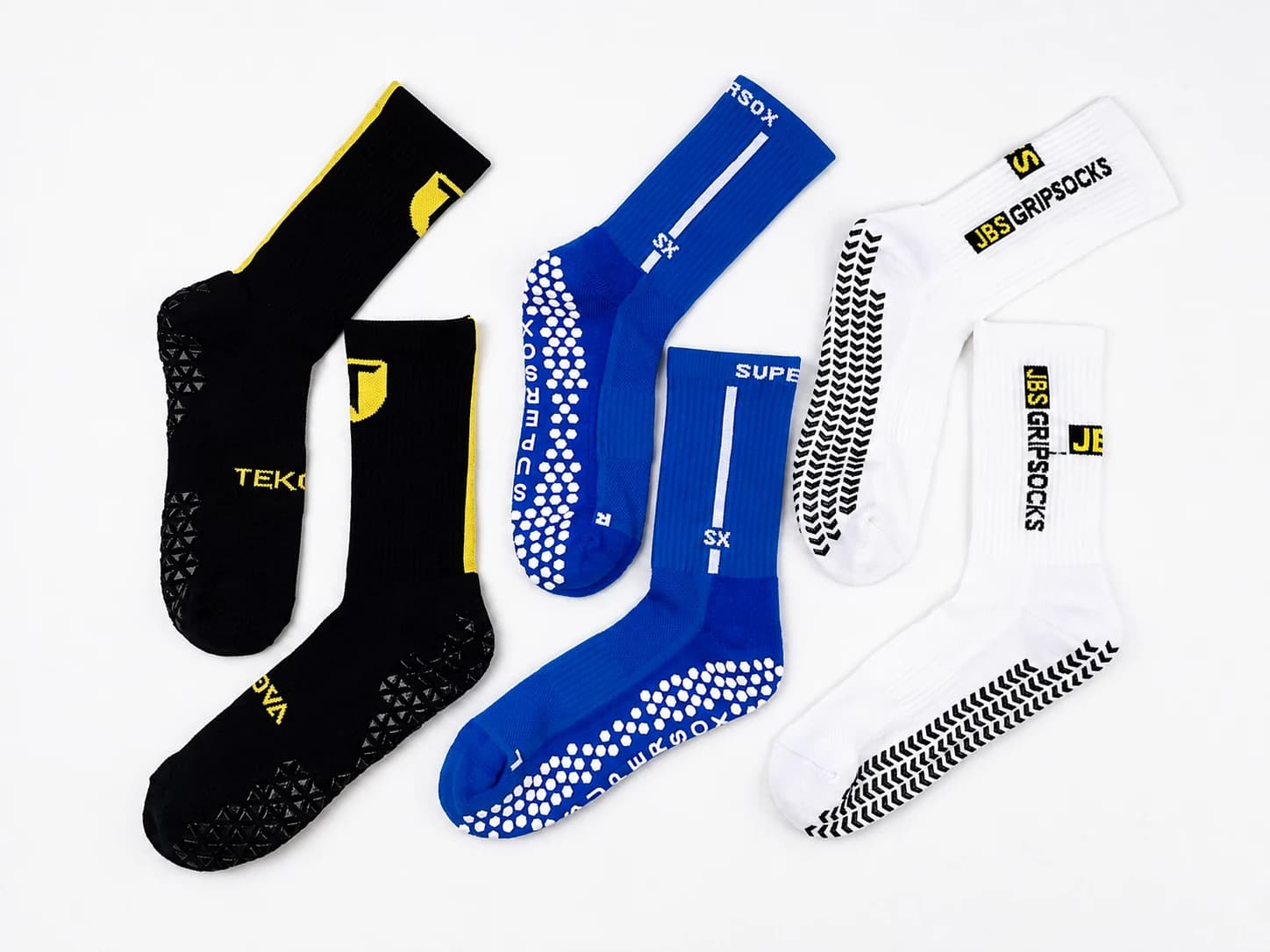
Starting a sock brand is relatively easy. Finding the right manufacturer to support that brand for the next three to five years is much harder.
A good private label socks manufacturer should do more than produce a design you send. The right partner helps turn an idea into a manufacturable product, guides sampling, maintains consistent quality, coordinates branded packaging and scales production as the business grows.
This matters especially for startups. A new brand may begin with a few hundred pairs, test several colors, change packaging after launch and then need several thousand pairs when a product succeeds. The manufacturer chosen at the beginning can make that growth easier—or become the bottleneck.
Factor 01
Compare MOQ Before Comparing Price
MOQ—minimum order quantity—is one of the first things most buyers ask about. But simply asking “What is your MOQ?” is not enough. The real minimum investment depends on how the quantity is applied to the specification.
Questions to ask
- ✓Is the MOQ per design, color or size?
- ✓Does custom yarn increase the MOQ?
- ✓Does custom packaging have a separate MOQ?
- ✓Can several sizes be combined within one production run?
- ✓Is a lower quantity available for a market test?
For an established retailer, a 3,000-pair commitment may be manageable. A new DTC brand may need to test one product, collect feedback, refine the design and identify its strongest colors before scaling. Ask for the smallest practical quantity for your exact design, logo method, colors, size range and packaging—not one universal number.
Buyer note
Be cautious if a supplier gives exactly the same MOQ for every product without discussing construction or customization.
Factor 02
Evaluate the Sampling Process
Never select an OEM socks supplier based only on digital mockups or catalog photographs. Sampling shows how the factory interprets a brief and manages technical details.
Questions to ask
- ✓How long do the first sample and revisions take?
- ✓What information is required before sampling?
- ✓How are sizing, fit, yarn feel and elasticity reviewed?
- ✓Can logo placement, colors, grip, cushioning and packaging be confirmed?
- ✓Can the supplier provide photos or videos before shipping the sample?
The goal is not simply to find the fastest supplier. Look for a structured process. Missed measurements, confused colors, unapproved changes or poor communication during sampling can become much larger problems in bulk production.
Buyer note
Treat the first sample as a small test of the future working relationship, not only as a product prototype.
Factor 03
Check Material Options and Technical Knowledge
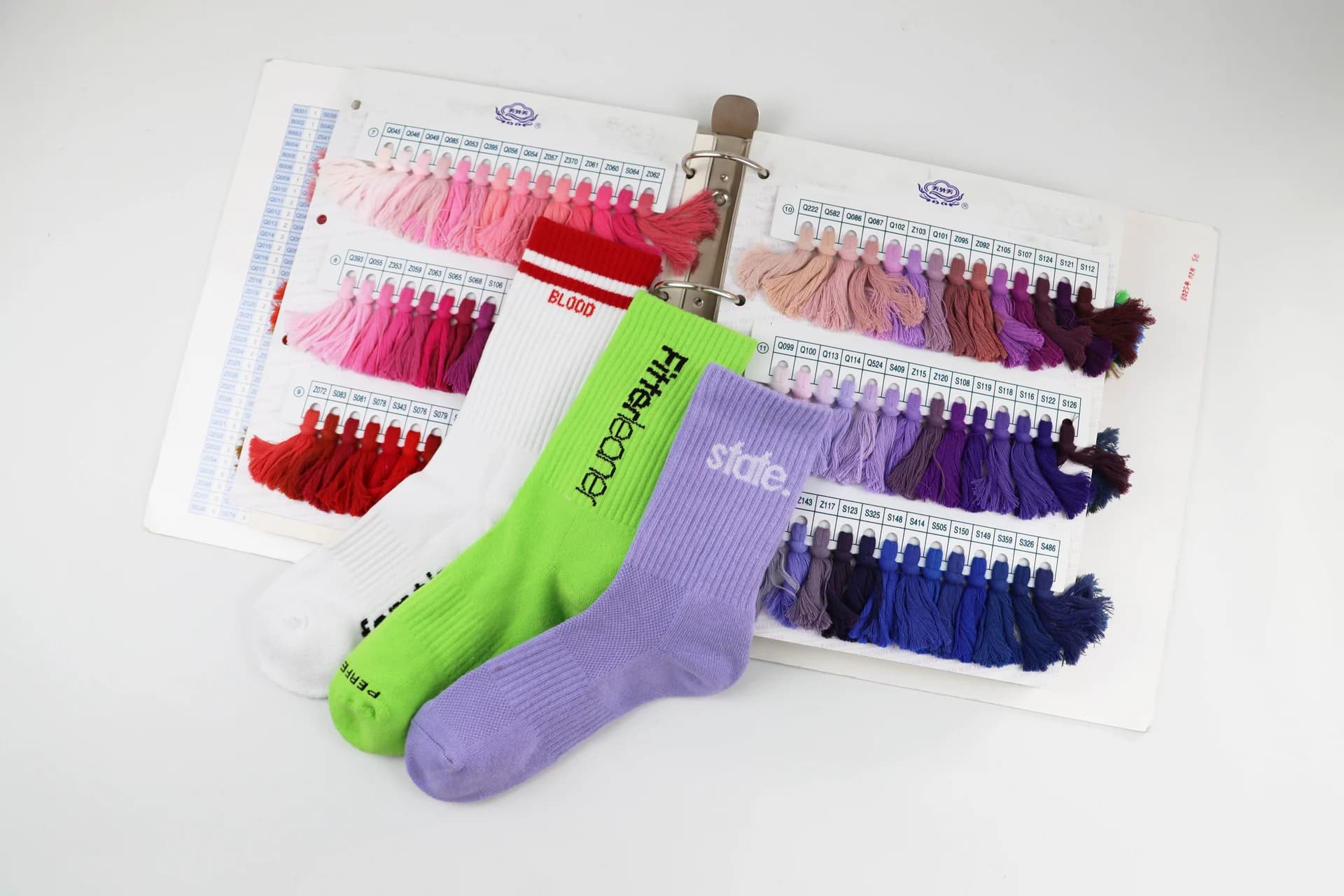
Experienced brands evaluate yarn and structure as carefully as appearance. Material choices affect comfort, moisture management, durability, elasticity, drying speed, compression and cost.
Questions to ask
- ✓Which yarn is suitable for the target market and use case?
- ✓What yarn count and composition do you recommend?
- ✓Are special, certified or recycled yarns available?
- ✓Do special yarns require a higher MOQ?
- ✓How will the material choice affect performance and price?
Common options include cotton for a soft lifestyle feel; nylon for strength and durability; polyester and performance yarns for athletic or moisture-management applications; elastane for stretch and recovery; and bamboo-based fibers for comfort-led ranges. A capable partner should explain the tradeoffs instead of asking you to choose without guidance.
Buyer note
A supplier acting only as an order processor may accept a material request without checking whether it fits the product’s intended use.
Factor 04
Compare Customization Capability
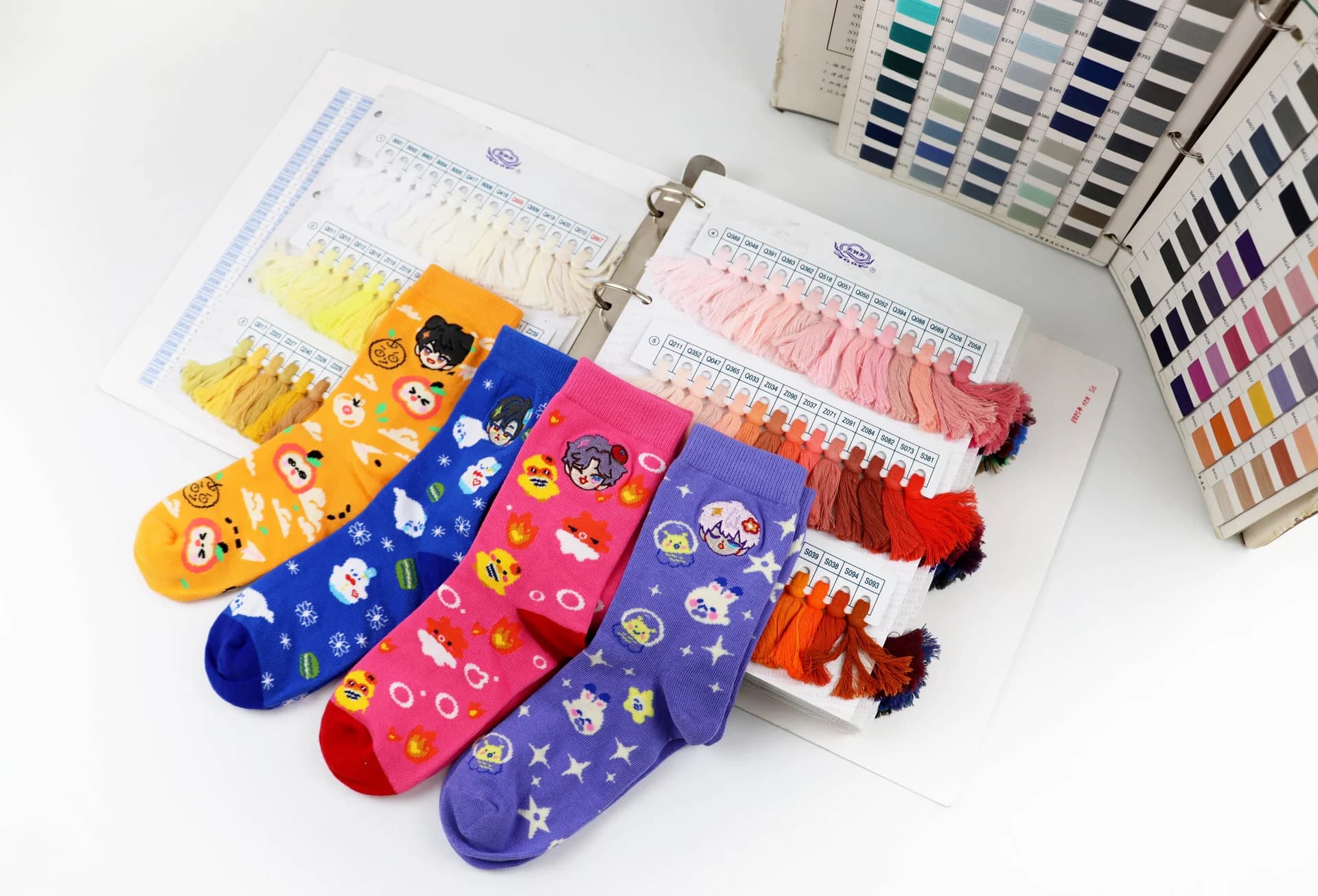
Private label does not simply mean placing a logo on an existing sock. Confirm whether the manufacturer can customize the areas that make the product valuable to your market.
Questions to ask
- ✓Can height, rib structure, mesh, compression and cushioning be adjusted?
- ✓Can heel, toe, grip placement and reinforcement be developed?
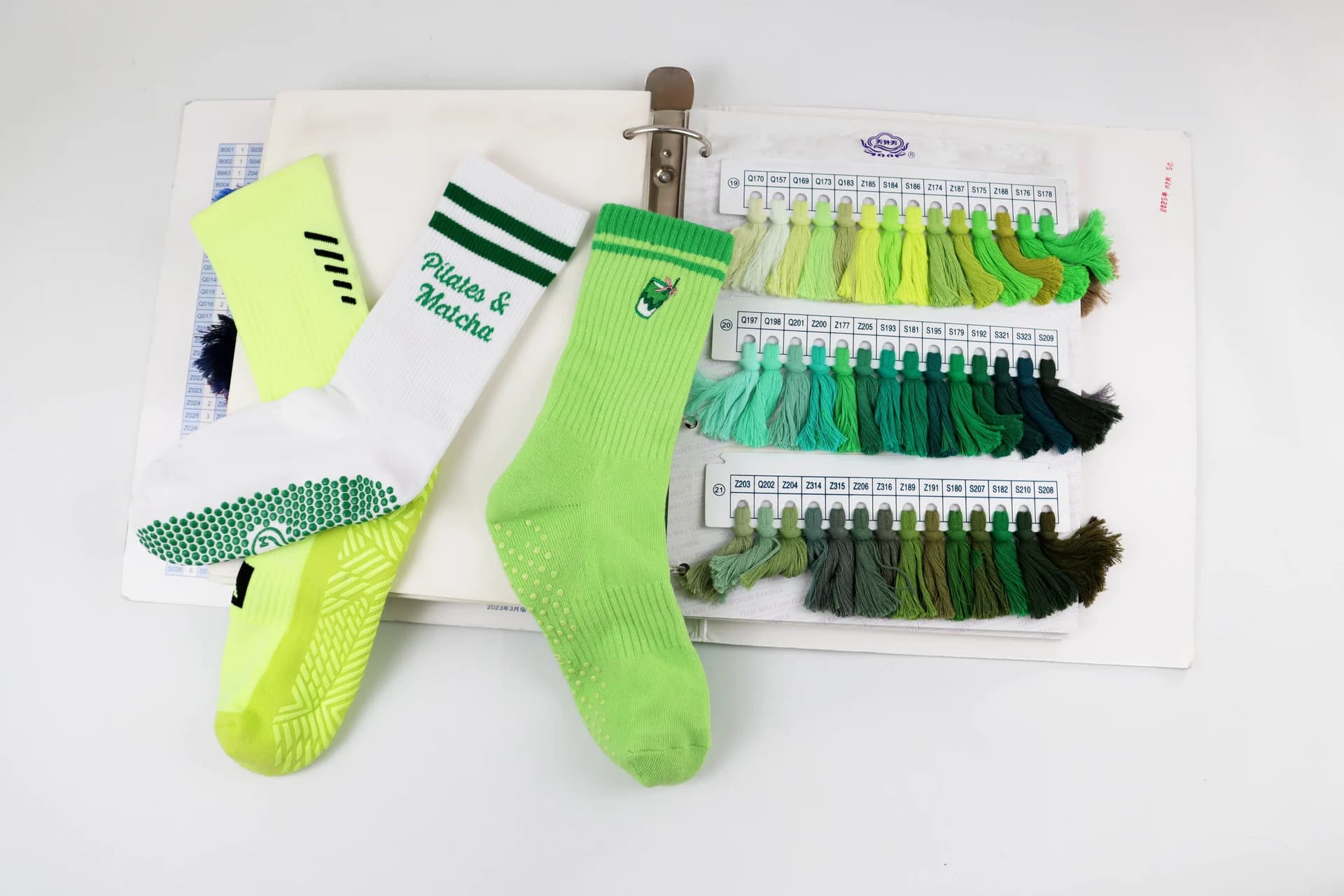
- ✓Are stock colors, Pantone matching and multi-color jacquard available?
- ✓Which logo method fits the artwork and durability requirement?
- ✓Can the factory show comparable technical products it has produced?
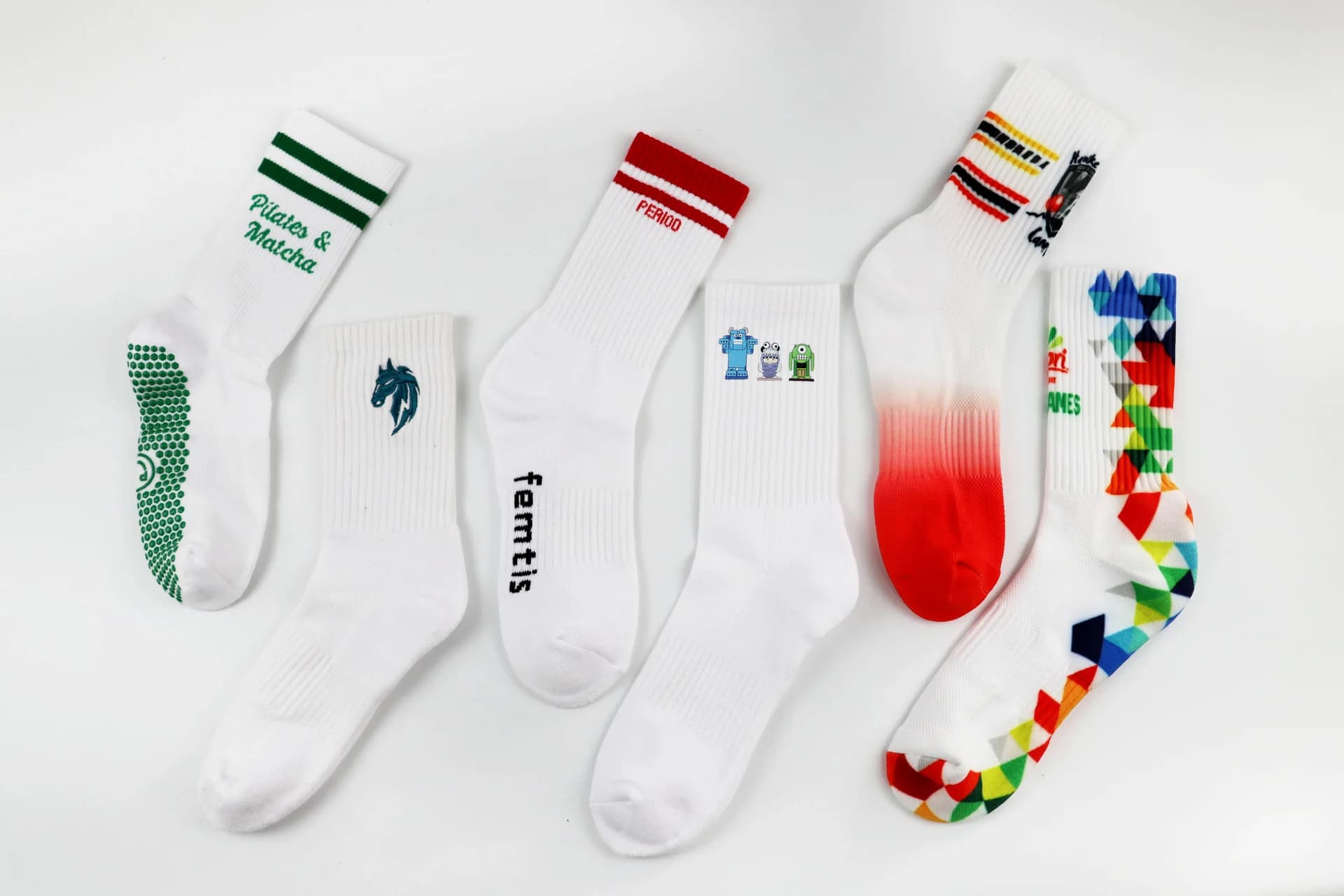
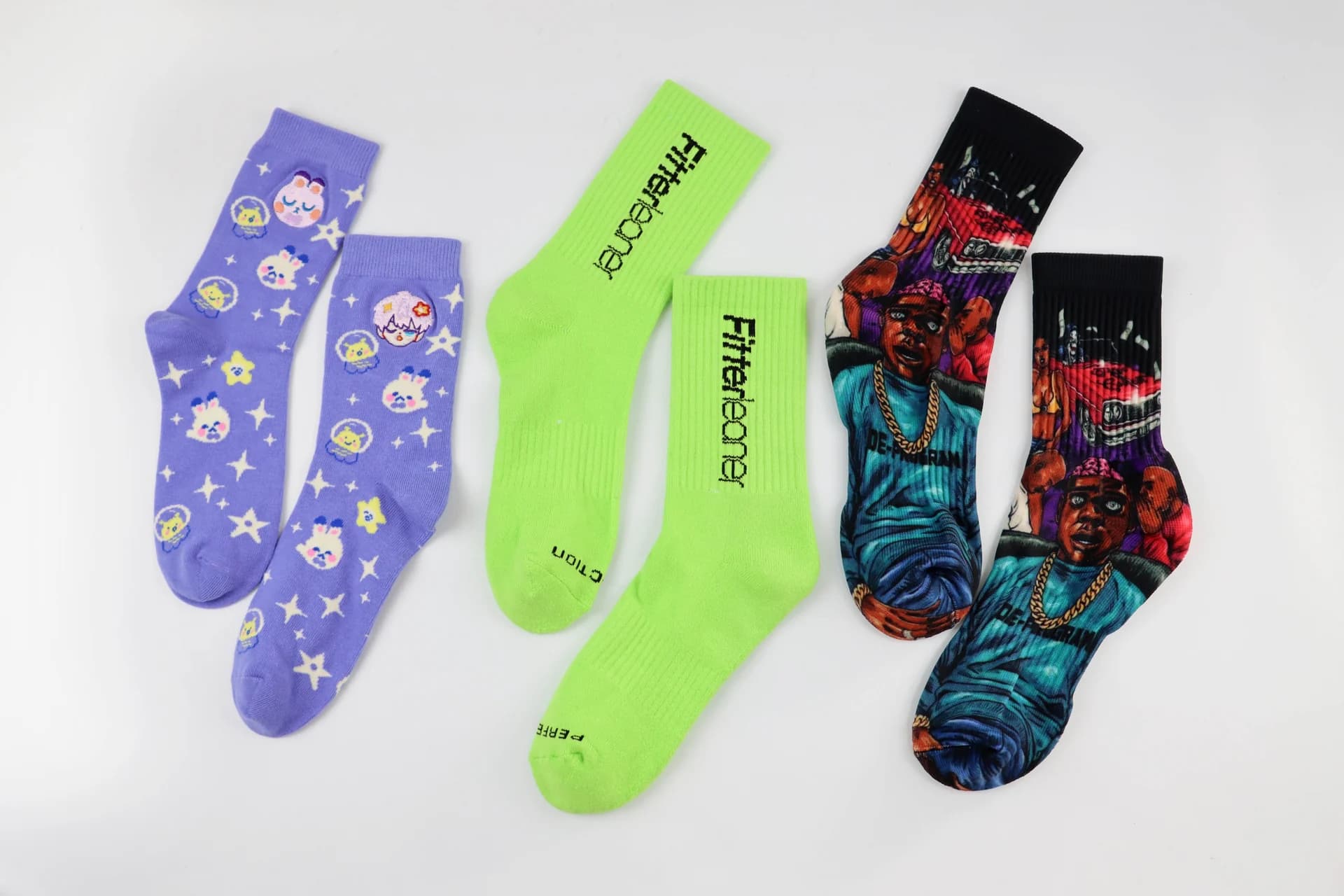
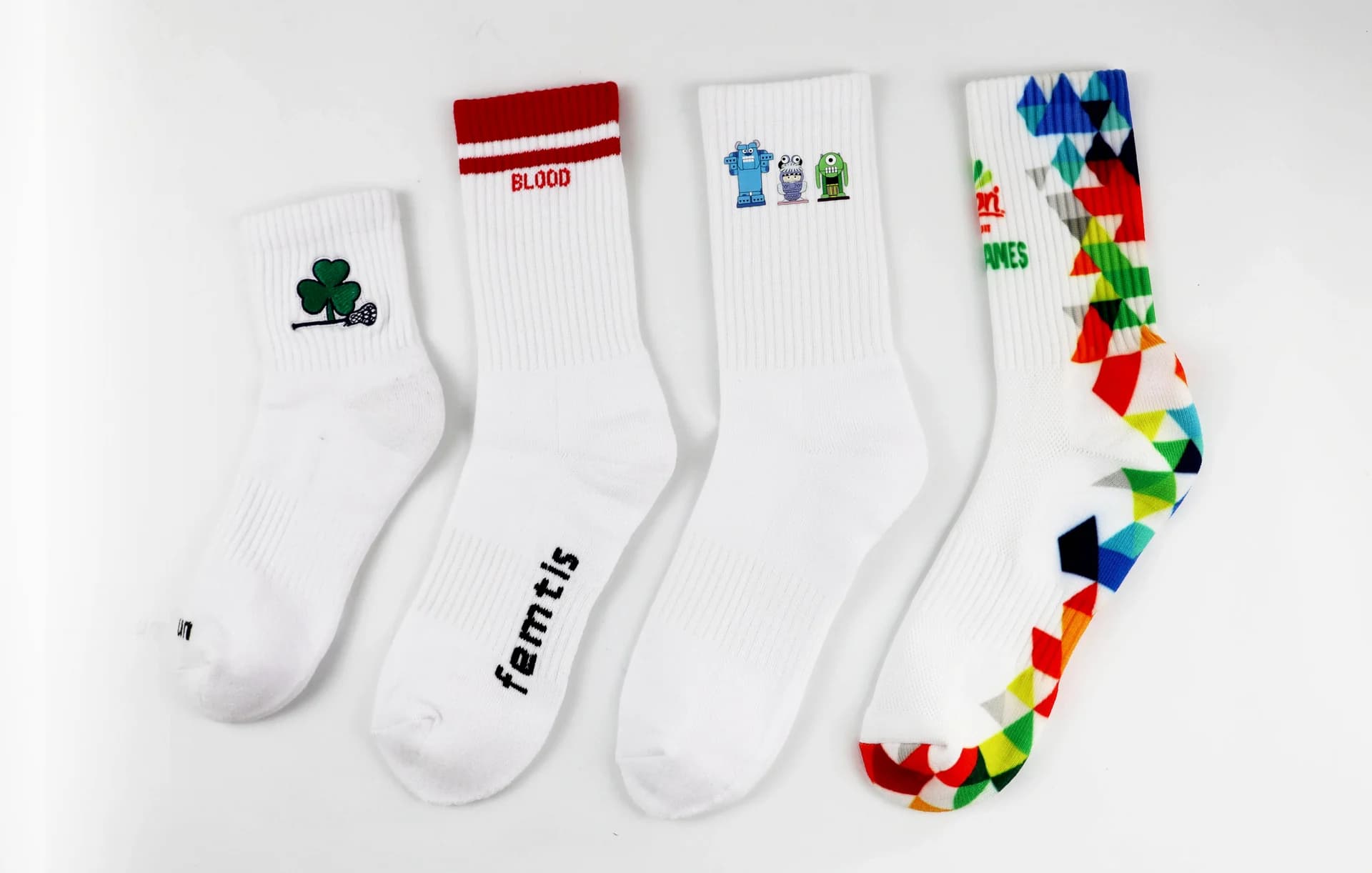
Logo options can include jacquard knitting, embroidery, printing, silicone application and woven labels. Performance programs may add anti-slip grip, terry cushioning, reinforced zones, breathable mesh, reflective details or specialist yarns. The right method depends on logo complexity, size, construction, durability and budget.
Buyer note
Do not assume every factory can execute every technical feature at the same quality level—ask for relevant examples.
Factor 05
Understand the Quality Control Process
Quality control should not begin only after the entire order has been produced. A professional factory monitors the approved specification throughout production.
Questions to ask
- ✓How are yarn specifications, color and incoming components checked?
- ✓Which size, height, structure and logo checks happen during knitting?
- ✓How are compression, cushioning and color consistency reviewed?
- ✓What final checks cover appearance, measurements and defects?
- ✓How are grip adhesion, pairing, labels and packaging verified?
Ask “What exactly do you inspect before my order is packed?” A useful answer should describe checkpoints for materials, production and the finished order—not only promise that everything will be checked before shipment.
Buyer note
Quality control should be a defined process with records and responsibility, not a slogan.
Factor 06
Evaluate Communication Before a Large Order
Many custom manufacturing problems come from misunderstandings rather than machine capability. The supplier must correctly manage specifications, measurements, artwork, colors, size ratios, packaging, delivery requirements and revisions.
Questions to ask
- ✓Are answers, quotations and specifications clear and organized?
- ✓Are changes confirmed before production proceeds?
- ✓Are important decisions recorded in writing?
- ✓Does the supplier ask about the customer, sales channel and positioning?
- ✓Does the team clarify sizes, packaging and whether this is a test or full launch?
Good suppliers ask detailed questions because they are thinking about how the product will be made and sold. A technically strong factory with weak communication can still be difficult to work with.
Buyer note
Repeatedly vague answers early in the project often predict specification drift later.
Factor 07
Review Packaging and Private Label Support
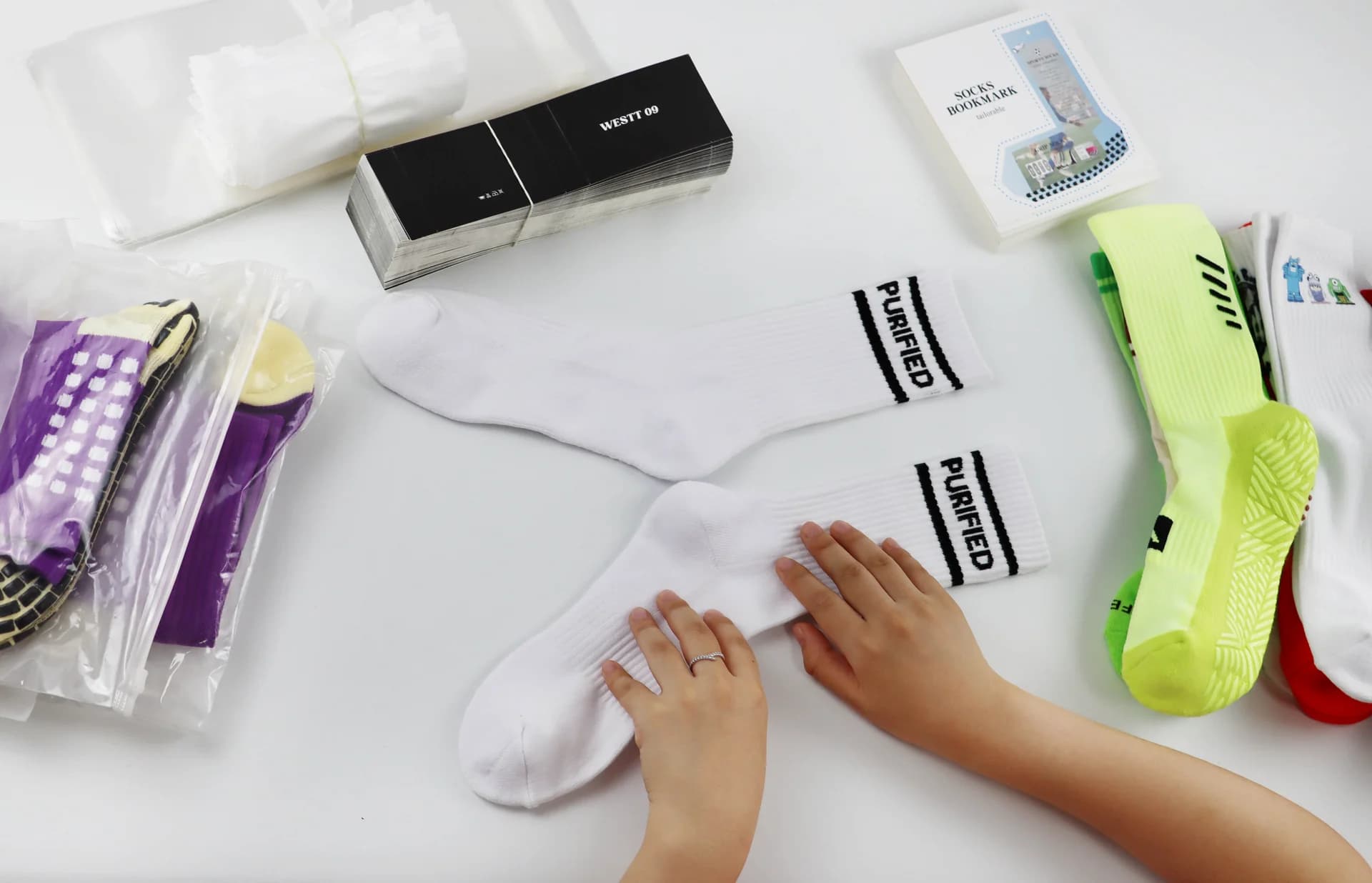
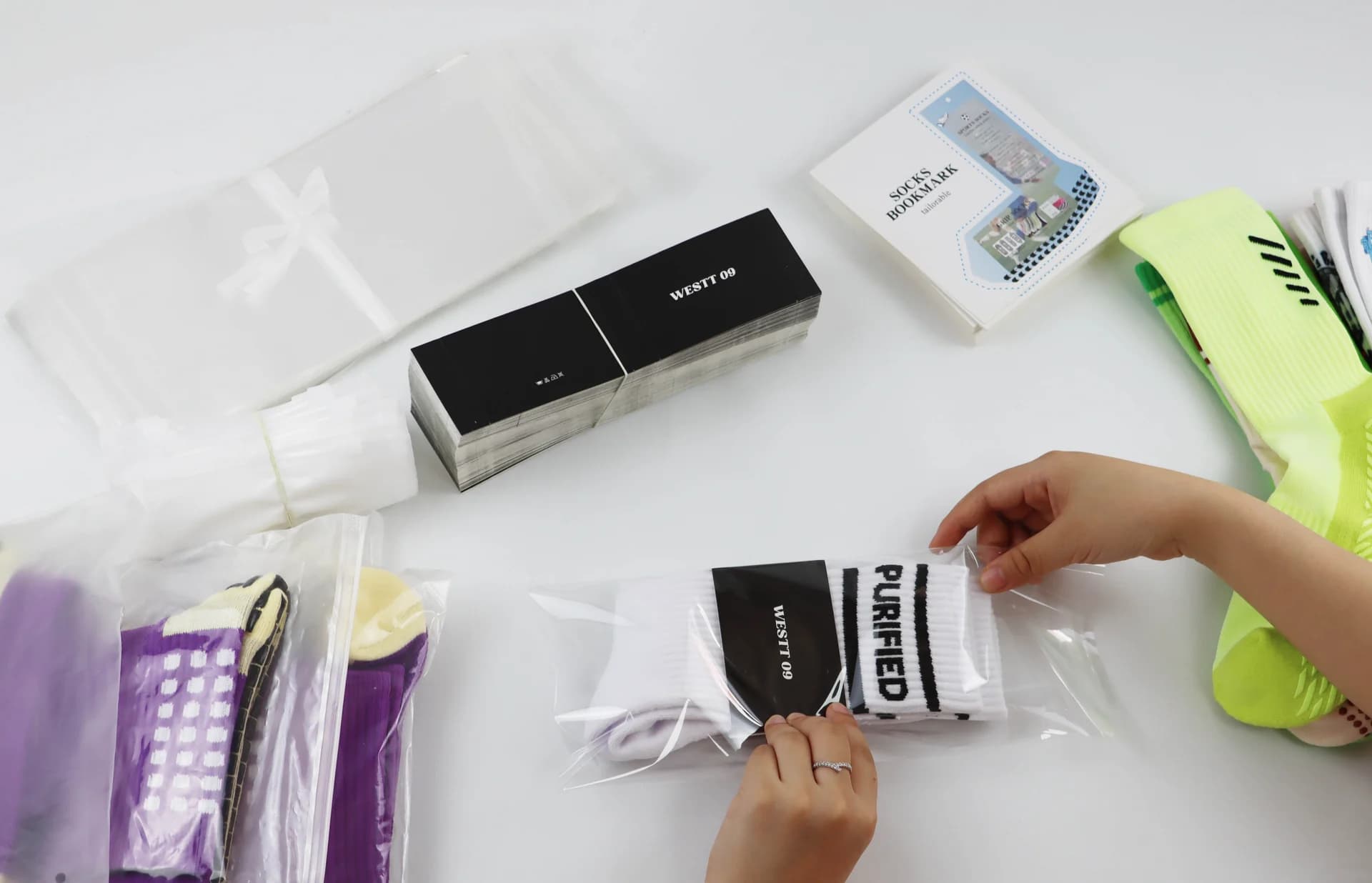
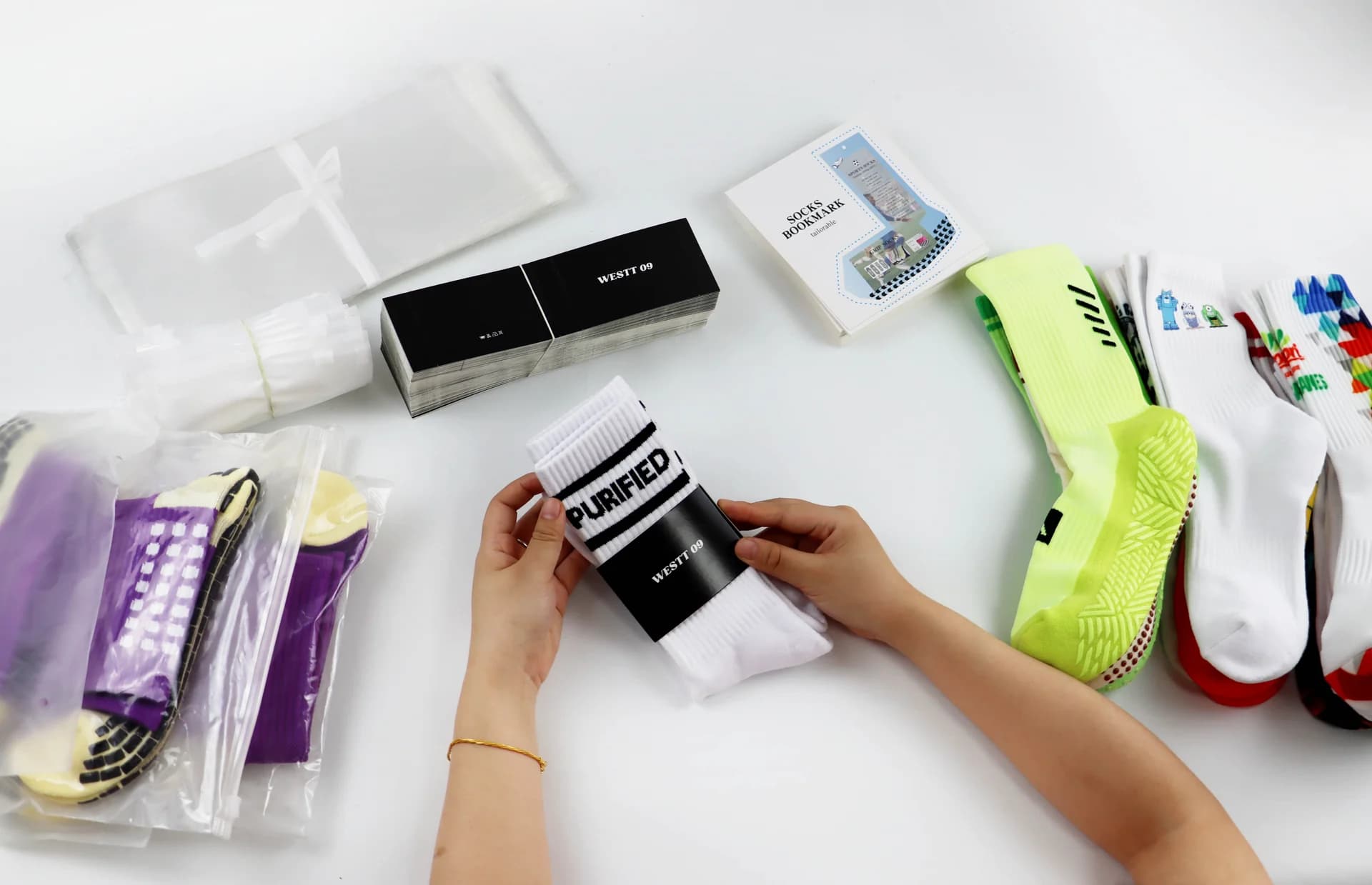
Packaging is especially important for DTC brands, ecommerce companies, gyms, yoga studios and retailers. A good sock can still look inexpensive if the retail presentation is poorly planned.
Questions to ask
- ✓Are paper bands, hang tags, bags, boxes and barcode labels available?
- ✓Can size, washing and carton labels be coordinated?
- ✓Is ecommerce-ready or retail-ready packing supported?
- ✓What is the MOQ for the socks?
- ✓What is the separate MOQ for custom packaging?
Packaging MOQ can differ from sock MOQ. A printed box supplier may require more units than the first sock run. Startups can often begin with a paper band, hang tag, sticker or simple branded bag, then upgrade after validating demand.
Buyer note
Packaging should be included in the brief early enough to match the product dimensions, launch quantity and sales channel.
Factor 08
Make Sure the Manufacturer Can Scale With You
Your first order is only one stage of the relationship. A suitable manufacturer should support both a controlled market test and stable repeat production when demand grows.
Questions to ask
- ✓What is the typical monthly capacity?
- ✓Can repeat orders maintain the same yarns and colors?
- ✓Can the factory handle more sizes, colors and product categories?
- ✓How do lead times change for larger orders?
- ✓What happens if demand increases quickly?
A healthy path can move from sample to small test order, market validation, repeat order, larger production and new product development. The manufacturer should be willing to support a smaller brand without becoming a bottleneck when that brand succeeds.
Buyer note
Do not optimize only for the first 100 pairs if the supplier cannot support the next 10,000.
Scalability in practice
From a controlled trial order to repeat bulk production.
Start small. Scale when demand is proven.

Validate the product with a focused first run.
Use the first order to confirm the product, presentation and market response before committing to a larger inventory position.
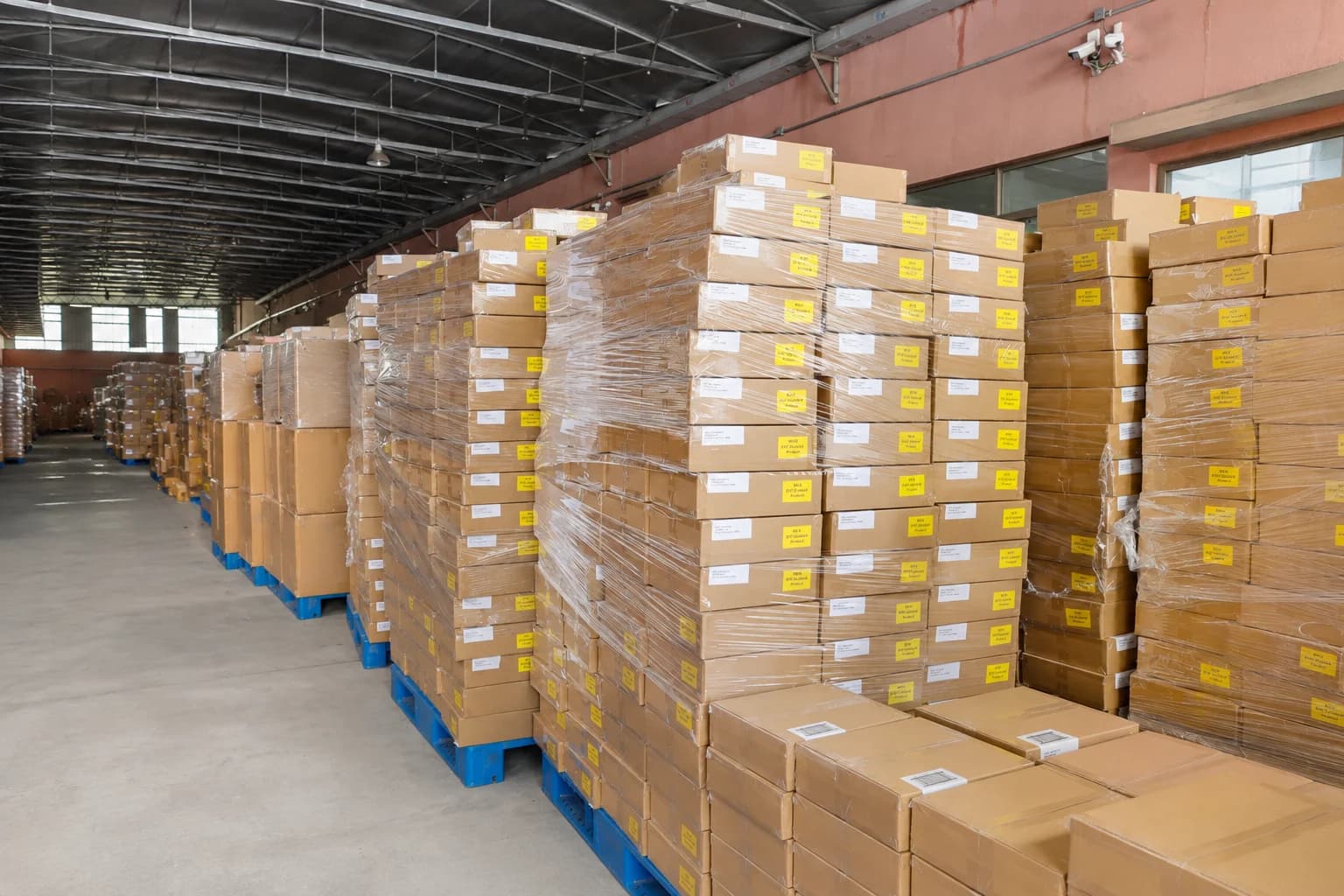
Increase volume after demand is proven.
Move into repeat production with the approved construction, branding and packing specification already established.